How much of a cancer drug is too much? Patients, researchers challenge FDA-approved dosages

Daftar Isi
When the Label Says More Than the Body Needs: A Growing Push to Rethink Cancer Drug Dosing
Healfromzero.com – Across North America, Europe, and parts of Asia, oncologists are quietly prescribing less of what the FDA label tells them to give. They are shortening treatment windows, stretching the intervals between infusions, and in some cases cutting doses to a fraction of the approved amount. The rationale is straightforward: for many patients on immunotherapy, the full labeled regimen delivers side effects that far outweigh any remaining therapeutic benefit once the tumor has stopped growing. What began as individual clinical judgment is hardening into a coordinated movement of physicians, researchers, and patients demanding formal studies to determine where the true therapeutic ceiling actually sits.
A Patient’s Calculus
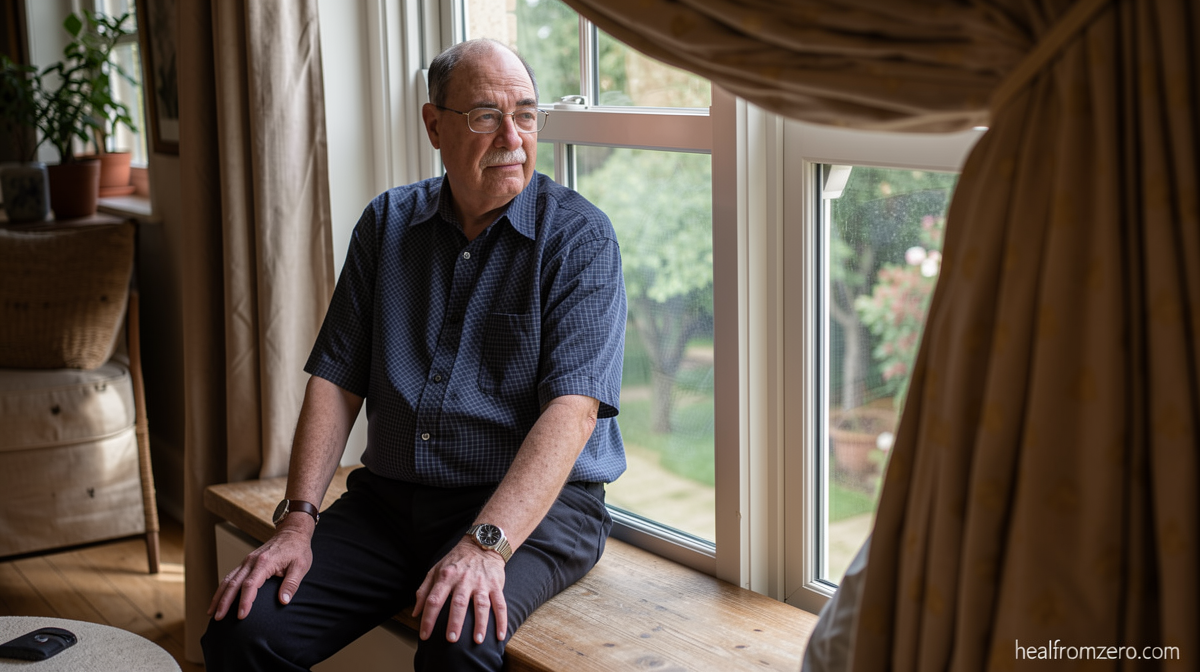
Chuck Manski, an economist at Northwestern University whose academic work centers on decision-making under uncertainty, found himself living that uncertainty in his own body. In 2022 he began receiving monthly infusions of nivolumab — marketed as Opdivo — to treat advanced melanoma. Over six months the drug destroyed his thyroid gland, forcing him onto lifelong replacement medication, and produced debilitating dryness in his eyes, lips, and mouth. The FDA’s approved protocol for the regimen called for a full twelve months of treatment. When Manski pressed his oncologist on why the second half of that year was medically necessary, she offered no clinical justification beyond the regulatory label.
“It’s FDA-approved, so that’s what we use.”
By the six-month mark, Manski showed no signs or symptoms of active cancer. After reading extensively through medical journal literature, he concluded that the mounting toxicity signaled the treatment had exhausted its useful effect. Speaking in June from Spain, where he had traveled to receive an award for his economics research, he described the moment of decision plainly:
“She couldn’t tell me a year was the optimal dose. Nobody could. So I made my own diagnosis. I took myself off.”
His choice was not an outlier. Clinicians in Canada, Israel, and Sweden had already been administering reduced doses of nivolumab and its close cousin pembrolizumab (Keytruda), or delivering them over compressed timelines and extended intervals relative to FDA guidance. In India, oncologists reported that doses as low as one-twelfth of the labeled nivolumab quantity still produced powerful anti-tumor effects across several cancer types.
“There is incredible uncertainty in drug dosing,” Manski said.
The Economic Architecture Behind the Label
Understanding why the status quo persists requires looking at who profits from the current dosing structure. Merck sold nearly $32 billion worth of pembrolizumab last year — a figure representing almost half of the company’s total drug revenue. The drug carries FDA approval for more than forty distinct cancer indications. Bristol Myers Squibb pulled in roughly $10 billion from nivolumab, which operates through a similar immune-checkpoint mechanism. Three frequently toxic breast-cancer agents — Ibrance, Verzenio, and Kisqali — added $4.1 billion, $5.7 billion, and $4.8 billion to the coffers of Pfizer, Eli Lilly, and Novartis respectively.
Pembrolizumab is typically prescribed at a flat, fixed dose regardless of patient size. Nivolumab is sometimes fixed, sometimes weight-adjusted. Either way, if a physician prescribes below the labeled quantity, the manufacturer collects less revenue per patient. Pharmaceutical companies have shown minimal appetite for voluntarily lowering recommended dosages once a price point is established: every unit sold at the approved dose translates directly into margin.
Hospitals and physicians also benefit from the current structure. Under the federal 340B program, created in 1992 to subsidize care for low-income patients, facilities that treat a qualifying share of low-income individuals purchase drugs at steep discounts while billing insurers or patients at higher rates. For Medicare beneficiaries specifically, physicians receive an additional six percent of the drug’s average price for each infusion administered. Between 2010 and 2024, total cancer-drug revenue flowing to doctors and hospitals climbed from approximately $9 billion to nearly $36 billion, according to available industry data.
The Patient Burden and the Evidence Gap
The financial stakes are not abstract. A recent survey conducted by the Kaiser Family Foundation found that 43 percent of U.S. adults had skipped a prescribed medication within the preceding year because of cost. A 2022 study out of Vanderbilt University examining Medicare enrollees determined that 30 percent of cancer-drug prescriptions never made it filled at the pharmacy. For patients already enduring the side-effect burden of full-dose immunotherapy, the cost pressure compounds a clinical problem that may be solvable with less drug.
Yet formal dose-optimization trials rarely take place after a drug clears its early development phases or reaches the market. By that stage, few actors within the U.S. healthcare system — patients being the notable exception — hold a financial or institutional incentive to learn whether a lower dose performs equivalently while inflicting less harm. The research question simply falls outside the commercial and regulatory incentives that drive post-approval study.
Matthew Goetz, a breast-cancer researcher at the Mayo Clinic Comprehensive Cancer Center, frames the structural problem bluntly:
“Decisions aren’t always made with the best needs of the patients in mind. Weighing the bottom line is another reason.”
What a Recalibrated Dose Could Mean
One analysis examining twenty-nine high-cost cancer drugs estimated that had minimum-necessary dosages been applied across the U.S. system in 2024, the healthcare economy could have saved roughly $31 billion. That figure encompasses reduced drug purchases, fewer infusion-center visits, lower rates of secondary complications requiring intervention, and diminished long-term medication needs stemming from organ damage. For patients like Manski, the savings are personal and immediate: a thyroid that still functions, eyes that do not burn, a mouth that can swallow without pain.
The informal coalition Manski now helps sustain — spanning researchers, practicing oncologists, and fellow patients — is pressing for the studies that would convert anecdotal clinical experience into validated dosing guidance. Until those trials materialize, the gap between what the label says and what the body actually needs will continue to widen, measured in dollars, in side effects, and in the quiet decisions of patients who decide, as Manski did, to step off the protocol on their own authority.
Related Reading
Frequently Asked Questions
What is How much of a cancer drug?
How much of a cancer drug is the main topic of this guide. The article explains the context, practical details, and next steps readers should understand.
Why does How much of a cancer drug matter?
How much of a cancer drug matters because readers are looking for a useful answer, not just a short summary. Good content should match search intent and help them decide what to do next.