What college students really need in their first aid kits

Daftar Isi
Stocking a Dorm Room Kit: What a Physician-Mom Actually Recommends for College Nights
Healfromzero.com – The clock reads 2 a.m. A text lands on your phone: your kid is miserable, the campus clinic shut its doors hours ago, and the closest round-the-clock pharmacy sits on the opposite side of town. The complaint is loud but not life-threatening — a splitting headache, a round of vomiting, a rattling chest stuffed with mucus. Urgent care would cost a fortune; the ER feels like overkill. What they need right now is relief, and what they need in their drawer is a thoughtfully assembled kit that covers the gaps between campus hours.
I am a family physician who spent years running urgent-care shifts inside a university health center, and I also field panicked texts from my own children at college. The guidance below reflects both roles. You are not building a walk-in pharmacy. You are assembling a compact shelf of tools, over-the-counter medications, and emergency supplies that lives within arm’s reach of the bed.
The One Item That Can Actually Save a Life
Before anything else, address the threat that kills. The U.S. Centers for Disease Control and Prevention identifies accidental poisoning — most often a drug overdose — as the leading cause of death among young adults in the country. On campuses, the danger vector has shifted: counterfeit “study pills” laced with fentanyl now circulate in dorms. A student who grabs what looks like amphetamine/dextroamphetamine (Adderall), alprazolam (Xanax), or oxycodone (OxyContin, Percocet) from a roommate’s desk may be inhaling enough fentanyl to stop breathing within minutes.
Naloxone nasal spray — sold over the counter under the brand name Narcan OTC at most pharmacies without a prescription — reverses that respiratory depression. Keep at least one canister in the kit. Two critical rules: the canister holds a single dose, so never waste a test spray to “check” it before use; and once you administer the spray, dial 911 immediately and remain at the person’s side until paramedics arrive. This is not a convenience item. It is the difference between a dorm-room tragedy and a recovered roommate.
Reading the Body: Measurement Tools
Campus health centers are perpetually slammed. Walking in and saying “I felt feverish” earns you a generic wait. Walking in and stating “my temperature hit 102.7 degrees at 1 a.m.” lets the triage nurse triage you correctly and quickly. An accurate digital thermometer converts a vague complaint into actionable data.
A pulse oximeter — the small clip-on device that reads blood-oxygen saturation — serves the same purpose for respiratory complaints. If your student is dealing with a hacking cough or shortness of breath, a reading below 94 percent changes the conversation from “rest up” to “get seen now.” The more precise the data point you hand a clinician, the faster and safer the intervention becomes.
Pain Management: Know the Differences
Ask any student across the country what they reach for most, and the answer is a pain reliever. The three over-the-counter options work through different mechanisms, and confusing them can cause problems.
Ibuprofen (sold as Advil, Motrin, and generics) is a nonsteroidal anti-inflammatory drug. It suppresses swelling, brings down fevers, and eases pain ranging from a pulled muscle to menstrual cramps. Acetaminophen (Tylenol and generics) targets headaches, sore throats, and fevers; it is gentler on the stomach lining but places a heavier load on the liver — a real concern when it coexists with the alcohol binging common in college social life. Aspirin (Bayer, Excedrin, and related brands) is generally not recommended for teenagers and young adults because of bleeding risk, though a physician may individually prescribe an aspirin-plus-caffeine combination for migraine sufferers.
For the dorm kit, I suggest a full-size bottle of ibuprofen as the primary agent and a smaller acetaminophen supply as the backup. Learn the labels, learn the maximum daily doses, and do not alternate the two without understanding why.
Rehydration: The Hangover and the Stomach Bug
A pounding headache born of alcohol — or of a norovirus round that swept the floor — will not yield to a pill alone. The body’s primary deficit is fluid and electrolyte. Single-serving electrolyte powder packets, the kind you’d find in a sports-drink aisle, slot neatly into a kit and restore sodium, potassium, and glucose faster than plain water. Keep a generous supply. They are cheap, shelf-stable, and the single most underused item in most dorm drawers.
Digestive Comfort: Antacids and When to Escalate
College life is a cocktail of caffeine, stress, late-night pizza, chocolate, alcohol, and nicotine — a recipe that sets off acid reflux with predictable regularity. Students consistently report that an antacid ranks second only to pain relievers in actual kit usage. A simple, immediate-acting antacid (TUMS or its generic equivalent) in chewable or gummy form handles the occasional episode without drama. If the need shifts from “occasional” to “several times a week” and long-acting acid-blocking pills start looking appealing, that is the signal to book a physician visit and investigate the underlying cause rather than self-manage indefinitely.
Cold and Flu: Avoid the Doubling Trap
It is tempting to grab one multi-symptom cold product and call it done. The problem: most combination cold remedies already bundle a fever-and-pain reliever (acetaminophen), a decongestant (phenylephrine), and a cough suppressant (dextromethorphan). Layering a separate acetaminophen tablet on top of that product can push you past safe daily limits without you noticing. Treating each symptom with its own targeted medication — and reading every label before combining — prevents accidental ingredient overlap, sharpens the therapeutic response, and eliminates a common source of drug interactions.
Storage and Accessibility
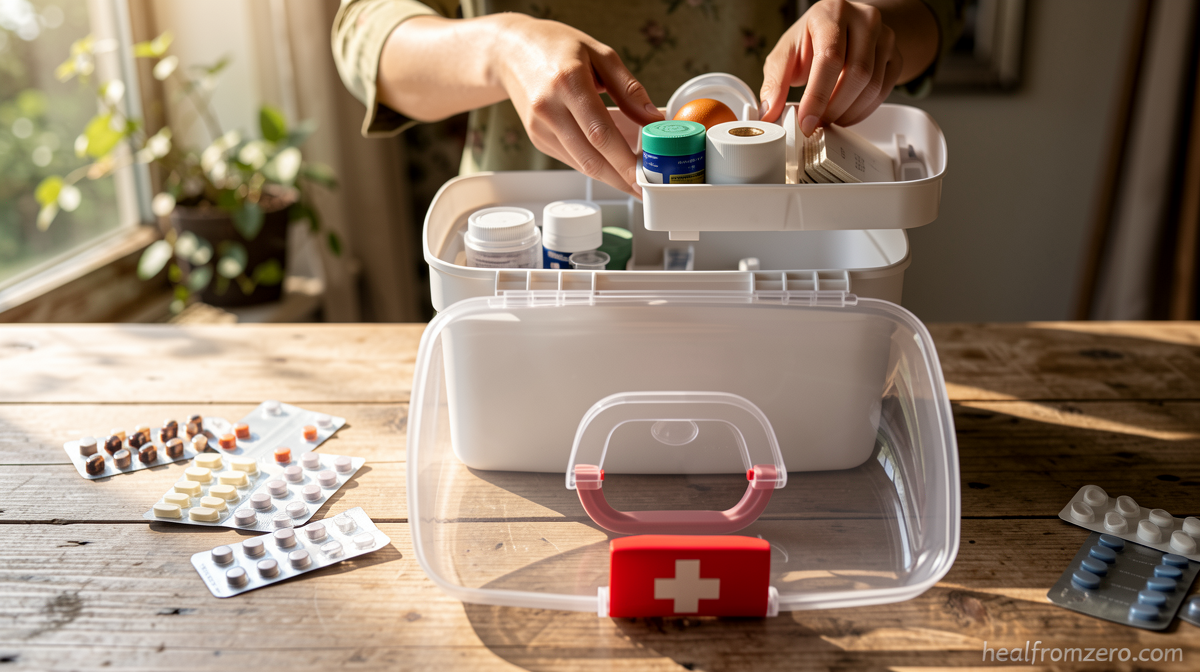
A kit that lives in a locked closet three floors away is a kit that does not exist at 2 a.m. Keep the assembled supplies in a clear, labeled container on the desk or in the top drawer of the nightstand. Check expiration dates each semester. Replace used electrolyte packets and antacid tablets promptly. And if your student is on a maintenance medication — asthma inhaler, allergy shots, thyroid hormone — make sure a backup supply rides alongside the general-purpose items.
None of this replaces professional care. It bridges the gap between “I feel awful” and “a clinician has seen me,” and in the narrow window where naloxone matters, that gap is measured in minutes.
Related Reading
Frequently Asked Questions
What is What college students really need in their?
What college students really need in their is the main topic of this guide. The article explains the context, practical details, and next steps readers should understand.
Why does What college students really need in their matter?
What college students really need in their matters because readers are looking for a useful answer, not just a short summary. Good content should match search intent and help them decide what to do next.