Is it safe to eat lettuce yet? What to know as cyclosporiasis outbreak lingers

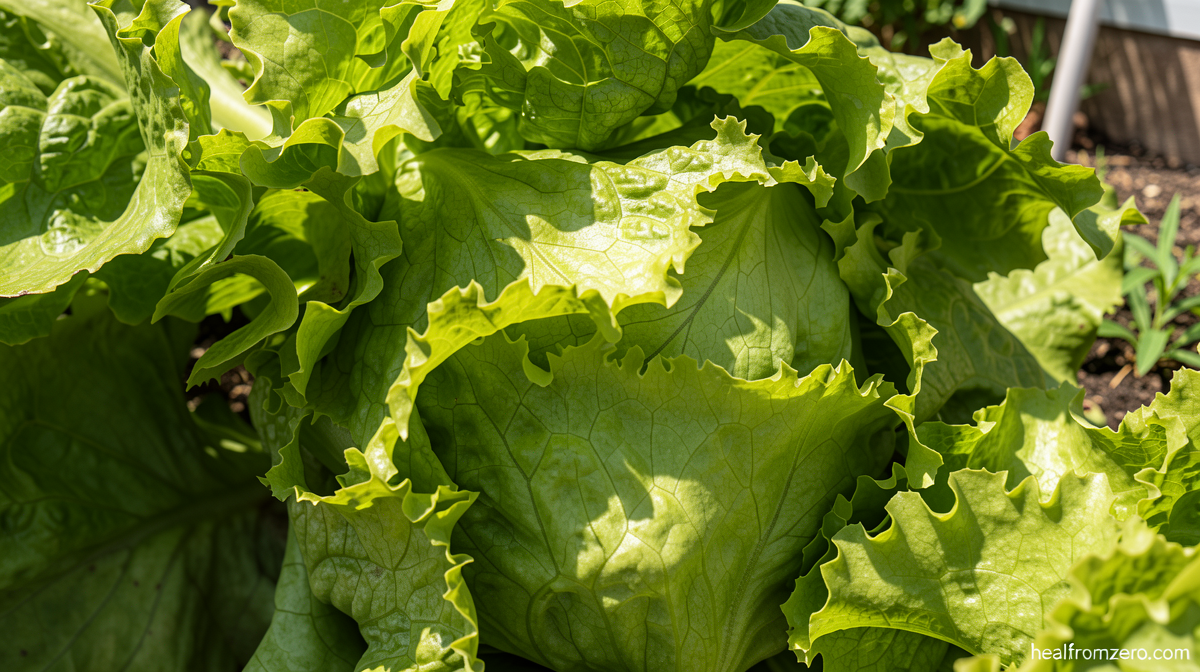
Is It Safe to Eat Lettuce? FDA Says Yes
Healfromzero.com – Walk into any grocery store this week and the question on every shopper’s mind is whether it is safe to eat lettuce after the largest cyclosporiasis cluster in recent years. Federal regulators have answered that question with a qualified yes: the recalled product is off shelves, and fresh heads of iceberg greens from unaffected suppliers carry no elevated risk. The caveat is narrow — avoid any bag still bearing the implicated lot codes from mid-July.
What Regulators Are Saying Right Now
In a joint statement released alongside the CDC, the FDA declared that every recalled lot tied to this specific Cyclospora event has been pulled from distribution. The agency stressed it is not issuing a category-wide advisory against leafy greens. Shoppers who want a garden salad for dinner face, by all available evidence, the same low baseline risk as any raw vegetable.
“If today for dinner you wanted to go out and eat a salad, you’re pretty safe from cyclospora at this point, as far as we know,” said Matthew Moore, associate professor of food science at the University of Massachusetts Amherst.
Moore’s remark mirrors the wider consensus in food-safety academia: once contaminated lots are genuinely out of circulation, the incremental danger of buying produce drops back to ordinary levels. The question of whether it is safe to eat lettuce from a non-recalled source, in other words, has a straightforward answer.
How the Recall Unfolded
Epidemiological clustering around shredded iceberg consumed at multiple Taco Bell locations pointed investigators toward Taylor Farms de Mexico and growers in central Mexico. On July 17, the distributor announced removal of all iceberg originating from that region. The formal recall covered Marketside-brand salad packs and shredded product with best-if-used-by dates from July 18 through August 3.
Dr. Jennifer Layden, associate dean for practice at the Bursky School of Public Health, Washington University in St. Louis, offered practical guidance for households that may still have an affected bag in the fridge.
“Assuming you do not come across any food with a known recall, yes, it is OK to eat such types of produce,” Layden said. “That food’s been recalled, and so with that knowledge, that’s been several weeks now. I believe that it is safe.”
She added that anyone who handled the implicated product should sanitize cutting boards, containers, and refrigerator shelves that came into contact with it.
Outbreak Numbers and the Reporting Lag
As of the most recent joint FDA–CDC update, 11,458 illnesses across 20 states have been linked to the event. Four hundred ninety-five patients required hospitalization; two died. The FDA noted that the majority of symptom onsets predated the July 17 recall, meaning the wave was already underway before contaminated product left the supply chain.
The latest recorded onset date is August 15 — a figure that does not signal a new contamination wave. Dr. Colleen Kraft, professor of infectious diseases at Emory University School of Medicine, clarified the distinction in an emailed statement.
“A newly reported case is not necessarily a newly acquired infection,” Kraft said. “There can be a substantial delay between someone becoming ill, being diagnosed, being interviewed by public health officials, and ultimately having their illness linked to an outbreak.”
State and federal epidemiologists can require up to six weeks to confirm whether a case belongs to the cluster. Cases surfacing in late August may trace back to meals consumed in early July, well before the recall took effect.
Understanding the Pathogen
Cyclospora cayetanensis is a microscopic coccidian parasite that colonizes the small intestine. Symptoms typically include watery diarrhea, abdominal cramping, fatigue, and low-grade fever, often appearing one to two weeks after ingestion. Because the organism is shed in stool and can persist in moist environments, proper hand-washing and thorough washing of raw produce remain the most effective personal-precaution steps.
Frequently Asked Questions
Do I need to throw away all lettuce in my fridge? Only if the packaging matches the recalled lot codes (Marketside-brand, best-if-used-by July 18–August 3, sourced from central Mexico). Other brands and suppliers are unaffected.
Can I still order a salad at a restaurant? Yes. Regulators have confirmed the recalled product is no longer in distribution, and restaurant kitchens source from multiple suppliers. If you have symptoms consistent with cyclosporiasis after eating out, contact your local health department.
How long should I wait before assuming a new case is unrelated? Public-health teams allow up to six weeks from symptom onset to complete laboratory confirmation and epidemiological linkage. A case reported in late August may still belong to the July cluster.
What should I do if I ate recalled product before the announcement? Monitor for symptoms for up to two weeks. If diarrhea, cramping, or fever develop, seek medical care and mention the exposure. Sanitize any surfaces that touched the product.