NASA’s ‘Dragon Lady’ is uncovering how wildfires create storms

Daftar Isi
From Cold War Spy to Fire Storm Researcher: NASA’s ER-2 Takes Flight
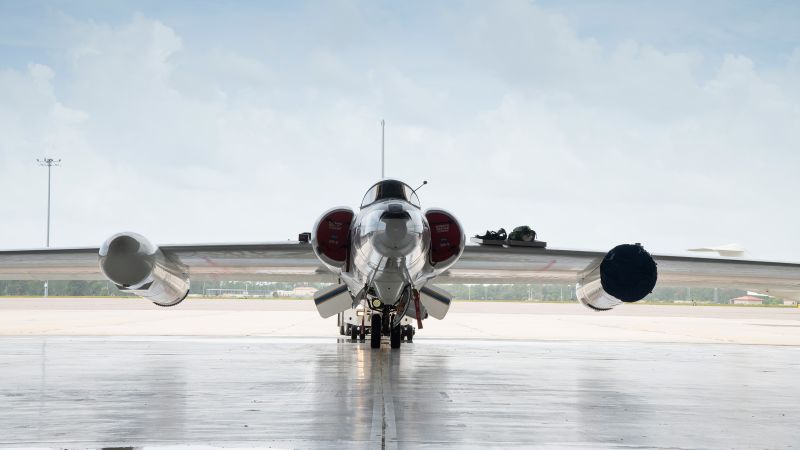
Healfromzero.com – A decades-old aircraft originally designed to peer behind the Iron Curtain has found new purpose in the sky above burning forests. NASA has deployed a modified U-2 spy plane to investigate one of meteorology’s most elusive challenges: understanding how wildfires generate their own weather systems. The ER-2, as NASA refers to this high-altitude workhorse, carries scientific instruments rather than surveillance equipment, transforming a military icon into a floating laboratory for atmospheric research.
The Science of Fire-Generated Storms
Pyrocumulonimbus storms represent some of nature’s most dramatic meteorological phenomena. These massive thunderstorms form when intense wildfire heat creates powerful updrafts that push smoke and hot air vertically through the atmosphere. The resulting storm clouds can produce lightning, hurricane-force winds, and occasionally fire tornadoes that spread flames across vast distances.
“It’s kind of like a chimney where the smoke from the fire is being pushed upward into the thunderstorm, accelerated through that vertical column, and then released,” explained David A. Peterson, a meteorologist at the Naval Research Laboratory.
Peterson serves as principal investigator for NASA’s INSPYRE mission—short for INjected Smoke and PYRocumulonimbus Experiment. This ambitious project aims to decode the erratic behavior of fire-generated storms that have historically eluded accurate forecasting. Unlike conventional weather systems, pyrocumulonimbus clouds form under unpredictable conditions, making them difficult to track and predict.
Reaching the Stratosphere
Recent scientific discoveries have revealed that these fire-driven weather systems possess remarkable vertical reach. Scientists found that pyrocumulonimbus storms can penetrate through natural atmospheric barriers, extending their influence into the stratosphere—a layer of the atmosphere typically reserved for satellites and high-altitude aircraft.
“There’s a volcano-like effect, with smoke being pushed really high into the atmosphere, and we’ve learned in recent years that once smoke reaches these high altitudes, it can obviously be transported by jet stream winds really fast,” Peterson noted.
This stratospheric penetration carries significant implications for global climate. Smoke particles deposited at such heights can circle the globe for months, potentially affecting weather patterns and temperature regulation across continents. Understanding the mechanics of how these storms form and evolve becomes crucial for both immediate fire management and long-term climate modeling.
Aerial Laboratory in Action
The INSPYRE mission commenced operations in July, with the ER-2 already conducting reconnaissance flights over active wildfires in northern Oregon and western Canada. The aircraft’s altitude capabilities position it ideally for this research. Flying at approximately 65,000 feet, the ER-2 operates above most weather interference while maintaining proximity to the fire plumes below.
“Think of it as a steerable satellite. It’s flying above the weather at maybe 65,000 feet, and we can basically have it orbit back and forth over a wildfire,” Peterson described.
The ER-2 carries an array of sophisticated instruments designed to measure fire energetics comprehensively. Radar systems determine plume size and altitude, while sensors track air motion within the storm. Electric field measurements capture lightning activity occurring inside the clouds. This multi-layered data collection approach provides researchers with a complete picture of storm dynamics.
Simultaneously, a Gulfstream 5 jet operates within the clouds themselves, creating a complementary data-gathering strategy. The two aircraft share information in real-time, with the Gulfstream’s in-cloud measurements validating and refining the ER-2’s remote observations.
“The idea is that the data they collect can inform each other,” Peterson explained. “The G-5 is directly in the clouds, and so it can inform the radars that are seeing the cloud and then relate that to what the airborne satellite is telling you.”
Historical Legacy of the Dragon Lady
The ER-2’s heritage stretches back to the mid-1950s, predating the era of spy satellites. During this period, the United States faced significant intelligence gaps regarding Soviet military and economic capabilities. The U-2, affectionately nicknamed the “Dragon Lady,” was engineered specifically to operate at extreme altitudes over Soviet territory.
“In the early 1950s, Soviet military and economic developments were a mystery to the United States because the USSR was a secretive, closed society,” noted the National Museum of the United States Air Force.
At its inception, American strategists believed Soviet missiles lacked the range to reach the U-2’s cruising altitude, granting the aircraft unprecedented freedom to photograph Soviet installations. This confidence proved premature. On May 1, 1960, merely four years after the U-2’s introduction, Soviet forces shot down a spy plane piloted by Francis Gary Powers, demonstrating that American military planners had underestimated Soviet technological capabilities.
Despite this setback, the U-2 continued serving as a critical intelligence asset through the Cuban Missile Crisis, the Vietnam War, and into modern conflicts including operations in Iraq and Afghanistan. More than seventy years after its maiden flight, the aircraft has transitioned from Cold War espionage to cutting-edge atmospheric science.
Building Better Forecasting Tools
The ultimate objective of the INSPYRE mission extends beyond immediate research. Scientists aim to develop improved prediction capabilities for pyrocumulonimbus storms, which could revolutionize wildfire management strategies worldwide.
“We’re both using tools that are just being developed now by some of our science team members to help guide the mission, but we’re also using the mission to help feed back to improve those prediction tools,” Peterson stated. “There will inevitably be a component of the mission where we produce better tools to predict this type of fire behavior.”
As climate change increases wildfire frequency and intensity across multiple regions, accurate storm forecasting becomes increasingly vital. Communities facing seasonal fire threats could benefit from advance warnings of dangerous storm development, allowing for more effective evacuation planning and resource allocation. The ER-2’s continued service demonstrates how aging military platforms can find renewed relevance through scientific innovation, bridging the gap between Cold War technology and twenty-first-century environmental challenges.
Related Reading
Frequently Asked Questions
What is NASA s Dragon Lady is uncovering?
NASA s Dragon Lady is uncovering is the main topic of this guide. The article explains the context, practical details, and next steps readers should understand.
Why does NASA s Dragon Lady is uncovering matter?
NASA s Dragon Lady is uncovering matters because readers are looking for a useful answer, not just a short summary. Good content should match search intent and help them decide what to do next.