Putin wants Africa on his side. African leaders are playing their own game

Daftar Isi
Africa’s diplomatic choices give Russia a stage as Ukraine war continues
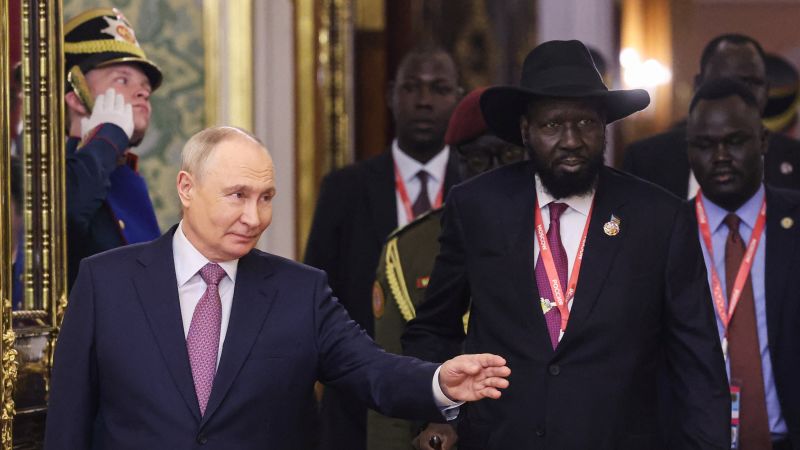
Healfromzero.com – Vladimir Putin used this week’s Russia-Africa Summit in Moscow to present his country as a partner willing to offer African nations trade, technology and political cooperation without the conditions he associates with Western powers. For the Kremlin, the gathering offered a prominent display of international engagement at a time when the war in Ukraine and Western sanctions have deepened Russia’s isolation in many capitals.
For African governments, however, participation does not necessarily signal allegiance to Moscow. Leaders are pursuing relationships with Russia alongside ties to Western countries, China, Gulf states and other partners, seeking practical gains that range from security assistance to food supplies, energy projects and diplomatic support.
Delegations from 48 of Africa’s 54 countries attended the two-day summit. Kremlin aide Yury Ushakov said 22 countries sent heads of state, up from 17 at the 2023 meeting. The first Russia-Africa Summit, held in 2019, drew representatives from 43 countries.
Putin’s message to African leaders
At the summit, Putin argued that Russia’s approach differed from that of Western states, accusing them of extracting resources, perpetuating colonial attitudes and restricting development through debt. He said Moscow wanted a form of economic cooperation that could benefit both Russia and African partners.
“Our business does not engage in the predatory, neo-colonial exploitation of natural and human resources,” Putin said.
He also said Russian companies contribute to local employment and tax income. The language fits a broader Kremlin effort to appeal to countries that view the global economic and political order as tilted toward wealthier Western nations.
The visual value of the summit may be as important to Moscow as any announcement made there. Will Brown, an Africa policy specialist at the European Council on Foreign Relations, said photographs and footage of Putin meeting African leaders can be amplified by Russian influence networks across Africa and the wider Global South.
“The ‘story’ of the summit is the most important thing,” Brown said.
Those images allow Russia to argue that it remains a consequential global actor despite efforts by Western governments to isolate it over Ukraine.
Non-alignment rather than a choice of sides
African states are not simply lining up behind either Russia or the West. Tighisti Amare, director of the Africa Program at Chatham House, describes the strategy as “diversified non-alignment.” In practice, that means maintaining options and negotiating with several outside powers rather than accepting the priorities of one bloc.
The needs driving those decisions vary widely. A government confronting an armed insurgency may prioritize military training or equipment. Another may be focused on agricultural products, investment in power generation, new commercial markets or support in international forums. Competitive pressure between outside partners can also help African leaders seek stronger offers from Western governments.
This approach reflects the diversity of the continent itself. African governments face different security environments, political pressures and economic priorities, making a single continental position on Russia unlikely. Engagement with Moscow can therefore be transactional, limited and subject to change rather than a permanent geopolitical shift.
The Sahel and Russia’s expanding security role
Russia has made notable advances in Mali, Burkina Faso and Niger, where military-led governments sought Russian support after their relationships with Western partners deteriorated. The Sahel, a broad semi-arid region running south of the Sahara, has become central to Moscow’s security ambitions in Africa.
Its expanding role is closely tied to the Africa Corps, a paramilitary organization that absorbed much of the work previously undertaken by Wagner after the mercenary group’s 2023 mutiny against the Kremlin. The transition gave the Russian state greater direct control over an overseas security network that had long been associated with Wagner.
Anna Ida Rock, a researcher at the Swedish Defense Research Agency, said Africa Corps has a presence in Burkina Faso, the Central African Republic, Equatorial Guinea, Libya, Mali and Niger. Russian military instructors have also been linked to the Republic of Congo, Madagascar and Togo, though claims concerning Togo remain disputed.
Moscow is also pursuing a potential naval facility in Sudan, seeking a strategic position on the Red Sea. Such a base would give Russia a foothold near a vital maritime route connecting the Mediterranean, the Suez Canal and the Indian Ocean.
From Wagner to Africa Corps
The replacement of Wagner with Africa Corps involved more than a rebranding exercise. Africa Corps operates openly under the authority of Russia’s Defense Ministry and military intelligence. Its ranks include many former Wagner fighters, but its stated functions have emphasized training, advising local forces and securing strategically important locations.
Wagner remains active in the Central African Republic, where the government has resisted a full transition to the new structure. Russian forces there have helped keep the government in office, yet insecurity continues and many civilians have not experienced greater safety.
The results elsewhere are similarly mixed. In Mali, Russian forces assisted the government in retaking Kidal, a north-eastern city. At the same time, insecurity has intensified and Africa Corps has suffered substantial losses. In Burkina Faso, Russian personnel have concentrated on protecting the government during a period of political instability. Their role in Niger has been more limited.
These outcomes underline the limits of military partnerships. Retaking territory or protecting a government can strengthen a ruling authority, but neither step automatically resolves the armed violence, governance problems and local grievances that drive instability.
Political influence outpaces commercial ties
Russia’s security and political profile in parts of Africa is far larger than its commercial relationship with the continent. Trade between Russia and African countries was estimated at $27 billion, a modest figure compared with the economic presence of several other external partners.
That gap helps explain why Moscow places substantial value on summit diplomacy, security cooperation and political messaging. Russia is seeking influence where military support, elite relationships and anti-colonial rhetoric can carry weight even without the scale of investment or trade offered by larger economic partners.
For African leaders, the summit is another venue for pursuing national interests. Their attendance gives Moscow valuable visibility, but it also gives African governments another party with which to negotiate. The central story is not a simple contest between Russia and the West, but a more flexible effort by African states to turn global rivalry into leverage.
Related Reading
Frequently Asked Questions
What is Putin wants Africa on his side?
Putin wants Africa on his side is the main topic of this guide. The article explains the context, practical details, and next steps readers should understand.
Why does Putin wants Africa on his side matter?
Putin wants Africa on his side matters because readers are looking for a useful answer, not just a short summary. Good content should match search intent and help them decide what to do next.