Rare Nanotyrannus sells at auction for $47.3 million, becoming second most valuable fossil ever

Daftar Isi
Nanotyrannus Skeleton Jodi Sells for $47.3 Million at Auction
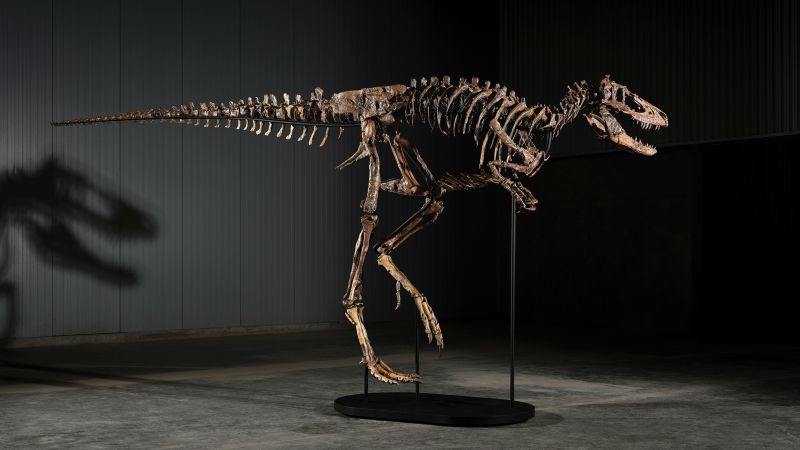
Healfromzero.com – Rare Nanotyrannus sells at auction for $47.3 million, making the skeleton known as Jodi the second most valuable fossil ever sold. The New York sale drew six bidders during a 12-minute contest and greatly exceeded the pre-auction estimate of $6 million to $9 million.
Jodi is a remarkably complete skeleton of Nanotyrannus, a smaller tyrannosaur whose scientific classification has been debated for decades. The result falls just short of the fossil-auction record set by Gus, an unusually complete Tyrannosaurus rex skeleton that sold for $50.1 million in July.
Why the Jodi fossil is so rare
Only three relatively complete Nanotyrannus skeletons are known to science. Jodi stands 9.6 feet tall and measures 19.6 feet long, with 191 bone elements and a skull described as virtually complete. Its bone development and proportions suggest it was an adult animal.
That detail matters because scientists have long argued over whether Nanotyrannus was a distinct dinosaur or a juvenile T. rex. More recent research has supported the view that it was a separate species, increasing the scientific importance of complete specimens such as Jodi.
Rare Nanotyrannus sells at auction at a moment when well-preserved tyrannosaur fossils are drawing exceptional interest from collectors, museums and researchers. Yet a fossil’s commercial value does not always reflect its research value, especially when access to a specimen is uncertain.
Montana discovery and concerns about private ownership
Montana rancher Jodi Pierson discovered the skeleton in 2019, and commercial paleontologist Clayton Phipps excavated it. The fossil came from the Hell Creek Formation, which stretches across Montana, Wyoming, North Dakota and South Dakota and is one of North America’s most important Late Cretaceous fossil regions.
The Hell Creek Formation has produced other important Nanotyrannus material. The specimen called Jane is displayed at the Burpee Museum of Natural History in Rockford, Illinois. The Dueling Dinosaurs fossil, found by Phipps in 2006, includes a Triceratops and a small tyrannosaur now identified as Nanotyrannus; it is held by the North Carolina Museum of Natural Sciences in Raleigh.
Some missing portions of Jodi’s skeleton were recreated using custom 3D printing and sculpting. The auction also included rights allowing the unidentified buyer to produce and sell replicas for museums or private collectors.
“We’ve really just found out that Nanotyrannus is real, and now one of the best skeletons is about to be sold to the highest bidder,” said Steve Brusatte, a professor of paleontology and evolution at the University of Edinburgh.
Brusatte said he feared the fossil could disappear into a private collection rather than remain available for public display and scientific study. David Hone, a paleontologist and reader in zoology at Queen Mary University of London, also said the price was much higher than he expected.
“It does feel like this is a bubble of prices on dinosaurs which must burst at some point, they can’t keep rising forever,” Hone said.
FAQ: Jodi, Nanotyrannus and the record-setting fossil sale
Who bought the Nanotyrannus skeleton?
The buyer of Jodi was not identified publicly. Rare Nanotyrannus sells at auction to an unnamed purchaser, leaving scientists uncertain about whether the specimen will be accessible for research or public viewing.
Where was the Jodi fossil found?
Jodi was discovered in Montana’s Hell Creek Formation, a major U.S. fossil region known for dinosaurs that lived near the end of the Cretaceous period.
Is Nanotyrannus the same as a young T. rex?
The question remains important in paleontology. Some scientists previously considered Nanotyrannus a juvenile Tyrannosaurus rex, while more recent research has increasingly supported its recognition as a separate dinosaur species.