Inside the study for a remedy to fight Congo’s deadliest Ebola outbreak

Daftar Isi
Experimental Ebola pill trial begins in eastern Congo as outbreak spreads
Healfromzero.com – More than 250 people in eastern Congo have joined a clinical trial examining whether an experimental antiviral pill can prevent Ebola after exposure to the virus. The effort comes during the country’s most severe Ebola outbreak, which has already caused at least 8,300 confirmed infections and 4,000 deaths since it was declared in mid-May.
The outbreak began in eastern Congo and has now reached seven provinces. Health authorities continue to face major obstacles in identifying exposed people quickly enough to monitor them and limit further transmission.
Researchers are testing obeldesivir, an experimental drug made by Gilead. The pill is intended for people who may have encountered the Ebola virus but have not developed symptoms. This strategy, known as post-exposure prophylaxis, or PEP, aims to stop illness before it begins.
A trial focused on Bundibugyo virus
The study is being conducted in Ituri province, the center of the current emergency. It targets the Bundibugyo virus, the strain driving this outbreak. Unlike other forms of Ebola, Bundibugyo currently has no approved vaccine or treatment specifically designed for it.
ALIMA, a medical nonprofit coordinating the trial, hopes to enroll nearly 1,000 people. Eligible participants must be at least 12 years old, have had contact with a confirmed Ebola patient within the previous five days, and show no symptoms when they enter the study.
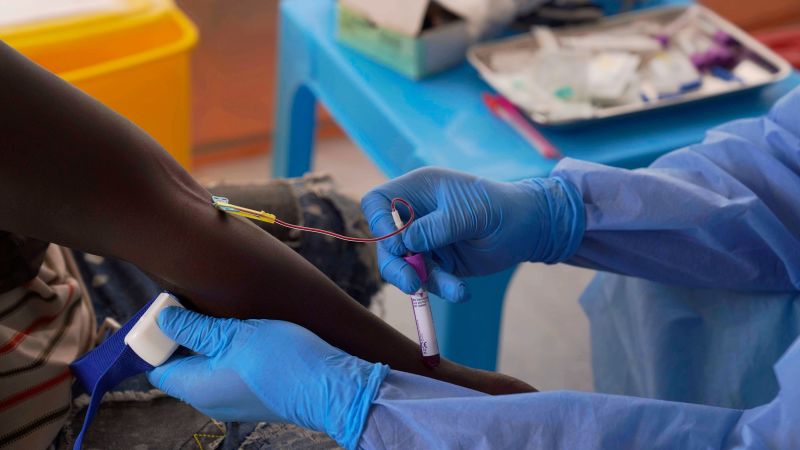
Half of the participants will receive obeldesivir and half will receive a placebo. Researchers will observe participants face-to-face each day for 21 days, the period in which symptoms may emerge following exposure. A final telephone follow-up is planned after 42 days.
People who become ill while enrolled will be offered supportive medical care immediately. Early treatment can make an important difference for Ebola patients by addressing symptoms and complications as soon as possible.
Dr. Godefroid Basara, who is involved in the trial, said the close monitoring is an essential part of the research. It also gives health workers a chance to identify illness rapidly if symptoms begin.
Families facing fear after exposure
The people taking part include health workers and relatives of Ebola patients, groups that may face especially high exposure risks. Several participants asked not to be identified because of the sensitive circumstances surrounding the outbreak and the medical research protocol.
One participant entered the study in August after her husband tested positive. She had cared for him directly and worried that contact with him, including exposure to his vomit, might have put her and other relatives in danger.
“I realized that if I even touched my husband — and I did touch him, his vomit, everything — (it meant that) I was a direct contact. I could have also passed on this contagious disease. I could have been contaminated,” she said.
She said that no one in her household had developed symptoms so far. The participant had seen other families affected after a single case led to illness throughout a home, underscoring why prevention after exposure could be so valuable.
Ebola is transmitted after an infected person begins showing symptoms. For those who have been exposed, the waiting period can be frightening, particularly when a family member is already sick or has died.
Another participant said two relatives had contracted Ebola and one had died.
“This disease is killing. It’s better to take precautions,” he said.
Why speed and contact tracing matter
The trial depends on reaching people soon after possible exposure. That requirement places added pressure on contact tracing, the work of identifying people who may have been near a confirmed patient and assessing their risk.
Finding those contacts has been difficult in Congo as the outbreak has expanded rapidly. A preventive pill could offer a new tool if it can be delivered in the narrow window before symptoms begin.
Dr. Guilavogui Jean Paul Yassa, ALIMA’s research coordinator, said the approach differs from both vaccination and treatment for established illness.
“It differs from a vaccine, which may take days or weeks to provide protection. It is also different from curative treatment because it is intended for people who are not yet showing symptoms,” Yassa said.
That distinction is central to the study. A vaccine prepares the immune system for future protection, while treatment is given after illness appears. Post-exposure prevention seeks to interrupt the process between contact with the virus and the onset of disease.
Emotional strain can interrupt participation
Dr. Jacques Zawadi, an investigating physician working with ALIMA at the trial center, said many people have welcomed the chance to participate. Reaching residents who live far from the facility, however, has made enrollment more difficult.
Grief can also disrupt the research. Participants may learn during the 21-day monitoring period that a relative has died, making it harder for them to continue returning to the center.
“This is the biggest challenge we face. When a person is emotionally affected, it is not easy to reason with them and ensure they return to the study,” Zawadi said.
The project also involves Congo’s National Institute of Biomedical Research and ANRS Emerging Infectious Diseases in France. Their work is taking place alongside other efforts to find protection against the virus responsible for this outbreak.
Health workers in Congo have also begun receiving Ervebo, a vaccine that proved effective in earlier Ebola outbreaks caused by a different and more common virus. Authorities believe Ervebo may provide some degree of protection against Bundibugyo, though research is still underway to determine whether it can prevent illness from this strain.
For communities confronting a fast-moving outbreak, the obeldesivir study represents more than a laboratory question. If the pill works, it could help protect people during the anxious days after exposure and potentially reduce the chain of infections that has driven the crisis across eastern Congo.
Related Reading
Frequently Asked Questions
What is Inside the study for a remedy?
Inside the study for a remedy is the main topic of this guide. The article explains the context, practical details, and next steps readers should understand.
Why does Inside the study for a remedy matter?
Inside the study for a remedy matters because readers are looking for a useful answer, not just a short summary. Good content should match search intent and help them decide what to do next.