Nigel Farage wins election in which his main rival was a trash can

Daftar Isi
Farage Secures Clacton Seat Despite Unconventional Opposition
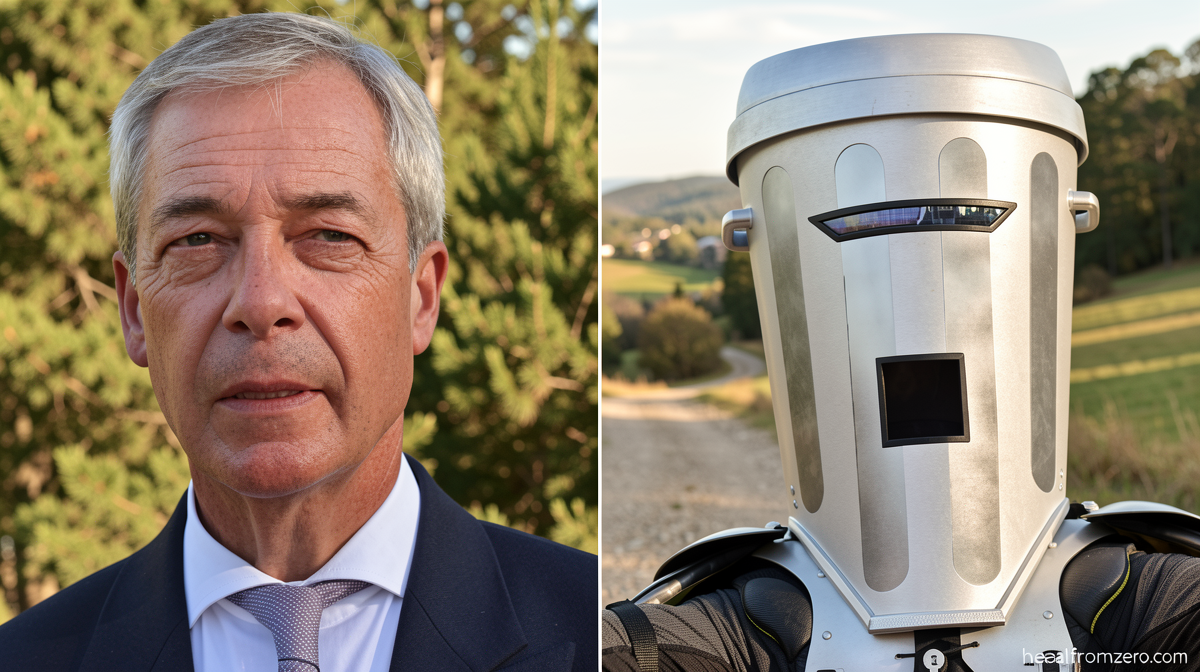
Healfromzero.com – Nigel Farage has successfully retained his parliamentary position following a special election that he personally initiated, navigating through a contest where most established political parties chose to boycott. The result ensures the Reform UK leader remains in Westminster, with his most prominent challenger being a comedian portraying a binocular-wearing trash can character. The populist hard-right politician secured re-election with considerable ease, accumulating 22,239 votes—surpassing his 2024 general election tally by approximately one thousand ballots. His primary opponent, Count Binface, who describes himself as an intergalactic space warrior, delivered a respectable performance with 9,455 votes. This outcome demonstrates substantial anti-Farage sentiment even within one of Britain’s most conservative constituencies.
A Self-Imposed Test of Public Confidence
Farage, widely recognized as the nation’s foremost anti-immigration campaigner and a key architect of Brexit, celebrated what he termed an overwhelming victory. He shared his reaction on social media platform X, stating simply: “The result in Clacton speaks for itself.” The former MP had voluntarily stepped down from parliament, thereby triggering the by-election, following intense examination of his financial arrangements. This scrutiny prompted an inquiry by the parliamentary standards committee, which had been temporarily suspended during the election period and is now set to continue its work.
Unusual Absence from Victory Declaration
In a departure from tradition, Farage declined to attend the official count declaration. He attributed this decision to police warnings regarding potential disruptions to the event. Essex Police clarified that there were “no incidents or issues,” emphasizing that attendance remained a matter for “individuals and their security teams.” Such non-attendance by by-election winners is exceptionally rare. Historical precedent exists only with Bobby Sands, the Irish Republican Army member elected as an MP in 1981 while imprisoned and undertaking a hunger strike. Count Binface, ever the character, posted his own reaction on X: “I came first in the Clacton by-election! Of the candidates who bothered to turn up for the results.”
Financial Burden and Political Headwinds
Farage had positioned this election as a direct appeal to his constituents, framing it as a confrontation with the political establishment. “I’ve decided the people of Clacton should be the judges of my actions,” he explained when announcing the by-election. However, the spectacle quickly attracted mockery, with prominent British journalists including Jon Sopel characterizing it as a “circus.” The contest featured 33 novelty and fringe candidates challenging Farage, while concerns regarding Reform UK’s financial arrangements persist. The decision to hold such an election carries significant financial implications. The cost is projected at approximately £250,000 ($338,000), which the public is legally obligated to cover despite Farage’s assertions that Reform would absorb the expenses.
Challenges on Multiple Fronts
Beyond the immediate election results, Farage confronts several mounting challenges. His traditional voter coalition shows signs of fragmentation, while Britain’s new center-left prime minister, Andy Burnham, presents a more formidable adversary than previously encountered. These obstacles represent unfamiliar territory for Reform UK, which had enjoyed considerable success in national opinion polls and achieved historic gains in local elections. Should the ongoing parliamentary investigation conclude that Farage violated established guidelines, this could initiate proceedings potentially leading to another by-election—one in which other major parties would likely participate.
The Right-Flank Challenge
As Farage navigates this electoral cycle, his grip on his voter base appears to be weakening. Reform faces competition from its right flank through Restore Britain, a newly established party founded by former Reform MP Rupert Lowe. Lowe, who has maintained a longstanding rivalry with Farage, was expelled from the parent party last year and subsequently launched his own organization, with encouragement from American billionaire Elon Musk. Lowe has now attempted to forge an alliance with Farage, contingent upon the latter accepting certain of Restore Britain’s more radical policies. Farage has thus far shown reluctance to reconcile. Tim Bale, a professor at Queen Mary University of London specializing in right-wing politics, provided analysis to CNN: “A pact would be tricky because Restore’s policies are so extreme that adopting them would make Reform less attractive to voters who aren’t really into the whole far-right package.”
A Changing Political Landscape
All developments occur against the backdrop of a new national government. Labour leader Burnham enjoys greater popularity than his predecessor Keir Starmer and has already demonstrated his capacity to challenge Reform during his successful parliamentary return earlier this summer. In this particular by-election, Farage has demonstrated his ability to defeat an intergalactic space warrior—but the broader political challenges he faces may prove more difficult to overcome.
Related Reading
Frequently Asked Questions
What is Nigel Farage wins election in which?
Nigel Farage wins election in which is the main topic of this guide. The article explains the context, practical details, and next steps readers should understand.
Why does Nigel Farage wins election in which matter?
Nigel Farage wins election in which matters because readers are looking for a useful answer, not just a short summary. Good content should match search intent and help them decide what to do next.