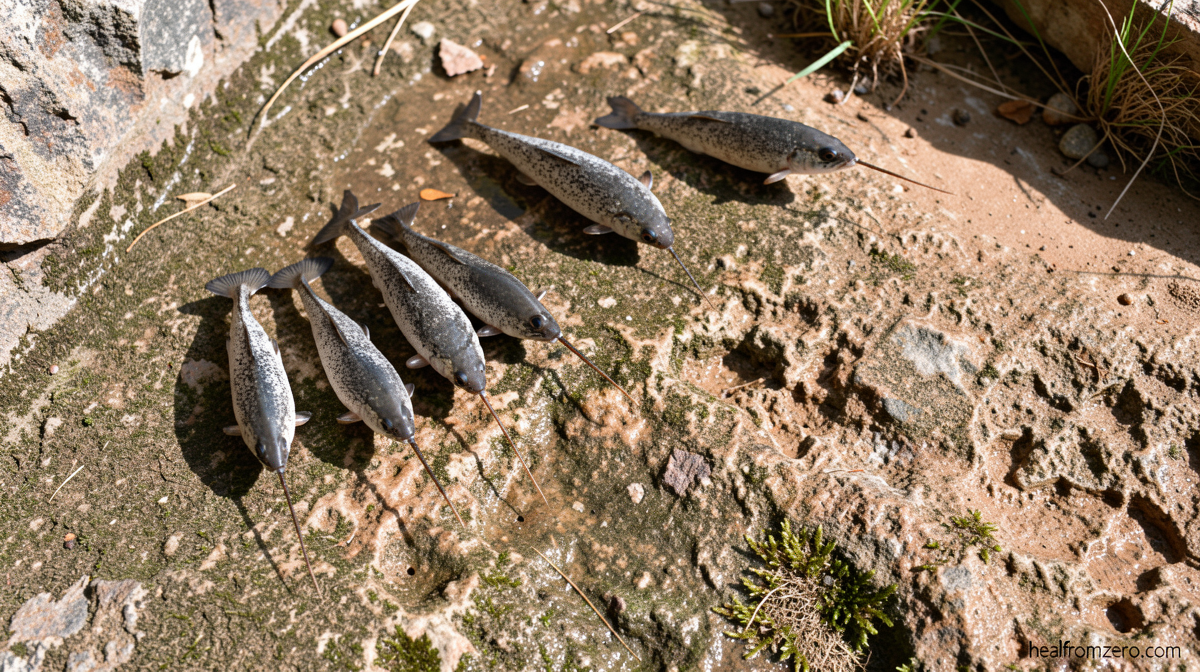
Scientists attached transmitters to narwhals in the Arctic. The data they brought back was alarming

Daftar Isi
Warm Atlantic Water Is Penetrating Deep Into Greenland’s Fjords, Accelerating Glacier Collapse
Healfromzero.com – Relatively warm, salt-laden seawater originating from the Atlantic Ocean has been detected flowing more than 180 miles into the vast fjord network along East Greenland’s coast — a distance that places it directly at the base of marine-terminating glaciers, where it is actively undercutting and melting ice from below. The discovery, drawn from three years of continuous ocean measurements collected by six instrumented narwhals, paints a picture of accelerating ice loss in one of the most remote and poorly monitored stretches of the Arctic.
The findings confirm what climate modelers have long warned about: the process known as “Atlantification” — the progressive intrusion of warmer, saltier Atlantic water into Arctic seas — is not a slow, distant threat. It is already reaching the very fronts of glaciers that drain the Greenland ice sheet into the ocean, and it is doing so with enough force to speed up their retreat.
What the Narwhal Data Revealed
Between 2017 and 2020, the six tagged animals generated more than 2,000 discrete observations of water temperature and salinity across the East Greenland fjord system, the largest such system on Earth. Researchers merged these readings with historical records from the World Ocean Database, the bulk of which were gathered by research vessels over many decades. The combined dataset exposed a clear long-term trend: progressively warmer Atlantic-origin water pushing straight toward glacier termini, where it erodes the submerged base of the ice and destabilizes the entire structure.
“The findings are very concerning, as they indicate the rapid melting of the marine-terminating glaciers,” said Eric Achterberg, a professor at the GEOMAR Helmholtz Centre for Ocean Research Kiel in Germany, who was not part of the research team.
Achterberg emphasized that the new measurements reinforce an already-established trajectory of ocean warming in the region, adding high-resolution, year-round detail that ship-based surveys simply cannot provide.
Why Narwhals, and Why Now
East Greenland’s coastline is a labyrinth of deep, ice-choked fjords that make conventional oceanographic work extraordinarily difficult. Vessels require costly icebreakers to navigate unpredictable pack ice, and winter conditions shut down ship operations entirely. The region has therefore remained one of the most data-poor areas in the global ocean, despite its outsized role in planetary climate.
Narwhals, by contrast, navigate those same waters with ease throughout every season. They dive to depths approaching 6,000 feet, effectively sampling the full vertical water column from surface to abyss. They also return repeatedly to familiar feeding and resting grounds, which means the same locations can be monitored over and over again.
“We can sit in front of our computers and the narwhals are swimming around in the icy waters in darkness,” explained Mads Peter Heide-Jørgensen, a study author and professor at the Greenland Institute of Natural Resources.
The tagging process itself was brief and low-impact. Local hunters captured the animals and guided them into nets; scientists then attached compact satellite transmitters weighing less than a pound. Each unit was engineered to record temperature and salinity continuously over extended periods and relay the data via satellite link.
“We developed a smaller transmitter that could reliably collect temperature and salinity for a long time and transmit that through a satellite,” Heide-Jørgensen said. “It doesn’t harm them in any way.”
Heide-Jørgensen stressed the urgency of filling the observational gap: “It’s a very understudied region … so we needed more data.” He also framed the broader significance of the location.
“In many ways, East Greenland is a bellwether for the climate changes we can expect in the North Atlantic,” he said.
The Broader Climate Stakes
The East Greenland fjords sit at a critical juncture in the Atlantic Meridional Overturning Circulation (AMOC), the vast conveyor-belt system of ocean currents that redistributes heat, freshwater, and nutrients across the North Atlantic and profoundly shapes weather patterns on both sides of the Atlantic. Cold, dense polar water flows southward from this region, feeding the overturning loop. If warming disrupts that flow — by melting freshwater into the ocean or by altering the temperature and salinity gradients that drive the circulation — the consequences would be severe and unevenly distributed: accelerated sea-level rise along the eastern seaboard of the United States, prolonged cold snaps across northern Europe, and intensified drought across parts of Africa.
The narwhal-derived winter data are particularly valuable because no ship can operate in these waters during the frozen months. As Achterberg noted, the study’s winter observations are “unique” and fill a gap that decades of ship-based campaigns have been unable to close. He described the overall approach as “unique and elegant.”
A New Benchmark for Ocean Monitoring
The sheer volume of data produced in just three years dwarfs what human crews managed to accumulate over more than a century of intermittent surveys. Helen Coxall, a professor of marine micropaleontology at Stockholm University and also unaffiliated with the study, put the comparison in stark terms.
“Close to the same number of analyses in three years that humans collected in the past 130 years,” Coxall said.
For a region whose ocean state has been largely invisible to science until now, the narwhal-borne dataset represents a step change in observational capability. It also delivers an uncomfortable message: the warm Atlantic water that climate projections predicted would eventually reach these fjords is already there, already at work, and already reshaping the ice.
Related Reading
Frequently Asked Questions
What is Scientists attached transmitters to narwhals?
Scientists attached transmitters to narwhals is the main topic of this guide. The article explains the context, practical details, and next steps readers should understand.
Why does Scientists attached transmitters to narwhals matter?
Scientists attached transmitters to narwhals matters because readers are looking for a useful answer, not just a short summary. Good content should match search intent and help them decide what to do next.