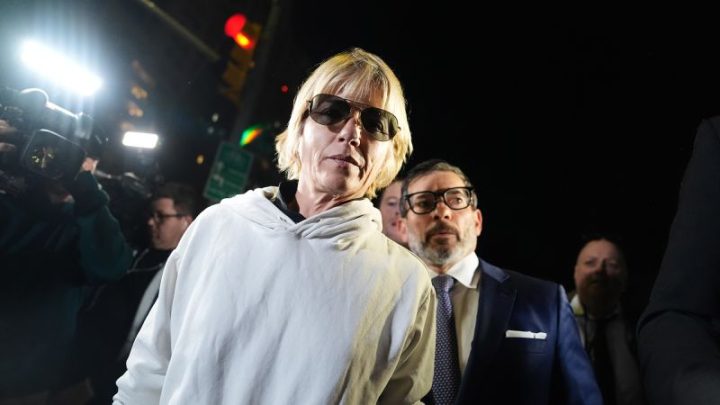
Nathan Fielder’s movie on Elizabeth Holmes absolutely lives up to the hype


Daftar Isi
Nathan Fielder’s Elizabeth Holmes Documentary Turns Access Into a Test of Truth
Healfromzero.com – Elizabeth Holmes spent the final days before entering federal prison preparing to remain visible. In “You Can See Everything,” the new documentary directed by Nathan Fielder and Lance Oppenheim, the former Theranos founder sits for more than 200 camera poses and digital scans designed to preserve her likeness for use in video, holograms and artificial intelligence.
The project is presented as a practical move as Holmes and her partner, William “Billy” Evans, pursue a healthcare startup they call Theranos 2.0. A digital version of Holmes could potentially be used for presentations while she is incarcerated. But the filming of that process also exposes an obvious emotional conflict: Holmes breaks down while discussing her past relationship with public exposure.
“I have a weird history with being on camera,”
That admission gives the documentary its central tension. Holmes is both an unusually visible public figure and someone whose identity, credibility and self-presentation have been relentlessly questioned. Fielder and Oppenheim use their exceptional access to examine what can be known about a person whose public persona has always appeared carefully constructed.
A filmmaker and subject built for uncertainty
Fielder’s earlier work, including “Nathan for You” and “The Rehearsal,” established his fascination with elaborate plans, social discomfort and the unstable line between performance and reality. He often places himself inside complicated situations, acting at once as a composed observer and an agent of disruption. That sensibility makes Holmes an unusually fitting subject.
In “You Can See Everything,” she seems to present multiple possible versions of herself. Evans characterizes her as simply unusual. Her father appears to see her as someone harmed by the men around her. A striking sequence involving Holmes and Abbott and Costello’s “Who’s On First” routine raises questions about how she processes language and other people’s perceptions. The film leaves viewers to consider whether these interpretations clarify her conduct or merely create further uncertainty.
Another possibility remains unavoidable: that Holmes is a habitual liar who has absorbed her own inventions so completely that she can no longer separate them from reality. Fielder at one point compares her to a magician and wonders whether she may be extraordinarily manipulative. The documentary does not offer an easy resolution, and its refusal to settle the question becomes part of its force.
“The world believes a reality about me that isn’t true. So what is the reality?”
Holmes’ question hangs over the entire film. It is not merely a statement about her criminal case or the collapse of Theranos; it is also a challenge directed at the audience. When a subject has spent years shaping a narrative, every confession, explanation and emotional display can become difficult to evaluate.
Intimacy without comfort
The filmmakers’ access is unusually broad. The documentary follows Holmes and her family shortly before her incarceration, and at one point even shows Evans nude in the shower. Such moments do not necessarily provide straightforward truth. Instead, they make the viewer aware of the discomfort created when private life becomes evidence in a film about deception, sympathy and public spectacle.
Visually, “You Can See Everything” is described through contrasts. Its images can be beautiful, yet its close scrutiny is often harsh. Extreme close-ups capture sweat, wrinkles, blemishes and other details that conventional documentaries might smooth away. Fielder and Holmes are filmed with the kind of attention that makes them seem less like polished public figures than people under examination.
The production also keeps its own artificiality visible. Cameras, crew members and boom microphones frequently remain in frame. This approach fits Fielder’s long-standing interest in exposing the machinery behind a supposedly natural moment. The result deliberately unsettles distinctions between observation and reconstruction, between recorded fact and staged experience.
The history behind the film
Holmes founded Theranos, the blood-testing company whose failure became one of the most prominent corporate fraud stories in recent years. In 2022, she was convicted of defrauding investors and received a prison sentence of more than 11 years. She began serving that sentence in 2023.
ABC News has said Holmes has been approved for transfer to a halfway house in 2027. That expected transition adds another layer to the timing of the documentary, which arrives while public interest in Holmes and the future of her life after prison remains intense.
“You Can See Everything” was made secretly and announced through a surprise trailer released last month. Its early response has been unusually enthusiastic, with some critics calling it the year’s best film and others considering whether it could become the first documentary nominated for the Academy Award for best picture.
Those expectations are substantial, but the film’s appeal appears to rest on more than novelty. By pairing Fielder’s interest in constructed realities with Holmes’ famously contested image, the documentary turns a familiar public figure into a difficult and unsettling subject. Rather than promising a definitive explanation, it asks whether any image—human, recorded or digitally replicated—can fully reveal the person behind it.
Related Reading
Frequently Asked Questions
What is Nathan Fielder s movie on Elizabeth?
Nathan Fielder s movie on Elizabeth is the main topic of this guide. The article explains the context, practical details, and next steps readers should understand.
Why does Nathan Fielder s movie on Elizabeth matter?
Nathan Fielder s movie on Elizabeth matters because readers are looking for a useful answer, not just a short summary. Good content should match search intent and help them decide what to do next.