US airman arrested at Capitol after calling for Trump’s impeachment is detained again

Daftar Isi
Air Force Major Detained Again After Capitol Impeachment Speech
Healfromzero.com – Major Jason Watson, the active-duty Air Force officer who drew national attention last month by demanding the impeachment of President Donald Trump from the steps of the US Capitol, has been placed in pretrial confinement once more. The detention came just days after Watson delivered pointed criticism of the president in a televised interview, underscoring how quickly military discipline mechanisms can follow public dissent from within the ranks.
A US Air Force spokesperson confirmed on Tuesday that Watson was “ordered into pretrial confinement” following what the service described as probable cause for continued misconduct. As of Wednesday evening, no formal charges had been filed, though the spokesperson noted the matter remained under active investigation. Watson is being held at a county detention facility in Maryland under a military hold, per the public information officer at that center. The specific charges he may ultimately face have not been made public.
The Uniform Dispute That Triggered the Second Detention
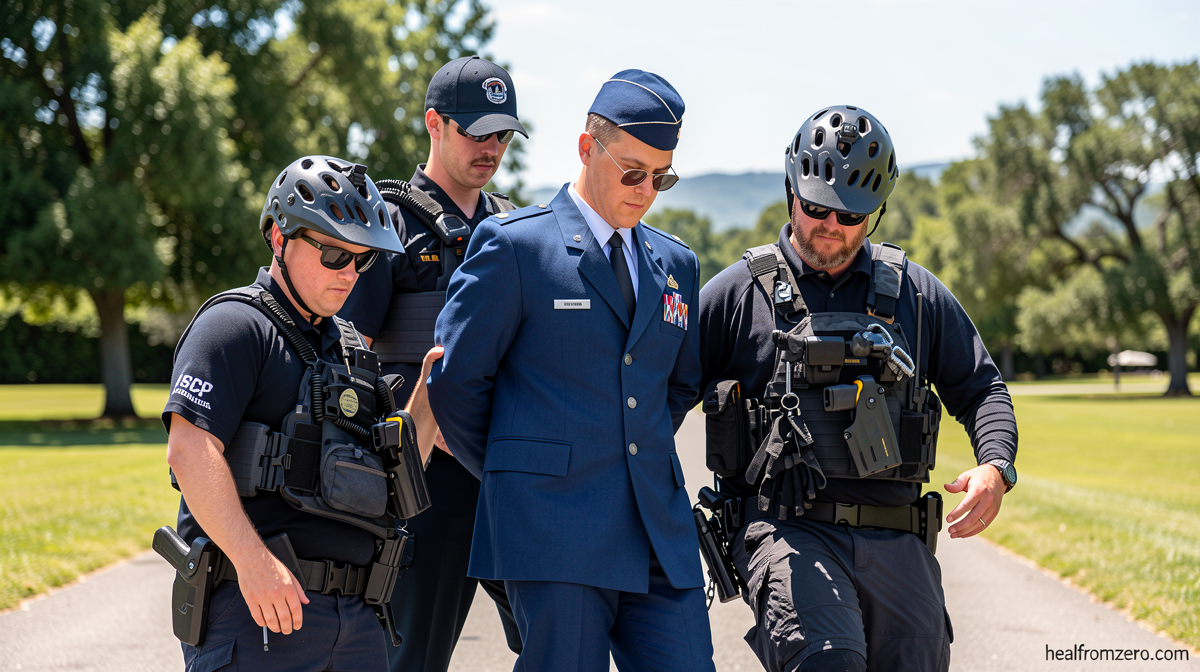
Watson’s attorney, Chris Mutimer, explained that the major was on duty the day after his interview when the situation escalated. Through legal counsel, Watson informed his chain of command that he would no longer wear his uniform while working. Command responded by ordering him to put it back on. Within roughly twenty minutes of that exchange, Watson was arrested and transported to a county jail.
“While he was at work he, through counsel, informed his chain of command that he would no longer be wearing his uniform,” Mutimer said. “Shortly after that, he was told he needed to put his uniform on. Within about 20 minutes, and my understanding is around 330, he was then arrested and he was brought to a county jail.”
Mutimer indicated the defense anticipates charges under Article 88 of the Uniform Code of Military Justice — which covers contemptuous words directed at officers — or Article 92, covering failure to obey orders, potentially tied to the uniform refusal.
“He expected this,” the attorney said. “He expected to be arrested.”
The Air Force Response
In a written statement issued Wednesday, the Air Force spokesperson framed the detention within the broader legal architecture governing service members.
“Military members are required to comply with the Uniform Code of Military Justice and all applicable regulations,” the spokesperson said. “Based on probable cause to support allegations of continued misconduct, Maj. Watson was ordered into pretrial confinement on Aug. 18, 2026. Maj. Watson is presumed innocent and will be afforded all rights under Rule for Courts-Martial 305 as his pretrial confinement is reviewed.”
The spokesperson added that Watson’s personal remarks do not represent the views or policies of the Department of the Air Force. The service has been asked to provide further details on the investigation’s scope and timeline.
Background: The Capitol Steps Arrest
The current detention is the latest chapter in a dispute that began on July 1, when Watson, wearing his full uniform, delivered a speech on the steps of the House chamber calling for the impeachment and removal of both President Trump and Vice President JD Vance. US Capitol Police explained at the time that members of the public may not demonstrate on the House steps unless accompanied by a member of Congress. Watson had been “escorted” to the steps by a member of Congress, who then departed the area before the speech began, police said.
Military regulation prohibits wearing a uniform while participating in political activities. Despite that prohibition, no charges tied to the July 1 demonstration had been filed as of this week, meaning the current detention stems specifically from the uniform-removal incident and its aftermath rather than from the original speech itself.
Watson’s Public Criticism of the Administration
In a Monday interview, Watson renewed his call for Trump’s removal and offered a sweeping indictment of the presidency.
“What is happening with President Trump is not normal. He has failed us,” Watson said. “And not only is he a failure as president, he is flagrantly violating the Constitution, breaking the law, engaged in rampant corruption and is killing Americans. And that is unacceptable to me and it should be unacceptable to all of us.”
Earlier in the week, Watson told reporters he was prepared to accept whatever consequences came with speaking out against the administration.
“We just have to be willing to accept that we can change what is happening in our country if we’re just willing to pay a price for it,” Watson said. “So all that I could do was ask myself what’s the highest price that I’m willing to pay. And this is what I ultimately came up with.”
The Broader Question of Military Dissent
Public dissent from active-duty officers remains uncommon in the United States, largely because the Uniform Code of Military Justice imposes strict limits on speech by service members. Article 88 specifically criminalizes contemptuous words directed at the president, vice president, Congress, and other senior officials, creating a legal environment in which even measured criticism can carry disciplinary consequences. The interplay between that statute, the First Amendment protections that apply to civilians, and the practical realities of chain-of-command authority makes cases like Watson’s a recurring flashpoint in debates over civil-military relations.
Watson’s situation also highlights a tension within military regulation itself: the uniform ban on political activity coexists with the expectation that officers obey lawful orders in the moment. By refusing to re-don his uniform after informing command of his position, Watson placed himself squarely in the crosshairs of Article 92, converting what might have been a protected act of conscience into a potential court-martial matter. Whether prosecutors ultimately pursue charges, and under which article, will determine whether the case becomes a test of how far the military will press discipline against an officer exercising what he frames as civic duty.
As of Wednesday evening, Watson remains in county custody under military hold, awaiting the outcome of the investigation. No trial date, formal indictment, or additional administrative action had been announced.
Related Reading
Frequently Asked Questions
What is US airman arrested at Capitol after?
US airman arrested at Capitol after is the main topic of this guide. The article explains the context, practical details, and next steps readers should understand.
Why does US airman arrested at Capitol after matter?
US airman arrested at Capitol after matters because readers are looking for a useful answer, not just a short summary. Good content should match search intent and help them decide what to do next.