Russian drone slams into major bridge in Kyiv as Germany’s chancellor visits

Daftar Isi
Kyiv bridge attack coincides with German chancellor’s show of support
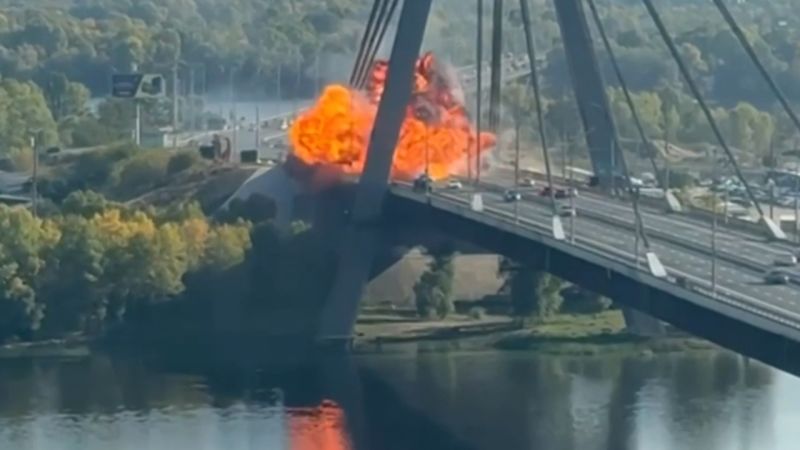
Healfromzero.com – A Russian drone hit Kyiv’s Northern Bridge on Sunday while German Chancellor Friedrich Merz was in the Ukrainian capital for meetings with President Volodymyr Zelensky, underscoring the continuing danger facing the city during Russia’s expanding aerial campaign.
Footage from the incident showed an explosion on the major crossing, followed by a large column of flames and dark smoke. Vehicles were still using the bridge when it was struck. Kyiv Mayor Vitaliy Klitschko said two people were injured.
The attack came during a visit intended to signal Germany’s political, military and economic backing for Ukraine. Merz traveled with Germany’s Minister for Economic Affairs and Energy, Katarina Reiche, despite Russian warnings issued Saturday that visiting officials and dignitaries in Kyiv could not be considered safe amid the ongoing strikes.
“Ukraine is facing decisive weeks ahead,” Merz wrote on X Saturday. “Therefore I have traveled to Kyiv today with the message: You can rely on us.”
A widening focus on Kyiv’s transport links
The Northern Bridge strike was the second attack on that crossing in two days, adding to concerns about the vulnerability of Kyiv’s transport infrastructure. Bridges play an essential role in keeping a large capital connected, allowing residents, emergency responders, supplies and public services to move across the city.
Kyiv’s Southern Bridge has also been under repeated pressure. It was hit five times in less than 24 hours on Thursday and Friday. That crossing is especially significant because it supports both road traffic and the city’s subway network, making damage there a potential disruption to everyday travel as well as broader urban operations.
The attacks highlight how strikes on infrastructure can affect more than a single site. Even when a bridge remains usable after an incident, damage assessments, emergency closures and heightened security can complicate movement for commuters and public authorities. Repeated attacks also force a city to devote resources to repairs and protective measures while maintaining services for residents.
Russia has intensified attacks on Kyiv, placing the capital under continuing pressure. Sunday’s strike illustrated that the threat extends to major civilian infrastructure even as senior foreign leaders visit the city. The presence of moving cars at the time of the blast also emphasized the risks faced by civilians during air attacks.
Defense production and new German assistance
Merz and Zelensky were also working to complete a major defense and industrial partnership between Germany and Ukraine. The planned agreement is expected to cover the production of drones and missiles, an area of growing importance as the war increasingly features long-range attacks and unmanned systems.
German officials said Berlin was expected to provide €1 billion, or about $1.13 billion, in military assistance. A further €350 million, approximately $390 million, was expected for repairs to Ukraine’s damaged energy infrastructure.
The two strands of assistance reflect separate but connected needs. Military support is intended to strengthen Ukraine’s ability to defend itself, while funding for energy repairs addresses the effect of attacks on systems that households, businesses and essential services rely upon. Energy infrastructure has remained a critical concern as damage can have consequences far beyond the immediate target area.
Industrial cooperation on drones and missiles could also deepen the practical relationship between Kyiv and Berlin. For Ukraine, domestic and joint production can be important in a conflict where demand for defensive and strike capabilities remains high. For Germany, the arrangement signals that its support is extending beyond immediate aid toward a longer-term defense partnership.
Growing pressure from Russia’s air campaign
Zelensky has said Ukraine’s requirements for air defense are increasing as Russia escalates its aerial operations. Moscow has used high-speed, jet-powered Shahed-type drones, which can present additional challenges for traditional Ukrainian air-defense systems.
Air defenses are designed to detect, track and intercept incoming threats, but the nature of those threats matters. Faster drones can reduce the time available to respond and may complicate efforts to protect large urban areas and widely distributed infrastructure. Kyiv’s bridges, roads, subway links and energy facilities are all part of the wider challenge of defending a functioning city during sustained attacks.
Sunday’s events brought those pressures into sharp focus. The drone strike injured two people, targeted a prominent crossing and took place as a leading European government representative arrived to demonstrate support. At the same time, the planned defense agreement and aid package pointed to the continuing effort by Ukraine and its partners to combine immediate protection with longer-term resilience.
For Kyiv residents, the attacks on the Northern and Southern bridges are a reminder that the city’s daily transport routes remain exposed to the broader conflict. For Ukraine’s leadership and its international partners, they reinforce the urgency of improving air defense, restoring damaged infrastructure and securing the means to sustain those efforts in the weeks ahead.
Related Reading
Frequently Asked Questions
What is Russian drone slams into major bridge?
Russian drone slams into major bridge is the main topic of this guide. The article explains the context, practical details, and next steps readers should understand.
Why does Russian drone slams into major bridge matter?
Russian drone slams into major bridge matters because readers are looking for a useful answer, not just a short summary. Good content should match search intent and help them decide what to do next.