Google is buying all of Spirit Airlines’ data to feed its AI models

Daftar Isi
Healfromzero.com – Google is buying all of Spirit Airlines’ remaining data — every spreadsheet, every internal memo, every booking record — in a $10 million deal that will feed directly into its artificial intelligence models. If you ever boarded a Spirit flight, checked in online, or corresponded with a Spirit employee, your anonymized interactions are now part of one of the largest corporate data acquisitions in recent airline history.
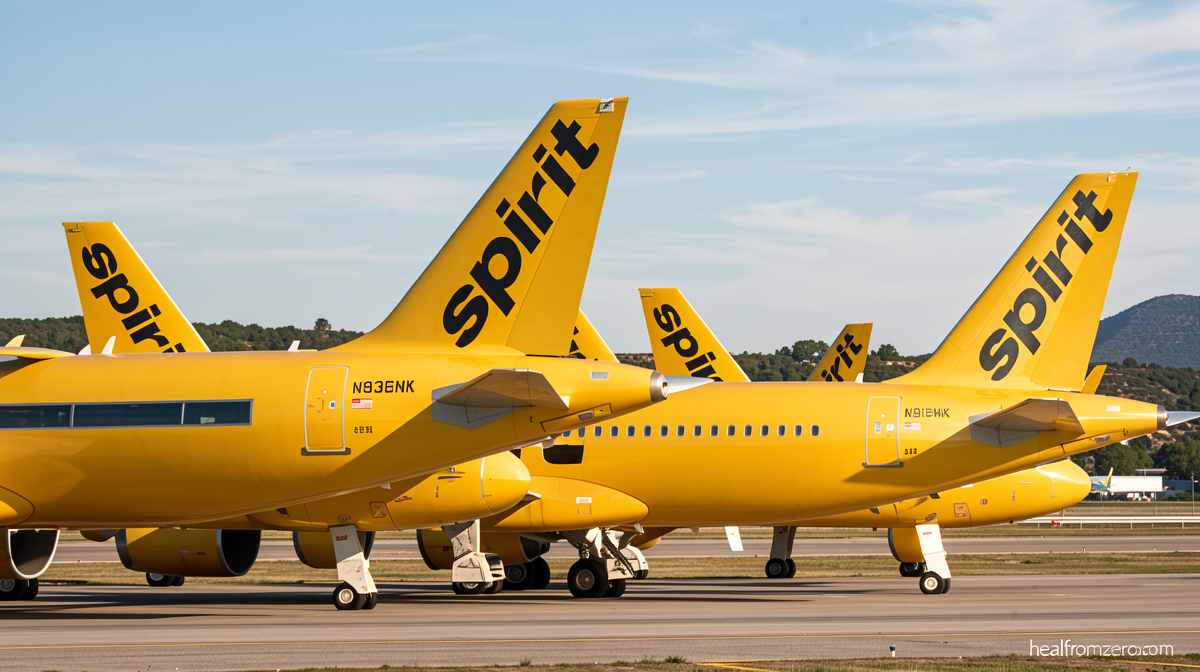
The discount carrier ceased all flight operations in May and has been liquidating its assets piece by piece through a federal bankruptcy proceeding. While jets, ground equipment, and real estate typically dominate those sales, the intangible assets — particularly structured operational data — have drawn unexpected attention from technology buyers.
What Exactly Is Google Acquiring?
Court filings disclosed late Monday that Google agreed to pay $10 million for a comprehensive enterprise dataset spanning Spirit’s entire operational history. The package encompasses internal emails and communications, financial spreadsheets, customer-facing transaction records including ticket bookings and frequent-flyer account activity, and human-resources files covering employee records. Crucially, the data has been scrubbed of any identifiers that could allow individual passengers or staff members to be re-identified, according to the bankruptcy court documents.
“We acquired part of an enterprise dataset from Spirit Airlines, which can be helpful in improving our products and AI models,” a Google spokesperson told CNN, confirming the company will receive no personal information as part of the transaction.
The purchase sits squarely within a broader industry trend. Numerous carriers have publicly stated they are deploying machine-learning systems to optimize fare structures, manage seat inventories, and streamline scheduling decisions. By ingesting a full airline’s operational dataset, Google gains a rare, end-to-end view of how a budget carrier priced routes, managed capacity, and handled customer workflows — information that is difficult to replicate from public filings alone.
Why This Sale Is Unusual — and What Happens Next
Spirit’s collapse marks the first time in roughly 25 years that a major U.S. airline was forced to stop flying entirely rather than being absorbed by a competitor. In most prior airline bankruptcies, a rival carrier purchased the whole operation — data included — and folded it into existing systems. Here, no buyer wanted the airline itself, so the assets are being auctioned individually.
The data sale attracted competing interest. Mercor.io, another AI-focused company, submitted the second-highest bid at $7.5 million. Bankruptcy Judge Sean Lane is scheduled to rule on whether to approve the $10 million transfer at a hearing set for Wednesday. If approved, the transaction will close one of the more unusual chapters in Spirit’s wind-down.
For passengers who flew Spirit in the past, the practical impact is minimal: your name, contact details, and travel history remain protected under the anonymization process described in the court filing. What changes is that the aggregate patterns of millions of bookings, fare adjustments, and operational decisions will now inform how Google builds and tunes its next generation of AI products.
Frequently Asked Questions
Will Google see my personal information? No. The court filing specifies that all personally identifiable information has been removed before the dataset is transferred. Google confirmed it will not receive personal information as part of the purchase.
Does this affect my frequent-flyer miles or past bookings? No. The sale covers the data as a bulk operational dataset for model training. Your account records under any successor entity or consumer-protection framework remain separate from this transaction.
Why would an AI company pay $10 million for airline data? Structured, end-to-end operational data from a real carrier — covering pricing, capacity, scheduling, and customer-service workflows — is scarce and expensive to generate synthetically. A full airline’s historical dataset offers training signal that is difficult to replicate from public sources.
When will the sale be finalized? Judge Sean Lane is expected to rule at a Wednesday hearing. The transaction cannot close until the court grants approval.