Why Saudi Arabia has few options in its conflict with the Houthis

Daftar Isi
Saudi Arabia Faces Costly Choices as Houthi Pressure Grows
Healfromzero.com – Saudi Arabia is confronting a rapidly worsening security challenge in Yemen after the Iran-aligned Houthi movement expanded its reach along the Red Sea coast and attacks disrupted a major oil transport route. Riyadh has signaled that it does not seek a full-scale conflict, but the pace of recent events is narrowing its room to maneuver.
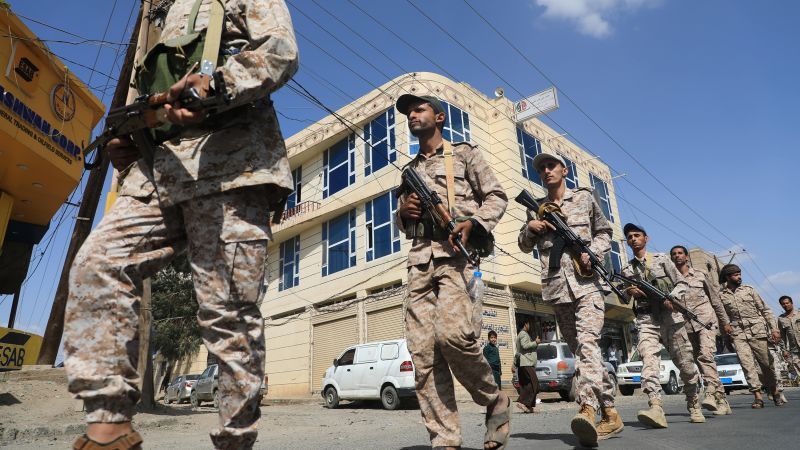
The Houthis captured Perim Island and the port town of Mocha this week, strengthening their position near the Bab al-Mandeb strait. The narrow waterway is one of the world’s most important energy and shipping passages, linking the Red Sea to the Gulf of Aden. Control or disruption around the strait can affect vessels moving between Europe, Asia and the Middle East.
Pressure intensified when Saudi Arabia’s East-West oil pipeline was shut after a drone attack launched from Iraq. No group publicly claimed responsibility. President Donald Trump blamed Tehran, while Iran-backed armed groups are known to operate in Iraq.
The pipeline has become increasingly important for Saudi oil exports because the war with Iran has effectively closed the Strait of Hormuz. Saudi Arabia has used the East-West route to redirect roughly 5 million barrels of crude a day that would otherwise have traveled to tankers in the Persian Gulf. An attack on that infrastructure therefore carries consequences beyond a single military incident.
A widening threat picture
Saudi officials had already expressed concern that Iraqi militias could coordinate with the Houthis in attacks on the kingdom. The latest developments appear to reinforce those fears, suggesting that Riyadh may face pressure from several directions rather than only across its southern border.
Mohammed Al-Basha, a Yemen specialist and risk adviser based in Washington, said the prospect of a major response was growing.
“All signs now point to a large-scale Saudi retaliation, and that likelihood is increasing by the day.”
He argued that the kingdom was approaching a point where it had little practical alternative to responding.
“At this point they don’t have an option.”
Yet retaliation could carry serious risks. Saudi Arabia has a well-equipped modern military and vastly greater financial resources than the Houthi movement, which emerged from Yemen, one of the Arab world’s poorest countries. But years of fighting have shown that military superiority alone has not been enough to remove the group from the battlefield.
The Houthis have developed their combat capabilities and tactics over time, overcoming perceptions that they were merely an irregular force with limited reach. Their ability to strike across borders and threaten strategic maritime areas has made them a harder adversary to contain than their relative resources might suggest.
From Yemen’s civil war to a regional confrontation
Yemen’s current turmoil began in 2014, when the Houthis seized the capital, Sanaa, forcing the internationally recognized government into exile. Saudi Arabia led a military intervention the following year in an effort to push the group back and has continued to support the recognized government.
Saudi Arabia has also maintained a blockade affecting Houthi-controlled parts of northern Yemen. The Houthis say their demands remain centered on ending what they describe as Saudi efforts to isolate those areas through travel and economic restrictions.
Nasr al-Din Amer, who heads the Houthi-run Saba news agency, said Friday that the movement would keep applying pressure until the restrictions were lifted.
“[We will continue] pressuring Saudi Arabia until they break the siege unjustly imposed by the Saudi enemy for 12 years.”
That position points to a continued escalation rather than a quick de-escalation. Although the Houthis are allied with Iran and receive weapons, training and some political influence from Tehran, they also pursue their own goals inside Yemen. Their relationship with Iran does not mean every decision is simply directed from outside the country.
The movement also gained support in parts of the Middle East after launching strikes against Israel following the Gaza war, which followed the Hamas-led October 7 attack on Israel. That broader regional profile has added political weight to a conflict that began as a domestic struggle for control of Yemen.
The limits of Saudi options
Cinzia Bianco, a visiting fellow at the European Council on Foreign Relations, described Saudi Arabia’s choices as severely constrained.
“Saudi Arabia really has limited options in the conflict with the Houthis.”
A large military escalation could demonstrate resolve and attempt to reverse Houthi territorial gains. However, it could also pull Riyadh back into an open-ended conflict resembling the worst years of Yemen’s civil war. That war has inflicted enormous suffering on civilians: about 22 million people, roughly half of Yemen’s population, require humanitarian assistance.
Further military action may also make it more difficult to keep the fighting contained within Yemen. Iran has been at war with the United States since February, and an intensified Saudi-Houthi conflict could become another front in the larger regional confrontation. Strikes involving Iraq, the Red Sea and Saudi energy infrastructure would increase the danger of miscalculation.
For Riyadh, restraint carries its own cost. Allowing the Houthis to consolidate positions near the Bab al-Mandeb or to threaten oil infrastructure could weaken Saudi deterrence and put vital economic interests at greater risk. But an expansive campaign could deepen the humanitarian crisis in Yemen and expose Saudi Arabia to prolonged retaliation.
The kingdom’s next decisions will therefore matter far beyond its border with Yemen. They could shape the security of Red Sea shipping, the reliability of regional energy exports and the chances that an already volatile US-Iran conflict broadens further.
Related Reading
Frequently Asked Questions
What is Why Saudi Arabia has few options?
Why Saudi Arabia has few options is the main topic of this guide. The article explains the context, practical details, and next steps readers should understand.
Why does Why Saudi Arabia has few options matter?
Why Saudi Arabia has few options matters because readers are looking for a useful answer, not just a short summary. Good content should match search intent and help them decide what to do next.