Supreme Court rejects Trump’s plan to limit mail-in voting in midterms

Daftar Isi
Supreme Court Halts Last-Minute Mail Ballot Rule Ahead of Midterms
Healfromzero.com – The Supreme Court has stopped the Trump administration from imposing a new nationwide procedure for mail ballots just weeks before the 2026 midterm elections, delivering a major setback to President Donald Trump’s long-running campaign against voting by mail.
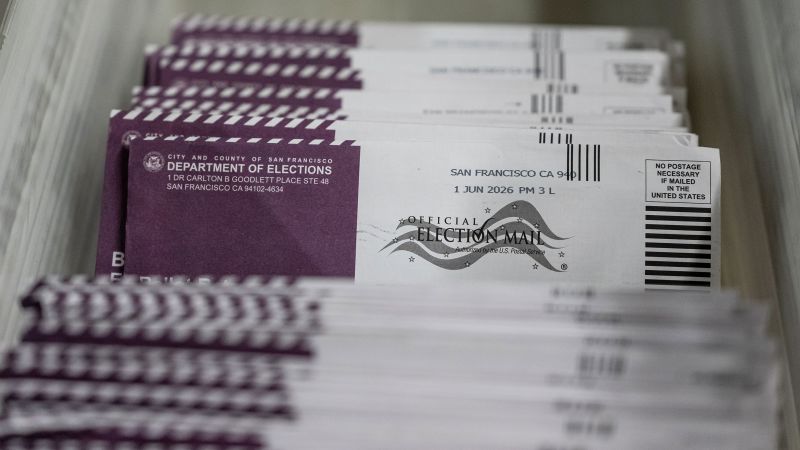
In an unsigned order issued Monday, the court concluded that the administration was unlikely to prevail in its legal challenge. The ruling prevents the US Postal Service from gaining the authority envisioned under the proposal, which could have allowed it to hold back potentially millions of ballots intended for voters.
The brief order did not provide an extensive legal analysis, but its immediate effect is clear: states will not be required to overhaul their mail-ballot systems during the current election cycle. Election administrators from both parties had warned that the proposed changes could disrupt voting operations, confuse voters and create widespread disenfranchisement.
Concerns Over Timing and Implementation
The administration described the postal changes as limited measures designed to strengthen ballot security and ensure that only eligible voters receive mail ballots. Supporters of the policy argued that the federal government has an interest in improving the handling and visibility of election mail.
Opponents, including Democratic-led states, voting-rights organizations and a bipartisan group of election officials, said the rule would be nearly impossible to implement on the proposed timeline. States would have had to submit large volumes of voter information through an online portal that was not yet available. They also would have needed to redesign ballot envelopes that had already been ordered or, in some places, mailed.
For local election offices, those requirements raised practical concerns beyond paperwork. Mail voting involves coordinating voter rolls, ballot production, envelope design, postal delivery schedules, election security procedures and voter communication. Altering those systems after ballots are prepared can increase the risk of administrative mistakes and leave voters unsure about whether their ballots will arrive or be counted.
Justice Brett Kavanaugh, writing separately, said he believed the Postal Service might have authority to adopt the proposal. But he emphasized that state and local officials lacked adequate time to put the rule into practice before the midterms.
“State and local election officials do not have sufficient time to reasonably implement the rule before the elections.”
His concurrence reflected the arguments made by numerous election administrators who said the calendar, rather than only the legal merits, made the policy especially problematic this year. Kavanaugh’s position may also leave open the possibility that the administration could seek similar changes for a later election, when officials would have more time to prepare.
Conservative Dissents
Justices Samuel Alito and Clarence Thomas dissented from the court’s action. Alito argued that the government’s interest in enforcing the rule outweighed the implementation concerns presented by states and voting groups.
“The government has a strong interest in enforcing the rule, and implementing it will also ‘enhance the visibility of Federal Ballot Mail’ in order to better detect election fraud,” Alito wrote.
Alito acknowledged that election officials faced serious logistical problems in making changes so close to the midterms. Still, he said those concerns did not justify blocking the administration’s request.
“That Hail Mary pass is unlikely to be successfully completed here,” Alito wrote. “The Postal Service has broad authority to regulate the mail.”
The divide among the justices illustrates that the dispute was not solely about the mechanics of mail delivery. It also centered on the extent of federal authority over election-related mail and how courts should weigh an administration’s policy goals against the risks of changing election procedures at the last minute.
A Blow to Trump’s Voting Agenda
The decision marks a notable defeat for Trump, who has repeatedly made false claims about widespread fraud involving mail ballots while continuing to vote by mail himself. His administration characterized the new rule as a safeguard, but critics viewed it as an attempt to use the Postal Service to reshape election administration across the country.
States traditionally play the central role in conducting elections, with county and municipal offices often responsible for carrying out many of the details. That decentralized system means a nationwide policy can require substantial preparation, especially when it affects ballot design, voter data and delivery procedures.
A coalition of roughly two dozen Democratic-led states and voting groups challenged the proposal. Their arguments were reinforced by election administrators and former governors from across the political spectrum, who warned the court that sudden changes could undermine orderly voting rather than improve it.
Colorado Secretary of State Jena Griswold, a Democrat, praised the outcome after the order was released.
“Trump’s attempt to sabotage the 2026 elections has failed,” Griswold said.
California Attorney General Rob Bonta, also a Democrat, called the ruling a win for democratic institutions and legal accountability.
“Victory for our democracy and a powerful affirmation of the rule of law.”
What the Ruling Means for Voters
For the 2026 midterms, the ruling means states can continue using the mail-ballot processes already in place rather than rushing to comply with a new federal postal framework. Voters who rely on mail voting will not face the immediate uncertainty that could have accompanied revised envelope rules, delayed ballots or untested data-reporting systems.
The court’s order does not necessarily settle every question about the Postal Service’s authority in future elections. Kavanaugh’s concurrence, along with Alito’s dissent, suggests that a similar policy could be considered differently if introduced with more time for states and local governments to adapt.
For now, however, the justices have signaled that major election-related changes cannot be imposed without careful attention to real-world timing. As midterm preparations continue, election offices will be able to focus on administering the systems voters already expect rather than implementing an untested nationwide rule during the final stages of the election calendar.
Related Reading
Frequently Asked Questions
What is Supreme Court rejects Trump s plan?
Supreme Court rejects Trump s plan is the main topic of this guide. The article explains the context, practical details, and next steps readers should understand.
Why does Supreme Court rejects Trump s plan matter?
Supreme Court rejects Trump s plan matters because readers are looking for a useful answer, not just a short summary. Good content should match search intent and help them decide what to do next.