Trump’s triumphal arch will cause a slew of ‘adverse’ effects, administration admits — but its plans are staying

Trump’s Triumphal Arch Will Scar D.C. Skyline
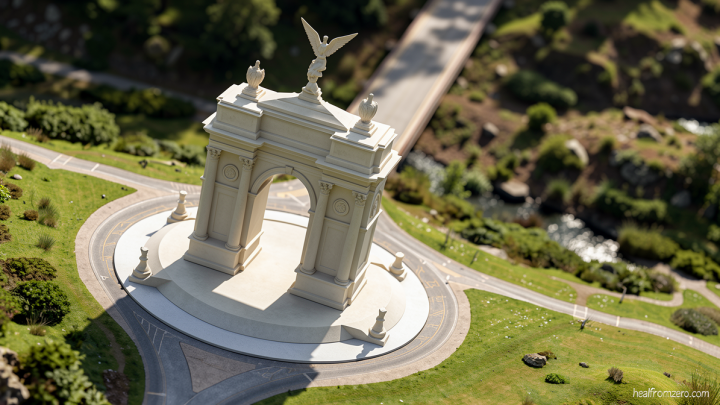
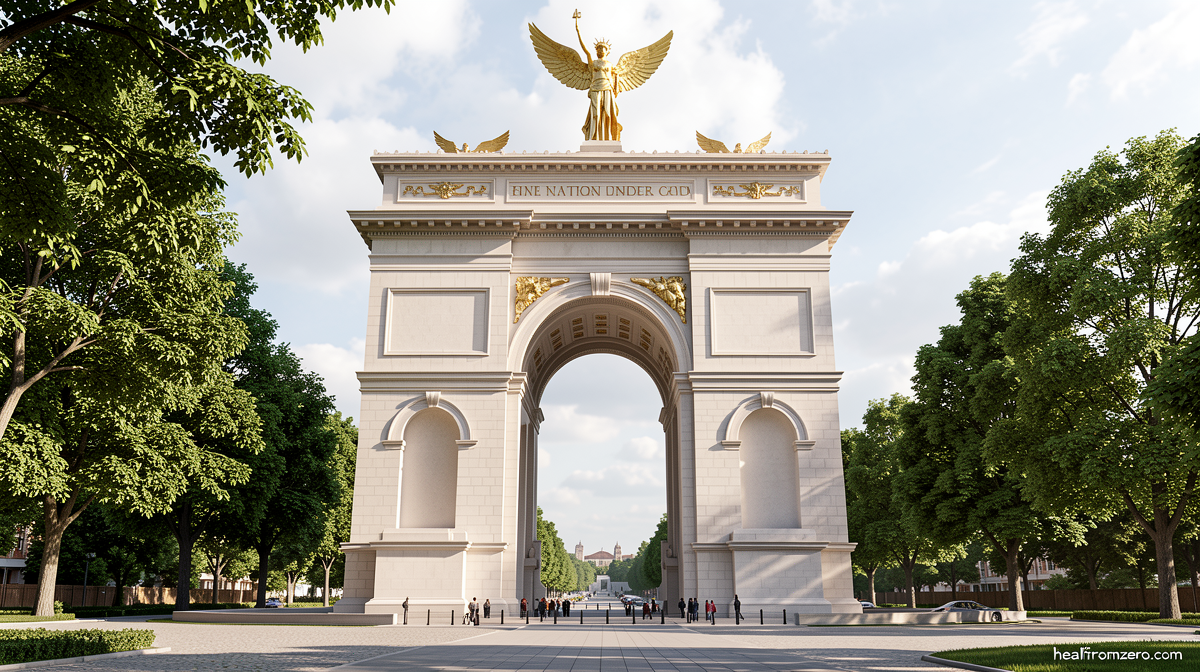
Healfromzero.com – The National Park Service has formally confirmed that Trump’s triumphal arch will inflict measurable harm on dozens of protected historic landmarks along the Potomac River waterfront. The 133-page environmental assessment, released Friday, concedes the 250-foot structure would disrupt sightlines to at least three dozen historical sites. Yet the same document recommends proceeding exactly as planned, placing the monument on Memorial Circle — a narrow traffic island between Washington and Arlington, Virginia — because the project is, in the agency’s words, “inherently location dependent” and “not interchangeable” with any other placement.
The finding arrives amid an active legal challenge questioning whether the president holds authority to reshape one of the nation’s most carefully composed ceremonial landscapes. Veterans’ groups, preservation scholars, and local residents have all raised objections, pointing to threats to memorial corridors, historic sightlines, and unresolved questions about executive power over federal land.
What the Assessment Concedes
The report acknowledges that the arch would break what planners term the “design continuity” of several iconic riverfront settings. Views of neighboring monuments would be altered, with the most severe impacts concentrated on six sites in the immediate vicinity of the proposed structure. Those six include Arlington National Cemetery, the Lincoln Memorial corridor, and Arlington House — the restored home of Robert E. Lee, preserved as a memorial before he departed to command his army into the Civil War.
Once completed, the structure would be visible from the U.S. Capitol, the Georgetown waterfront, and the Pentagon. In practical terms, a building of that scale would insert itself into sightlines that have defined the visual grammar of the capital for over a century.
“Every time the Park Service looks harder at this site — the ceremonial gateway between Washington and Arlington National Cemetery — it finds more historic places this arch would stand in front of,” said Ed Stierli of the National Parks Conservation Association. “Widening that assessment is the right thing to do, and it makes it that much harder to justify a 250-foot arch here.”
The Location Justification and Rejected Alternatives
The report’s central argument for keeping the arch at Memorial Circle rests on a claim that is circular yet legally significant: the very qualities that make the site preservation-sensitive are the same qualities that render it “the historically appropriate location for the undertaking.” Relocating the structure elsewhere, the agency argues, would produce a “materially different commemorative project.” Alternative sites outside the circle are dismissed as “not reasonable avoidance alternatives.”
The agency says it weighed scaling the arch down, relocating it entirely, canceling construction, and removing the proposed statues that would crown the structure. None were adopted. Each, the report concludes, would either produce “greater impacts to historic properties” or fail to satisfy what it calls the “location-dependent purpose of the undertaking.”
As a partial offset, the document proposes mitigation measures including a meadow management program for the adjacent Lady Bird Johnson Park and an interpretive program along the Lincoln-to-Arlington House corridor. Yet the report itself concedes a critical limitation:
“Mitigation measures that document, interpret, or compensate for adverse effects after they occur do not negate an adverse effect finding.”
The question of whether Trump’s triumphal arch will ultimately stand on Memorial Circle now rests with the courts, which are weighing the broader constitutional challenge to presidential authority over the site.
FAQ
Where exactly would the arch be built? Memorial Circle, a small island in the Potomac River directly opposite Arlington National Cemetery and the Lincoln Memorial. The site has long functioned as a ceremonial threshold between two of the country’s most solemn memorial spaces.
How many historic sites would be affected? At least three dozen landmarks would experience some form of impact, with the most severe effects concentrated on six sites in the immediate vicinity of the proposed structure.
Can the arch be moved? The Park Service evaluated alternative locations and concluded they were “not reasonable avoidance alternatives,” arguing that relocation would produce a “materially different commemorative project” that would fail to meet the stated purpose.
What is the current legal status? An ongoing court challenge questions presidential authority over