Roger Federer tells CNN Sports he’s prepared for happy tears at Hall of Fame induction

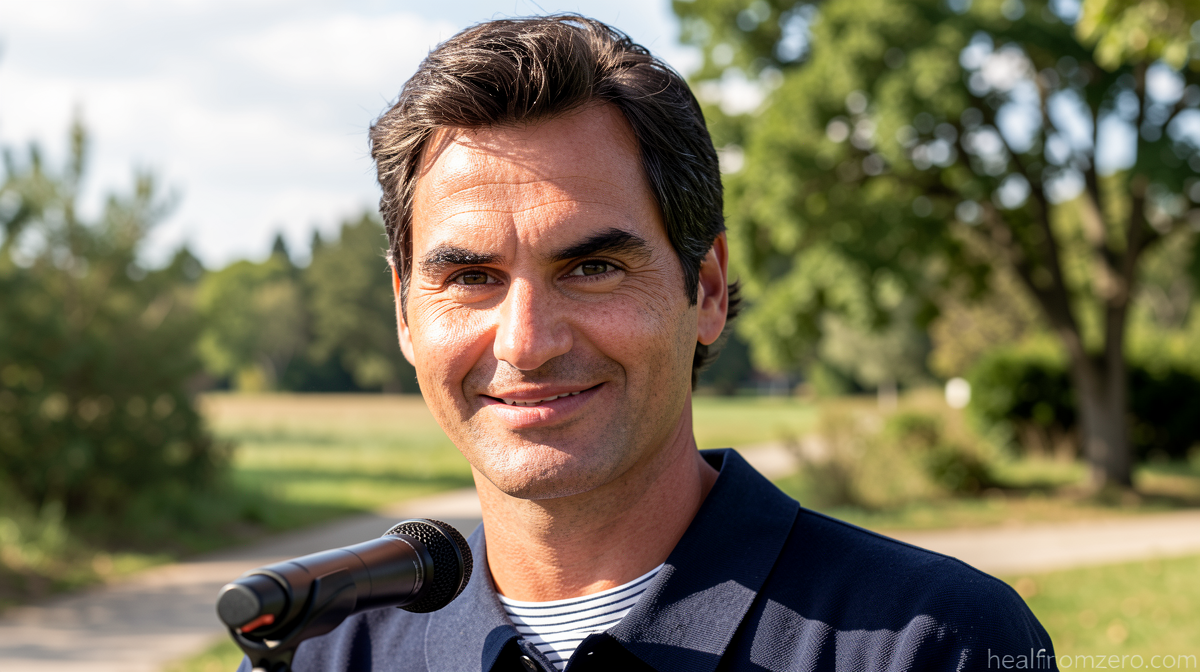
Federer’s Hall of Fame Night: Expecting Happy Tears
Healfromzero.com – Roger Federer tells CNN Sports he is prepared for happy tears when the International Tennis Hall of Fame in Newport, Rhode Island, inducts him this Saturday. The Swiss icon, who collected 20 major singles titles across a two-decade career, will stand before family, former teammates, and decades of fans who watched him reshape the sport. Hours before the ceremony, the 48-year-old spoke openly about what the evening might stir — and conceded the tears may come again.
A History of Unscripted Emotion
Visible feeling on the court has followed him since the very beginning. In 2001, a young player stepped onto Centre Court at Wimbledon for the first time and defeated Pete Sampras, the reigning champion and his personal idol. The aftermath caught even him off guard.
“I go to my knees, (then) I shake hands with Pete and he’s my hero … and these emotions came all over me,” he recalled. “And I was like, ‘What is going on?’ This is not who I am normally.”
That unscripted release became a recurring thread through every subsequent triumph and, ultimately, through his tearful farewell match in 2022. Now, with the Hall of Fame speech looming, he says the convergence of gratitude, family presence, and career retrospection could trigger another wave of feeling.
“If I’m speaking about the game and all the gratitude that I have, and having my entire family there – from my parents to my wife to my four children and my whole team from coaching staff and physios, etc. I think it could hit home very hard,” he said. “If it happens, it will be more memorable for me personally, but I hope I get through the speech without too many hiccups. We’ll see.”
Two Decades of Ceiling-Breaking
The road to Newport was paved over more than twenty years of sustained dominance. By 2004, he had claimed three of the four grand slam singles titles in a single calendar year and climbed to the top of the ATP rankings. He then held the number-one position for 237 consecutive weeks — a span that remains the all-time record in men’s tennis.
The following year saw him win more than 95 percent of his matches. Yet 2006 is widely regarded as his absolute peak: three additional major titles, 12 overall championships, and a season record of 92 wins to 5 losses, translating to a 94.8-percent win rate. Few believed Pete Sampras’ landmark of 14 grand slam titles would ever be surpassed, but the barrier fell at Wimbledon in 2009, and the tally continued climbing until it reached 20.
That total has since been eclipsed by Rafael Nadal and Novak Djokovic, yet among devoted followers his name still anchors the conversation about the greatest player ever to hold a racket. His blend of fluid movement, precise shot-making, and an almost meditative calm under pressure set a standard that subsequent generations have struggled to replicate.
The Myth of Effortless Play
One persistent narrative surrounding his game was that it appeared deceptively simple. In the CNN Sports interview, he pushed back on that framing, explaining how observers misread the physicality behind his strokes.
“It looked like I wasn’t actually hitting the ball so hard,” he recalled how others viewed his style as a youth player. “But it was kind of flying off of my racket with a lot of power. People always thought, like, ‘It’s so simple for you,’ because it looked like elastic. But it wasn’t the case. There was a lot of work and effort put into it.”
The double-edged nature of that perception never escaped him. Losses drew criticism demanding more intensity; victories invited the same “it’s so easy” refrain. He suggests the gap between public perception and private exertion may explain the emotional releases that punctuated his career.
“The sacrifice was massive and I was holding a lot of pressure in.”
Life at a Different Pace
Since stepping away from professional competition, he has settled into a rhythm he describes as genuinely satisfying. Fatherhood to four children, philanthropic work, and roles as an investor and businessman occupy his days. He still travels, a habit he says suits his temperament.
“I’m actually really happy going through everyday life at a lower pace,” he said. “I’ve always been a guy who loves being on the road.”
He has expressed interest in improving his golf game and in returning to the piano, an instrument he played before tennis consumed his schedule. With his wife and all four children also playing piano, he sees a family activity waiting on the other side of retirement.
Frequently Asked Questions
Where and when will the Hall of Fame induction take place? The ceremony is scheduled for Saturday at the International Tennis Hall of Fame in Newport, Rhode Island.
How many Grand Slam singles titles does Federer hold? He finished his career with 20 major singles championships, a record later surpassed by Rafael Nadal and Novak Djokovic.
What is his all-time ATP ranking record? He held the number-one position for 237 consecutive weeks, the longest streak in men’s tennis history.
What does he plan to do after the ceremony? He has cited golf improvement, a return to piano playing, and continued family time as priorities in his post-competition life.