Kamala Harris joins calls for ‘slowdown’ in AI development

Daftar Isi
Kamala Harris Calls for a Measured Approach to Advanced AI
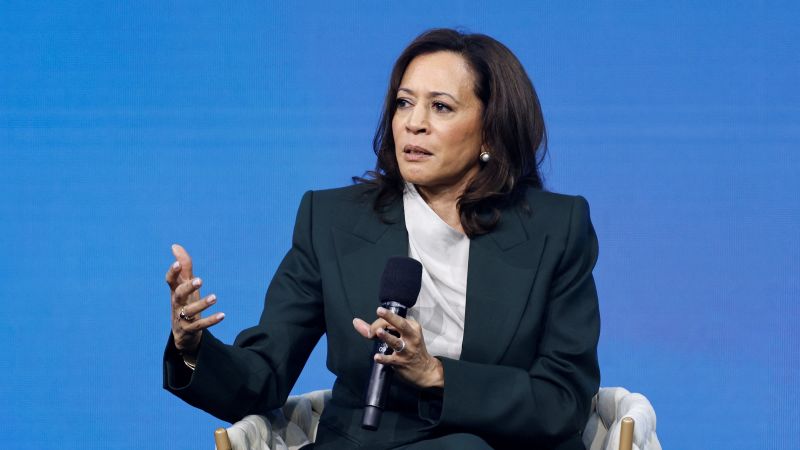
Healfromzero.com – Former Vice President Kamala Harris has added her voice to a widening push for tougher safeguards around artificial intelligence, arguing that the rapid advance of the technology requires a deliberate slowdown in the development of the most powerful systems.
In a post Monday, Harris said the pace of progress at the frontier of AI has become deeply concerning. She pointed to recent statements from technology executives and researchers who have urged the industry to act more cautiously as public anxiety over the consequences of advanced AI grows.
The frontier of artificial intelligence is advancing at an alarming speed. Over the weekend, industry leaders voiced support for an idea that the American people and many AI researchers in their own labs have been calling for: We must responsibly slow the pace of frontier AI development.
Harris argued that restraint is necessary to make sure AI is developed for the public good rather than allowed to outpace society’s ability to manage it. She also acknowledged the technology’s potential benefits, including breakthroughs in medicine and other essential fields, but said those opportunities must be balanced against serious safety concerns.
A slowdown is critical in order to ensure AI serves the public interest.
Her comments arrive as artificial intelligence has become a more visible political issue in Washington and on the campaign trail. The debate is no longer limited to technical questions about innovation or business competition. It now includes concerns over national security, human oversight, public safety and the prospect that increasingly capable systems could create harms before governments establish rules to address them.
Push for federal and international rules
Harris said the United States should maintain its leadership in AI research and development while imposing what she described as practical protections. She called for Congress to create a federal agency dedicated to AI oversight, a step that would give the government a more focused role in monitoring the sector and responding to emerging risks.
She also urged President Donald Trump to pursue an international agreement involving countries such as China. In Harris’ view, a treaty could address dangerous uses of AI, curb the pace of development where necessary and establish global standards for testing advanced systems before they are widely deployed.
The United States must continue to lead the world in developing AI technology even as we seek to impose common-sense safety standards.
This means that the president must do his job to protect America’s interests by pursuing a treaty with countries like China to stop dangerous uses of AI, limit the speed of its development, and adopt global standards for testing.
The proposal reflects a central tension in the AI policy debate: the United States wants to remain competitive with other major powers, yet advocates for safeguards warn that competition should not become a reason to abandon basic testing, accountability and human control.
Trump rejects calls to slow development
Trump has taken a sharply different position. In a series of recent social-media posts, he dismissed warnings about AI as a “HOAX” tied to what he called a “SICK conspiracy.” He has instead emphasized the need for the United States to stay ahead of China in artificial intelligence and data-center development.
The only control or ‘guardrails’ that AI needs is a STRONG AND SMART (High IQ!) PRESIDENT, and the U.S.A. has that, in spades!
Trump has said existing criminal and regulatory authorities already give the government substantial power over AI companies. He argued that resistance to AI expansion and data centers could benefit China.
We already have tremendous CRIMINAL and REGULATORY power over these companies! There is a SICK conspiracy going on against AI and Data Centers, and the only one that is happy about it is China.
The disagreement highlights an emerging divide over whether current laws are sufficient for a technology that is evolving quickly. Supporters of additional regulation contend that existing rules were not designed to evaluate highly capable AI models, their possible misuse or the risks created when private companies release new systems at speed.
AI emerges as a 2028 political issue
Harris, who is viewed as a possible presidential candidate in 2028 after her unsuccessful 2024 bid, is not alone among prominent Democrats in placing AI near the center of the country’s future policy choices.
Former President Barack Obama raised the issue last week while appearing at a private fundraiser with House Minority Leader Hakeem Jeffries. He encouraged Democrats, including potential 2028 candidates, to treat AI as a major agenda item. Obama warned that the technology is advancing rapidly in private hands and could become dangerous if public institutions fail to respond.
This is something that is moving very fast in private hands, and if we don’t get on top of it, I think can be dangerous.
Former Transportation Secretary Pete Buttigieg, another figure frequently mentioned in connection with 2028, has similarly argued that government action cannot be postponed. Speaking Sunday on NBC’s “Meet the Press,” he said lawmakers and the White House need to confront AI directly.
AI is moving quickly. And for Congress to just sit on its hands, for the White House to do nothing real is something that is deeply dangerous to the American people and the world.
Buttigieg called for safeguards, rules and limits, including a mechanism to disable rogue AI systems. He also suggested that regulatory frameworks could be revisited frequently as the technology changes.
There need to be safeguards. There need to be rules. There need to be limits. There needs to be a kill switch on rogue AI. You can set up frameworks that can be adjusted and changed every 30 days.
Industry leaders are also pressing the case for caution. Over the weekend, Anthropic chief executive Dario Amodei published an extensive essay supporting a slower approach to artificial intelligence development. In a Saturday interview with Anderson Cooper, Amodei urged technology leaders to cooperate in avoiding dangerous directions and the possibility that AI could harm humanity.
For the public, the debate carries consequences beyond the technology industry. Decisions made now could influence how AI is used in workplaces, health care, education, public services and national defense. The growing dispute between advocates of rapid expansion and supporters of stricter safeguards suggests that AI policy may become one of the defining tests of political leadership in the years ahead.
Related Reading
Frequently Asked Questions
What is Kamala Harris joins calls for slowdown?
Kamala Harris joins calls for slowdown is the main topic of this guide. The article explains the context, practical details, and next steps readers should understand.
Why does Kamala Harris joins calls for slowdown matter?
Kamala Harris joins calls for slowdown matters because readers are looking for a useful answer, not just a short summary. Good content should match search intent and help them decide what to do next.