With a new breed of candidate, Democrats are challenging in states they usually lose

Daftar Isi
Democrats See New Senate Openings in Traditionally Republican Territory
Healfromzero.com – Republicans entering the fall campaign face more than weak national conditions tied to President Donald Trump’s declining standing with voters. Democrats have recruited candidates who are competitive in places that have often appeared safely Republican, raising the possibility that the Senate map could become far more volatile than expected.
The party needs a net gain of four seats to take control of the Senate. At the same time, Democrats are positioned to compete strongly for a House majority. Yet the Senate opportunity is not simply a product of dissatisfaction with Trump or broader anxiety about the economy. It also reflects a class of Democratic candidates trying to reconnect the party with voters who have drifted toward Republicans in recent elections.
Many of these contenders are using distinctly local political styles. Their campaigns combine economic arguments, cultural familiarity and messages aimed at voters outside the traditional Democratic coalition. That strategy is being tested in states where Democrats have long struggled to reduce Republican advantages among rural, working-class and independent voters.
Different Candidates, Shared Goal
In North Carolina, former two-term Gov. Roy Cooper has emerged as a formidable Democratic prospect. His popularity with independents and his ability to compete in rural communities could limit Republican margins in a state that has repeatedly delivered close statewide contests. Republican Michael Whatley, a former chair of the Republican National Committee, is well known among party insiders but has worked to match Cooper’s broader public recognition.
Iowa may offer the more surprising test. State legislator Josh Turek has called himself a “common sense prairie populist,” presenting an appeal tailored to a state Trump carried by 13 points just two years earlier. His candidacy comes as farmers confront the effects of Trump’s tariffs and high fuel prices, issues with direct relevance in an agriculture-heavy state.
Republican Rep. Ashley Hinson remains a capable contender for the seat expected to be vacated by Joni Ernst. A former television anchor, Hinson is seen as an effective communicator with deep familiarity with Iowa issues. Still, the state’s economic strains have created a more complicated environment than Republicans might have anticipated.
Ohio offers another example of a Democrat relying on a durable, working-class political identity. Former Sen. Sherrod Brown has spent years emphasizing blue-collar populism. That message may carry particular force as Trump, increasingly distant from everyday voters, maintains close ties with billionaires. Ohio supported Trump comfortably in 2024, but Brown’s approach is built around persuading voters who do not fit neatly into either party’s national image.
New Approaches in Georgia and Texas
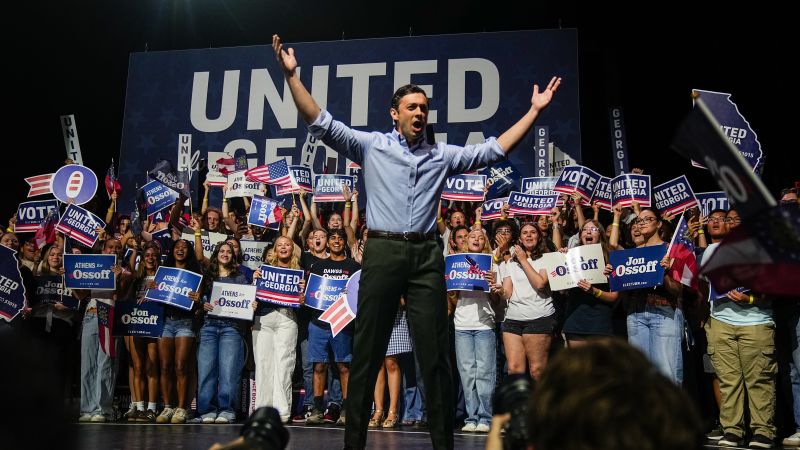
Georgia Sen. Jon Ossoff has developed a political profile that blends generational change with sharp criticism of Trump. His willingness to challenge the president directly has helped distinguish him in a competitive state, while his previous success in Georgia has elevated his national stature. His rise has also encouraged speculation about whether he could become a significant figure in the 2028 presidential contest.
In Texas, James Talarico is pursuing a combination of economic populism and Christian faith. For Democrats, a statewide win in Texas has remained an elusive goal for three decades. Talarico’s campaign is an effort to test whether a message rooted in household economic pressures and religious language can broaden Democratic appeal in a state where cultural politics have often favored Republicans.
Democrats have also benefited in some contests from Republican nominees who could prove difficult in a general election. Georgia Rep. Mike Collins, a prominent MAGA figure, and Texas Attorney General Ken Paxton, who has faced scandal, received Trump’s support despite concerns among more establishment-oriented Republican leaders.
A Party Still Facing Its Own Image Problem
Strong individual candidates do not erase Democrats’ wider challenges. A late-July CNN/SSRS survey found voters favored Democrats by 8 points for the fall election, but it also showed that congressional Democrats and Republicans were viewed with similarly low regard. Expectations for what a potential Democratic majority could accomplish were limited.
That tension explains why recruitment matters so much. A favorable national mood can help candidates, but it may not be enough if voters remain skeptical of the party itself. Democrats are seeking contenders who can speak persuasively about local economic conditions, appear culturally familiar and avoid being defined solely by Washington politics.
The broader objective is to repair weaknesses in language, policy and positioning that helped Trump build support among voters who once formed a core part of the Democratic base. Candidates such as Cooper, Turek, Brown, Ossoff and Talarico are not delivering identical messages, but each is trying to demonstrate that the party can compete beyond its most reliable states and constituencies.
Michigan Could Become the Defining Test
The Michigan Senate race may be the clearest illustration of both the opportunity and the risk. Democrat Abdul El-Sayed, a 41-year-old epidemiologist, is the highest-risk Democratic option in a crucial contest. A victory over former Republican Rep. Mike Rogers would make El-Sayed a leading representative of a younger political generation and a prominent progressive voice.
A loss, however, would bring intense criticism from Democrats who preferred the more moderate Rep. Haley Stevens. If Rogers wins, supporters of Stevens could argue that the party’s left-leaning base sacrificed a winnable seat and potentially jeopardized Senate control.
Candidate quality is never the only force in an election. Discipline, skill and the ability to connect across ideological lines can be decisive, but timing and luck remain central. Maine Republican Sen. Susan Collins has repeatedly survived difficult political climates, often benefiting from a reputation for independence. Her latest reelection effort may be her most demanding yet, as the Trump era has complicated that image and forced choices between her Republican base and more moderate voters.
The fall campaigns will ultimately determine whether Democratic gains reflect a lasting political adjustment or a temporary backlash against an unpopular president. For now, the party’s most promising development may be its willingness to field candidates whose political identities are shaped as much by their states as by national party expectations.
Related Reading
Frequently Asked Questions
What is With a new breed of candidate?
With a new breed of candidate is the main topic of this guide. The article explains the context, practical details, and next steps readers should understand.
Why does With a new breed of candidate matter?
With a new breed of candidate matters because readers are looking for a useful answer, not just a short summary. Good content should match search intent and help them decide what to do next.