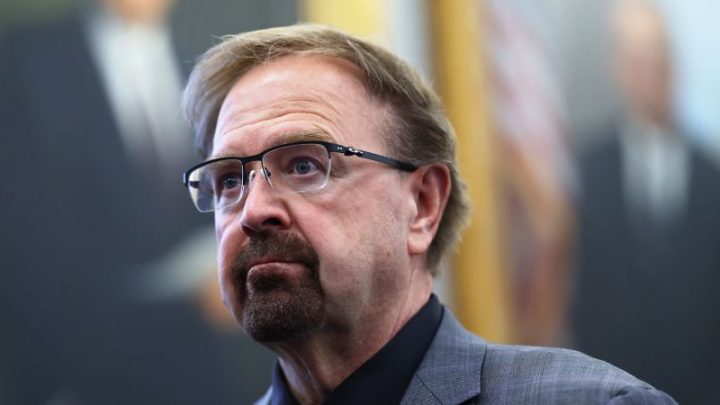
Blanche declines to pledge independence from the White House

Daftar Isi
Healfromzero.com –
Justice Department Chief Sidesteps Independence Pledge, Deepening Questions Over White House Influence
Healfromzero.com – Attorney General Todd Blanche made clear on Sunday that he will not promise to operate free from presidential direction, a stance that has intensified scrutiny over how closely the nation’s top law-enforcement office tracks the political priorities of President Donald Trump. Speaking on NBC’s “Meet the Press,” Blanche rejected the premise that any attorney general ought to bind himself to a blanket guarantee of autonomy from the executive branch.
“No, I’m not going to pledge that, and no attorney general should ever pledge that,” Blanche told NBC’s Kristen Welker.
The remark landed in a context already charged with controversy. Blanche, who served as Trump’s personal defense counsel before joining the administration, was confirmed by the Senate just days earlier after occupying the role in an acting capacity since April. His confirmation had been shadowed by disputes over the so-called “anti-weaponization” fund, a compensation mechanism that critics argued could channel taxpayer dollars to individuals who sued the government over politically motivated prosecutions.
Presidential Input in Prosecution Decisions
Going beyond the independence question, Blanche indicated that the president’s personal views could factor into individual case decisions. Pressed specifically about whether Trump should weigh in on the recently dismissed Reflecting Pool vandalism prosecution in Washington, D.C., the attorney general offered an ambiguous but affirmative answer.
“Every American has a voice in prosecutions… So whether President Trump should have a, quote, ‘voice,’ it depends, but yes,” Blanche said.
He expanded on the point moments later, framing presidential consideration as a natural element of the office.
“Will I take the president of the United States’ view on something into consideration? Yes, of course. And I hope every attorney general in history would not answer that question differently,” Blanche added.
That framing sits in tension with the long-standing norm that the Justice Department prosecutes cases on their merits, insulated from electoral or partisan calculation. Critics have pointed to a series of indictments and attempted indictments targeting figures perceived as adversaries of the president — including former FBI Director James Comey and New York Attorney General Letitia James — as evidence that the department functions as an extension of the White House’s political machinery rather than an independent arbiter of justice.
The Reflecting Pool Case and Jeanine Pirro
The specific case that prompted Blanche’s comments involved the vandalism of the Reflecting Pool at the Lincoln Memorial, a matter that drew national attention and prompted Trump to publicly demand a revisit of the prosecution. U.S. Attorney Jeanine Pirro, who oversees the District of Columbia, had recently dismissed the case. Blanche declined to state whether Pirro should reopen the matter, though he offered pointed support for her handling of it.
“I absolutely support US attorney Pirro, as does President Trump. Now that’s different than whether the president is extraordinarily frustrated at what happened in that case, and I don’t in any way fault him for that.”
He further characterized Pirro’s overall performance as “doing a phenomenal job” and argued that singling out one dismissed prosecution to judge her tenure was unfair given the evidentiary record available at the time.
Claiming the Right to Disagree
In a separate interview with “Fox News Sunday,” Blanche pushed back against the perception that the attorney general’s office has become a rubber stamp for presidential wishes. He described a working relationship in which candid disagreement is not merely tolerated but expected.
“The president loves disagreement,” Blanche told Fox. “He wants to get counsel from all of his leaders that is just that – counsel. It doesn’t mean you’re saying yes to him.”
He dismissed the popular caricature of a president phoning his attorney general each morning to assign targets.
“There’s that misnomer about President Trump – which is that he wakes up in the morning, calls me up, and says ‘Todd, go prosecute this.’ That’s absolutely not the case.”
Election Integrity and the Voter-Rolls Dispute
A second major thread of the interview concerned the administration’s aggressive push to obtain unredacted voter rolls from state governments ahead of the upcoming midterm elections. Trump has long maintained — without substantiating evidence — that the 2020 election was stolen from him, and his second-term agenda has translated that grievance into a sustained legal campaign to insert federal oversight into state-run elections.
The administration has filed suits against roughly thirty states that have resisted turning over voter rolls and related sensitive data. Those suits have frequently ended in losses at the lower-court level. Asked whether Blanche would carry those defeats to the Supreme Court, he stopped short of a commitment but left the door open.
“Absolutely, it’s a possibility,” Blanche told Welker. “Election integrity is something that President Trump ran on, and the American people elected him. It’s something that every American should care about.”
A Supreme Court ruling on the scope of federal access to state voter data would carry sweeping implications for election administration, privacy protections, and the balance of power between federal and state governments in the electoral process.
The Anti-Weaponization Fund and January 6 Claims
Blanche reiterated that the anti-weaponization fund — which had threatened to derail his Senate confirmation — is effectively defunct. He nonetheless noted that existing statutory mechanisms allow any individual who believes the government wronged them to file a compensation claim against the federal government.
“Well, anybody can file a claim against the federal government, not just anybody associated with January 6,” Blanche said. “I’m not going to sit here and say on a news program whether a litigation that may or may not happen will result in money.”
He declined to guarantee that rioters from the January 6, 2021, Capitol breach would be excluded from such claims, leaving open the question of whether the administration’s compensation architecture could ultimately extend to individuals who participated in that event. The ambiguity itself became a point of contention among observers tracking the fund’s afterlife.
Blanche’s Sunday appearances thus painted a portrait of an attorney general who insists on institutional independence in principle while conceding, in practice, that the president’s preferences will inform how the department exercises its prosecutorial discretion. Whether that distinction — between formal autonomy and practical deference — can withstand sustained political pressure remains the central question facing the Justice Department under his leadership.
Related Reading
Frequently Asked Questions
What is Blanche declines to pledge independence?
Blanche declines to pledge independence is the main topic of this guide. The article explains the context, practical details, and next steps readers should understand.
Why does Blanche declines to pledge independence matter?
Blanche declines to pledge independence matters because readers are looking for a useful answer, not just a short summary. Good content should match search intent and help them decide what to do next.