Six months on, Trump’s Iran ‘excursion’ risks igniting crises far beyond the Middle East

Daftar Isi
The Iran War’s Long Shadow: How a Middle East Conflict Is Reshaping Global Alliances and Security
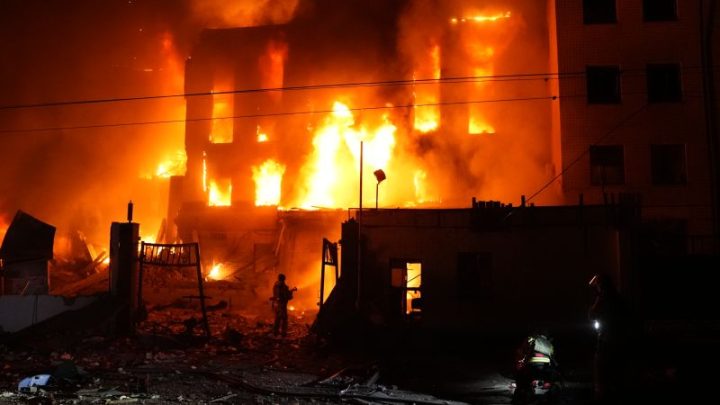
Healfromzero.com – What was pitched as a brief military operation has metastasized into a six-month conflict whose aftershocks are now rippling across every continent where American security commitments matter. President Donald Trump described the campaign against Iran as an “excursion” of a few weeks’ duration. Half a year into the fighting, that characterization reads as either a miscalculation or a deliberate misdirection. The Iranian population has borne enormous human cost, millions of people across the broader Middle East have been displaced or endangered, and consumers worldwide are absorbing inflated energy and commodity prices. Meanwhile, the administration’s stated objectives have migrated repeatedly — from an initial demand for total Iranian capitulation, regime overthrow, and the scrapping of the Islamic Republic’s nuclear ambitions, to a narrower recent position centered on reopening the Strait of Hormuz and slowing Tehran’s enrichment program. None of those goals has been achieved.
More troubling than the stalled objectives, however, is the strategic vacuum the war has created elsewhere. As Washington pours its diplomatic, military, and political bandwidth into extracting itself from a self-inflicted Middle East crisis, attention has drifted from other long-standing flashpoints: Ukraine, the Taiwan Strait, the South China Sea, and the Korean Peninsula. The consequences of that drift are already visible in procurement shortfalls, reduced deterrence postures, and opportunities being seized by rival powers.
Ukraine’s Interceptor Crisis
The most immediate casualty of the Iran campaign’s logistics drain has been Ukraine’s air defense. Iranian drones, ballistic missiles, and other projectiles have struck US bases and allied installations across the region in sustained volleys. To replenish depleted inventories, ammunition originally earmarked for Kyiv was redirected to the Middle East theater. Ukrainian President Volodymyr Zelensky disclosed this month that his country now possesses roughly one-tenth of the interceptor missiles it requires to counter the accelerating barrage of Russian ballistic strikes. The operational toll is stark: the summer of 2026 has proven the deadliest stretch for Ukrainian civilians since May 2022, when the war began.
Oil, Sanctions, and Russia’s Windfall
Tehran’s effective closure of the Strait of Hormuz triggered a global oil shock that, paradoxically, undercut the very economic pressure campaign Washington had built against Moscow. Confronted with surging gasoline prices at American pumps, Trump made the politically fraught decision to ease certain sanctions on Russian crude exports in order to cool the market. The move handed Moscow additional revenue to sustain its war machine in Ukraine. Beyond the direct fiscal transfer, the broader disruption to oil, gas, and fertilizer trade flows opened new commercial corridors for Russian energy exporters seeking alternative buyers.
Alexander Gabuev, director of the Carnegie Russia Eurasia Center in Berlin, pointed to a concrete illustration of that shift. In June, Russian President Vladimir Putin received the leaders of Southeast Asian nations in the city of Kazan.
“The turnout in Kazan was impressive: Nine of 11 heads of state from ASEAN were present, along with the Indonesian foreign minister and a special representative from Myanmar. Above all, these men decided to make the long journey to Russia because of US and Israeli attacks on Iran causing higher prices for energy and fertilizer.”
The summit underscored how a Middle East conflict can, within months, reorient the commercial and diplomatic calculations of nations that had previously leaned toward Western supply chains.
Strategic Distraction in the Indo-Pacific
The Korean Peninsula, long a site of periodic tension between North and South Korea, now sits in the crosshairs of a different kind of risk: American inattention. Trump’s administration has scaled back the annual joint military exercises with Seoul and withdrawn the sole US aircraft carrier previously stationed in the Western Pacific. Those reductions, layered atop the interceptor shortages in Europe, mean that the most consequential geopolitical effects of the Iran war may yet to materialize — and when they do, they will likely be felt thousands of miles from the Persian Gulf.
Emily Harding, vice president of the Defense and Security Department at the Center for Strategic and International Studies in Washington, cautioned that while no secondary flashpoint has yet erupted into full-scale crisis, the conditions for escalation are being quietly assembled.
“This is the kind of thing where the global adversaries are going to be taking note of the situation and learning more about how the US reacts in certain moments and then folding that into their planning. But we haven’t seen anybody take advantage of it yet. It’s more that some foundations are being weakened, not that we’re actually seeing the building start to shake.”
An Unintended Dividend for Kyiv
Not every ripple has been negative for Ukraine. The prolonged visibility of the Iran conflict has sharpened global awareness of what four-plus years of war have produced in Kyiv: a drone capability now regarded as world-leading. That recognition has catalyzed a wave of bilateral security-cooperation agreements and ammunition-supply pledges from nations eager to diversify their own air-defense architectures. In a narrow sense, the Middle East war has validated Ukrainian military innovation on a global stage.
What Comes Next
The central question for the coming months is not whether the Iran conflict will end — the administration’s stated priority is extraction — but whether the strategic gaps it has widened will be exploited before Washington can reconstitute its deterrence posture across multiple theaters simultaneously. The foundations, as Harding put it, are already weakened. Whether they hold depends on decisions made in the next few quarters, in capitals from Seoul to Kyiv to Brussels, and in the quiet planning rooms of powers watching the United States struggle to close one front while two others remain exposed.
Related Reading
Frequently Asked Questions
What is Six months on Trump s Iran?
Six months on Trump s Iran is the main topic of this guide. The article explains the context, practical details, and next steps readers should understand.
Why does Six months on Trump s Iran matter?
Six months on Trump s Iran matters because readers are looking for a useful answer, not just a short summary. Good content should match search intent and help them decide what to do next.