Coding classes are rewriting futures in a Kenyan youth prison

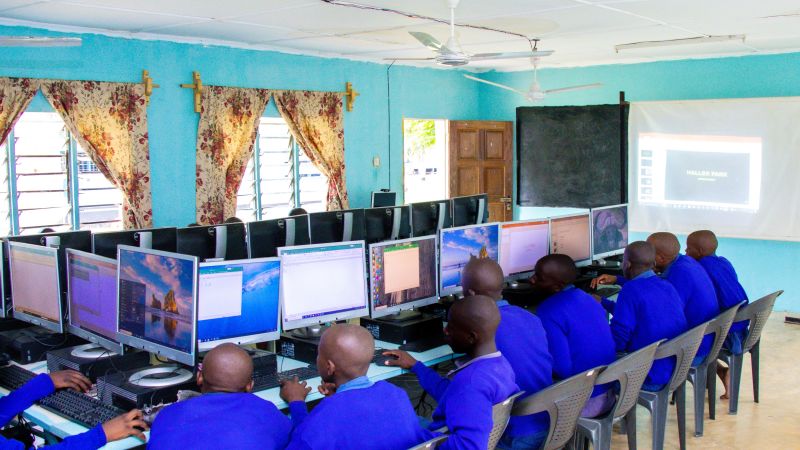
Coding Classes Are Transforming Lives in a Kenyan Youth Correctional Facility
Coding classes are rewriting futures – Kenya’s juvenile justice system has taken a bold step toward rehabilitation by integrating technology into its facilities. Paul Akwabi, a tech entrepreneur and founder of TechKidz Africa, has launched a program that is helping young offenders gain digital skills and rekindle their potential. His initiative, rooted in personal experience and a commitment to second chances, is now offering coding classes and other tech-focused training at Shimo La Tewa Borstal Institution and Boys Education Centre, a prison in Mombasa. This effort marks a significant shift in how young offenders are being prepared for the future, especially in a country where access to technology remains uneven.
A Personal Connection to the Cause
Akwabi’s journey began in the impoverished streets of Nairobi’s Kibera slum, where he grew up navigating the challenges of poverty and crime. As a teenager, he delivered drugs and guns for older boys, a memory that lingered when he visited the prison years later. “I saw myself in those young inmates,” he told CNN. Unlike many of his peers, Akwabi had a different path: he taught himself electronics by repairing radios and studying books. After secondary school, he worked as a street vendor while pursuing a degree in Computer Science at the Technical University of Mombasa. For him, technology wasn’t just a hobby—it became a lifeline.
“I thought, ‘This could have been me,’” Akwabi reflected, emphasizing how his own struggles with opportunity shaped his vision for the program.
Bringing Tech Education to the Prison Walls
In 2024, TechKidz Africa partnered with Close the Gap Kenya, a nonprofit that refurbishes and donates IT equipment, to establish a computer lab within the prison. The collaboration also led to the creation of a three-month digital literacy course tailored for young offenders. This initiative targets boys aged 15 to 18 who have committed serious crimes, providing them with skills in Information and Communications Technology (ICT) that focus on employability and online safety. The program’s participants range from 4 to 19 years old, though the current cohort is more focused on those who have completed vocational training exams.
The curriculum is designed to build gradually, starting with foundational concepts like digital ethics and hardware repairs before progressing to advanced topics such as coding, web design, and robotics. “Most of the learners have hands-on skills in areas like carpentry, plumbing, or agriculture,” Akwabi noted. “But when they first encounter computers, it’s often a new world for them.”
Participants’ Experiences and Goals
For many inmates, the course is their first exposure to technology. One 19-year-old from Nyeri County shared that operating a computer was initially daunting, as he had never used one before. “At first, it was difficult to navigate the software,” he wrote in response to a CNN query, highlighting the steep learning curve for some participants.
“I was able to use a computer for the first time and enjoyed typing activities,” said an 18-year-old from Meru County. “I hope these skills will help me promote my plumbing business once I’m released.”
These stories reflect the program’s dual purpose: equipping students with practical skills while fostering confidence in their abilities. TechKidz’s approach emphasizes not just technical proficiency but also the development of positive habits around technology. Mwang’ombe, senior superintendent of Shimo La Tewa Institution, highlighted the importance of this training, noting that many inmates from rural and low-income communities lack basic computer access, often limited to watching movies in cybercafés.
Addressing Tech Disparities in Kenya
Kenya’s rapid tech growth has outpaced its rural populations, creating a stark divide in access and skill levels. A 2024 government survey revealed that while over 50% of Kenyans own mobile phones, only 11.6% use computers regularly. This gap is particularly pronounced in marginalized communities, where digital literacy remains a luxury. Urban areas, in contrast, see higher internet access and tech integration, leaving rural youth at a disadvantage.
Shimo La Tewa Borstal Institution has become a microcosm of this disparity. According to Mwang’ombe, the prison houses a disproportionately high number of inmates from rural backgrounds. “Many have never touched a computer before,” she explained. “We had to start from the basics—teaching them what a computer is and how it can be a tool for empowerment.”
Rehabilitation and Reintegration Efforts
Kenya’s adult prisons face severe overcrowding, a challenge that has prompted the judiciary to prioritize rehabilitation over punishment. Shimo La Tewa Borstal Institution follows this model, requiring inmates to engage in formal education, vocational training, or agricultural programs during their three-year sentences. The last two years of their sentence can be spent on probation in the community, allowing them to reintegrate with support from the program.
Akwabi’s initiative aligns with this rehabilitation focus. By integrating digital skills into the curriculum, TechKidz Africa aims to give these young offenders a competitive edge in the job market. The three-month course, for instance, covers email etiquette, Microsoft Excel and Word, and eventually coding, video production, and graphic design. This structured approach ensures that learners progress from basic to advanced skills, building a foundation for future opportunities.
A New Pathway for Second Chances
Technology has emerged as a powerful tool for second chances in Kenya’s youth justice system. For the 25 participants in the first cohort, the program has already begun to change perspectives. One learner, for example, expressed hope that his newfound graphic design abilities would help him market his plumbing services post-release. “I didn’t think I’d ever have the chance to use computers,” he said, underscoring the transformative potential of the course.
Akwabi’s vision extends beyond individual success. He envisions a future where these young offenders become leaders in Kenya’s tech ecosystem, bridging the gap between urban and rural digital literacy. “Technology isn’t just about coding—it’s about understanding how to use it responsibly and creatively,” he emphasized. The program’s emphasis on online safety and digital ethics reflects this philosophy, ensuring learners are not only technically skilled but also aware of the risks and responsibilities that come with technology.
Expanding Access to Technology in Marginalized Communities
Close the Gap Kenya plays a critical role in making this initiative possible. The nonprofit donates refurbished IT equipment to schools and prisons, providing the hardware needed for TechKidz’s courses. This collaboration has enabled the installation of a fully functional computer lab within Shimo La Tewa Borstal Institution, offering inmates access to tools they might otherwise never see. The program’s success hinges on this partnership, as well as the willingness of the prison administration to embrace innovation in rehabilitation.
Mwang’ombe acknowledged the significance of the program, stating that digital hygiene training is now a standard component of the institution’s curriculum. “We want these boys to use technology safely and productively,” she said. “It’s about creating habits that will serve them long after they leave the prison.”
As Kenya continues to invest in its tech sector, initiatives like TechKidz Africa are proving that innovation can thrive even in the most unexpected places. By addressing the root causes of the digital divide and empowering young offenders, the program offers a glimpse of hope in a system that once seemed hopeless. For Akwabi, it’s a testament to the idea that opportunity is not defined by circumstance but by the tools provided to overcome it.
Looking Ahead: A Digital Renaissance in Youth Prisons
The future of Kenya’s youth prisons may depend on programs like TechKidz Africa. With digital skills becoming a cornerstone of economic participation, the ability to teach these skills to incarcerated youth could redefine their prospects. As the country moves toward a more tech-driven economy, initiatives that provide access to education and training are essential for reducing recidivism and fostering a generation of digitally literate, socially conscious innovators.
Akwabi’s work highlights the transformative power of education, even in the most challenging environments. By combining technology with vocational training, TechKidz Africa is not only preparing young offenders for the workforce but also helping them rebuild their lives. The program’s success may inspire similar efforts across Kenya, ensuring that no young person is left behind in the digital age.