
MIT unveils a robot that flies and swims. Now it wants to put it into action
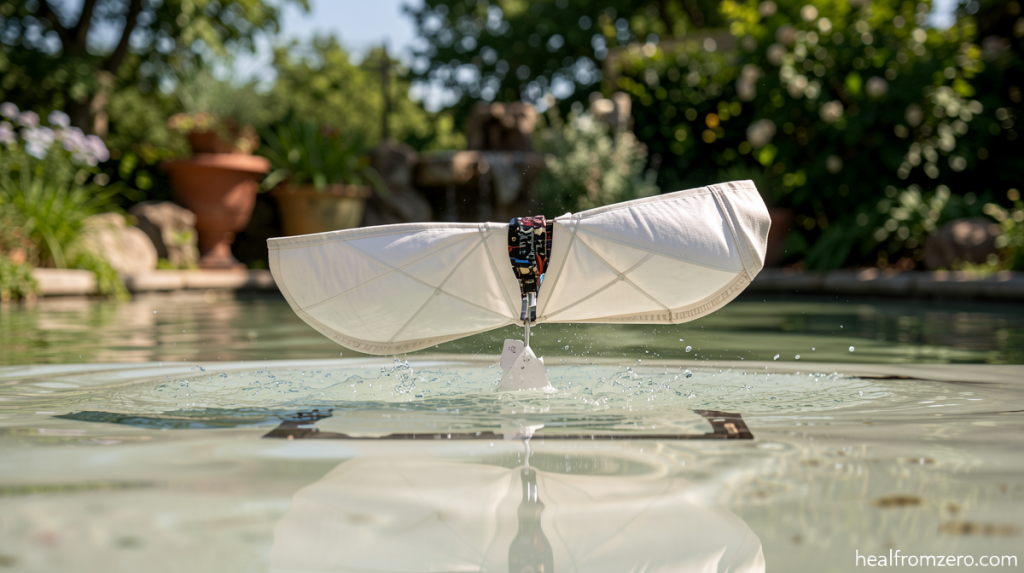
MIT Engineers Create Versatile Robot Capable of Navigating Both Air and Water
Healfromzero.com – A research laboratory at the Massachusetts Institute of Technology has successfully developed an innovative robotic device capable of transitioning seamlessly between aerial and aquatic environments. The compact machine, which costs approximately $300 to produce, represents a significant advancement in environmental monitoring technology. Its primary mission involves tracking ocean health and potentially contributing to marine conservation efforts worldwide.
The engineering team drew inspiration from nature, specifically studying seabirds such as petrels and puffins that utilize their wings for propulsion across both mediums. These avian species demonstrate remarkable adaptability, adjusting their wing movements to navigate efficiently through air and water. The researchers analyzed extensive literature on diving birds, documenting how wing flap frequencies correlate with wingspan measurements across various species.
Engineering Challenges and Innovative Solutions
While the concept appears straightforward, creating a functional robot that mimics avian movement presented substantial technical hurdles. Water possesses significantly greater density than air, with variations influenced by temperature, atmospheric pressure, and humidity levels. Diving birds naturally fold their wings partially when submerged, reducing movement amplitude and minimizing resistance while generating forward thrust.
Replicating this behavior mechanically would have required additional joints, increased complexity, and greater weight. Instead, the MIT team designed a flexible wing structure that maintains its shape while allowing controlled movement. The resulting device weighs only 250 grams and features nylon wings alongside a tail treated with hydrophobic nanoparticles to repel water effectively.
“No one had ever figured out how to transform that into a fully moving robot,” explained Raphael Zufferey, an assistant professor of mechanical engineering at MIT and lead author of the research study.
Performance Capabilities and Testing
The robotic vehicle operates independently of its environment, relying on programmed wingbeat frequencies rather than sensing whether it is airborne or submerged. Current specifications indicate flight speeds exceeding 6 meters per second and swimming velocities approaching 1 meter per second. Theoretical endurance estimates suggest the device could travel 6 kilometers while flying or 2 kilometers while swimming on a single battery charge, though these figures await real-world verification.
Extensive testing occurred over twelve months across two distinct locations. Initial trials took place in a controlled water tank facility within Massachusetts, followed by field experiments conducted in Lake Geneva, Switzerland. Engineers determined that a 70-degree angle optimizes both water entry and surface departure. The current model functions reliably under moderate weather conditions but requires further development for rougher environments.
“Developing a vehicle capable of operating effectively in both air and water is a significant technical challenge, and successfully integrating these two modes of operation is a notable engineering achievement,” stated Maaten Furlong, director of engineering science at the National Oceanography Centre, who participated in reviewing the research.
Future Applications in Oceanography
The research team now focuses on securing funding and resources to advance the technology toward autonomous mission capabilities. While individual functions have been demonstrated, combining flight, swimming, transition, and diving into a single coordinated operation remains an ongoing objective.
Scientific data collection at sea currently involves considerable expense, making affordable alternatives highly valuable. The lightweight design enables deployment from both maritime and terrestrial locations. Programmed routes could guide the robot through predetermined flight paths before submerging to gather water samples from specific depths.
Additional applications extend beyond routine sampling. The device could navigate hazardous environments including toxic algal blooms, volcanic crater lakes, and regions near floating ice formations. Camera systems might also be integrated for wildlife observation purposes, providing researchers with continuous monitoring capabilities without disturbing natural habitats.
This initiative aligns with broader environmental awareness campaigns, including CNN’s Call to Earth editorial series, which collaborates with Rolex’s Perpetual Planet Initiative to promote sustainability education and inspire meaningful action toward planetary preservation.
Related Reading
Frequently Asked Questions
What is MIT unveils a robot that flies?
MIT unveils a robot that flies is the main topic of this guide. The article explains the context, practical details, and next steps readers should understand.
Why does MIT unveils a robot that flies matter?
MIT unveils a robot that flies matters because readers are looking for a useful answer, not just a short summary. Good content should match search intent and help them decide what to do next.