
Pope Leo faces first major crisis of papacy from rebel Catholic group
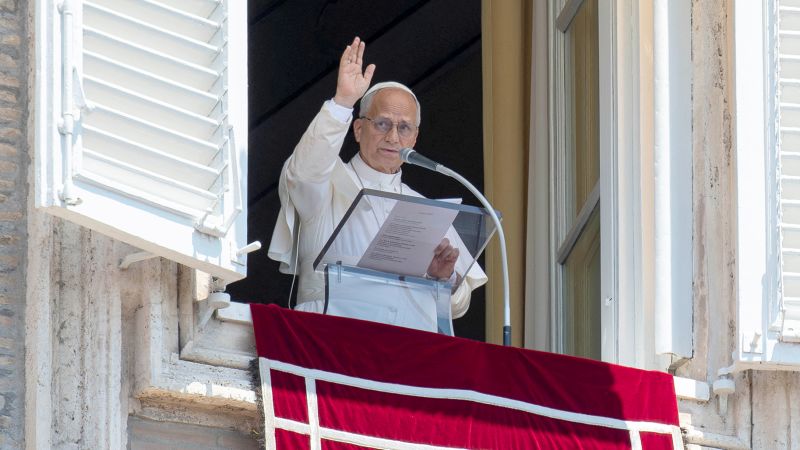
Pope Leo XIV Confronts Split from Traditionalist Catholic Movement
Pope Leo faces first major crisis – In a pivotal moment for his papacy, Pope Leo XIV has issued an urgent plea to the Society of Saint Pius X (SSPX), a traditionalist Catholic faction poised to ordain bishops without the Vatican’s blessing. The move marks the first significant challenge to his leadership, as the group prepares to consecrate four new bishops at its seminary in Écône, Switzerland. The pope warns that proceeding with the ordinations would be a “sin of extreme gravity,” emphasizing their potential to fracture the Church’s unity. His appeal comes as a final attempt to prevent the group from establishing a parallel ecclesiastical structure, a step he believes would undermine the authority of the papal office.
The SSPX’s Defiance and Theological Stance
Known for its staunch opposition to modernization within the Catholic Church, the SSPX has long rejected the reforms introduced by the Second Vatican Council in the 1960s. Central to its ideology is the preservation of traditional practices, such as the use of Latin in Mass and the emphasis on pre-Vatican II liturgical customs. The group views these changes as a departure from the Church’s original teachings, arguing that they have diluted the faith’s authenticity. This theological stance has fueled its separation from the mainstream Catholic Church, which it perceives as compromised by liberal influences.
“I plead with you and ask you with all my heart: please turn back!” Pope Leo wrote in a letter to the SSPX, which he delivered in the eleventh hour. “I pray for you, because to tear the seamless garment of Christ is a sin of extreme gravity. May the Lord enlighten your consciences and awaken your hearts.”
The SSPX’s actions are rooted in their conviction that the Church is in a “state of emergency.” They claim that liberal ideas, including ecumenism and religious freedom, have eroded the purity of Catholic doctrine. To counter this, the group has published a 28-page “profession of Catholic faith” aimed at refuting what it calls “modern errors.” This document underscores their belief that the salvation of souls depends on adhering to traditional practices, even if it means challenging the authority of the papacy.
A History of Rebellions and Excommunications
The SSPX traces its origins to 1970, when Archbishop Marcel Lefebvre founded the movement in Switzerland. Lefebvre, a French prelate, was a vocal critic of the Vatican II reforms, particularly the shift toward using vernacular languages in Mass and the Church’s embrace of ecumenical dialogue. His followers, known as the Lefebvrists, have since become a distinct community within Catholicism, maintaining their own seminary and liturgical traditions. Despite being officially suppressed by the Bishop of Fribourg in 1975, the group persisted and gained renewed momentum in the 1980s.
That momentum reached a critical point in 1988, when the SSPX consecrated four bishops without papal approval. The act triggered immediate excommunications from the Roman Catholic Church, as it was seen as a direct challenge to the Pope’s authority. However, Pope Benedict XVI later lifted these penalties in 2009, acknowledging the group’s efforts to maintain traditional practices. This reconciliation, though, was short-lived, as one of the bishops, Richard Williamson, was later implicated in a Holocaust denial scandal. His false claims about the Nazis’ use of gas chambers during World War II led to his prosecution and conviction in a German court, resulting in his expulsion from the SSPX.
Pope Leo’s Strategy for Unity
Since his election, Pope Leo XIV has prioritized the unification of the global Catholic community, a mission he sees as central to his papacy. The SSPX’s plan to ordain bishops independently threatens this goal, as it could establish a separate hierarchy within the Church. Cardinal Blase Cupich, a close ally of the pope, has highlighted the risks of such a move, stating that it risks creating a “parallel structure within the ecclesial body of the church.” Cupich noted that the pope has repeatedly invited the group to reconsider its actions, underscoring his commitment to dialogue while maintaining firm boundaries.
Despite these efforts, the SSPX remains resolute. The group’s preparations for the upcoming ordinations are well underway, with a dedicated website outlining four days of events centered around the ceremony. Among the offerings is a 75 Swiss Franc souvenir box containing four bottles of wine, a gesture intended to engage supporters and symbolize their allegiance to the movement. The ordinations, set to take place on Wednesday, are expected to be a defining moment in the pope’s tenure, testing his ability to balance authority with reconciliation.
Pope Leo’s appeal reflects a broader tension within Catholicism between tradition and modernity. While the SSPX represents a minority of 700 priests and 600,000 followers globally—a small fraction compared to the Church’s 1.4 billion members and 400,000 priests—their influence extends beyond numbers. Their defiance challenges the Vatican’s authority and highlights the enduring appeal of traditionalist views in an era of rapid change. The pope’s focus on unity is evident in his repeated interventions, as he seeks to prevent the schism from deepening.
Theological Implications of the Crisis
The SSPX’s insistence on ordaining bishops without papal consent is framed as a necessary act of faith. They argue that the Church’s current state—marked by what they see as modernist trends—requires a return to apostolic authority. This belief is tied to the idea of the seamless garment of Christ, a metaphor used to describe the Church’s unbroken lineage from the apostles to the present day. For the Lefebvrists, any disruption to this lineage, including the ordination of bishops without papal approval, is a grave offense to divine order.
The Vatican’s stance on the issue is clear: the ordinations would constitute a schismatic act, officially excluding the new bishops from the Church’s sacraments. This excommunication is not merely a punishment but a declaration of the bishops’ separation from the Catholic Church’s communion. The pope’s message to the SSPX is one of urgency, urging them to reconsider their actions before the irreversible step is taken. Yet, the group remains steadfast, viewing the excommunication as a necessary sacrifice for preserving their vision of the faith.
A Global Movement with Local Roots
The SSPX’s presence in the United States underscores its international reach. The group maintains a headquarters in Missouri and a seminary in Dillwyn, Virginia, where Father Michael Goldade, one of the bishops set to be ordained on Wednesday, leads the training of priests. This local infrastructure allows the SSPX to sustain its mission despite its separation from the Vatican. The group’s resilience is a testament to the enduring appeal of its traditionalist message, even as it faces scrutiny from the papacy.
While Pope Leo XIV’s appeal is a final attempt to mend the rift, the SSPX’s resolve highlights the challenges of maintaining doctrinal consistency in a diverse Church. The upcoming ordinations are expected to draw attention from both supporters and critics, testing the group’s commitment to its principles. For the pope, the crisis is a reminder of the delicate balance required to uphold unity while respecting the diversity of Catholic thought. The outcome of this confrontation could shape the future of the Church’s relationship with traditionalist movements, setting a precedent for how dissent is handled within its ranks.
The tension between the Vatican and the SSPX is not new, but Pope Leo’s approach has taken it to a new level. By framing the issue as a matter of extreme gravity, he positions himself as the guardian of the Church’s integrity. Yet, the SSPX’s actions also reflect a broader critique of Vatican II’s reforms, which continue to spark debate among Catholics worldwide. As the ordinations approach, the world watches to see whether the pope’s appeals will sway the group or if the crisis will deepen, marking a turning point in the Church’s history.