
Desert express: UAE launches first national passenger rail network
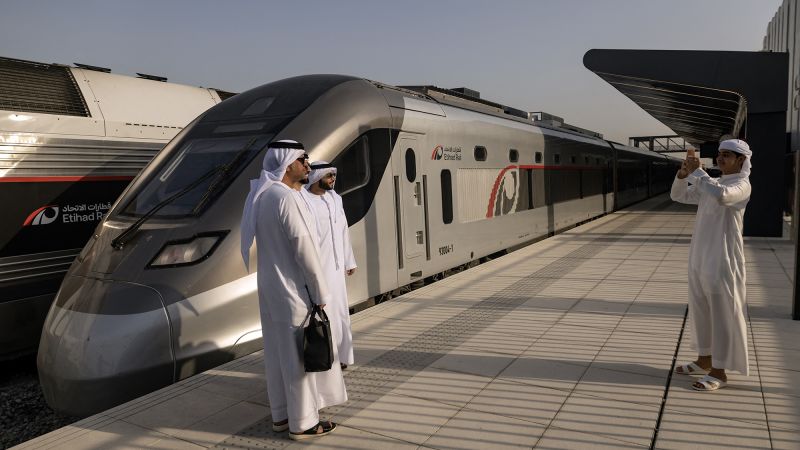
UAE Unveils National Rail System: A New Era for Regional Connectivity
Desert express – The United Arab Emirates marked a pivotal moment in its transportation history as it welcomed its first national passenger rail service, signaling the start of an ambitious project to link 11 cities across the region. The initial phase of this long-anticipated express train network, managed by Etihad Rail, launched with the departure of its inaugural train from Fujairah on the Gulf of Oman at 5:34 a.m. local time on Tuesday. This event, which corresponds to 9:34 p.m. ET on Monday, heralded a significant shift in how people traverse the nation, offering a modern alternative to traditional car-based mobility.
The first train’s journey covered approximately 250 kilometers (155 miles), taking one hour and 45 minutes to arrive at Mohammed Bin Zayed City Station in Abu Dhabi by 7:19 a.m. (11:19 p.m. ET on Monday). This service, which is the first of six planned for the network’s debut day, is part of Etihad Rail’s “introductory operational phase,” as outlined in a press release shared with CNN. The launch was met with considerable anticipation, with over 10,000 tickets sold before the service began, indicating strong public interest in this new mode of travel.
Etihad Rail emphasized that the train service would provide passengers with a “modern travel experience,” incorporating features like air conditioning, onboard Wi-Fi, power outlets, and reserved seating. The company also introduced “premium class services” to enhance comfort and convenience for those seeking a more elevated journey. These offerings reflect a broader strategy to integrate advanced technology and sustainability into the UAE’s transportation infrastructure.
Azza Alsuwaidi, Etihad Rail’s chief operating officer, highlighted the symbolic importance of the launch in her statement.
“The first departure from Fujairah this morning is the moment a national vision becomes part of everyday life, giving people a new way to connect with one another, with opportunity and with the places that make our country so unique,” she said. “Years from now, today’s passengers will be able to say they were there at the very beginning.”
Her words underscore the significance of the rail network as a cornerstone of the UAE’s development plans, aiming to unify its diverse urban centers under a single, efficient transit system.
The network’s expansion is set to continue later this year, with Dubai Train Station and Al Dhaid Train Station opening on September 30. Three months after that, stations in Al Dhafra will join the system, and the entire 900-kilometer (560-mile) route is expected to be completed by the end of March next year, once Sharjah station is fully operational. This phased rollout ensures that the rail system can gradually integrate with existing infrastructure, addressing logistical challenges while maintaining service quality.
The UAE has long relied on personal vehicles for transportation, with Emiratis expressing a strong cultural affinity for cars. This new rail service represents a strategic effort to diversify mobility options and reduce traffic congestion in urban areas. Abdulla Hamad AlGhfeli, acting director general of the Integrated Transport Centre, which oversees the nation’s transport systems, confirmed the collaboration between Etihad Rail and the government agency.
“Together, we have integrated passenger rail with Abu Dhabi’s wider public transport network, making it easier than ever for residents and visitors to continue their journeys using buses, taxis and other mobility services,” he stated.
This integration is expected to streamline travel for both locals and tourists, creating a seamless multi-modal transportation experience.
The rail network’s development aligns with the UAE’s commitment to reducing its carbon footprint and promoting sustainable transport. By offering a low-emission alternative to road travel, the system aims to cut down on fossil fuel consumption and support the nation’s green initiatives. Etihad Rail has also highlighted the economic potential of the project, suggesting it could transform regional connectivity and stimulate growth in trade and tourism.
However, the impact on international tourism remains uncertain. Mark Smith, a train travel expert and founder of The Man in Seat 61, expressed cautious optimism.
“To be honest, I’m not sure of the significance myself,” he said. “At this stage it doesn’t link Abu Dhabi with the outside world, I don’t hear from many people going there, and would anyone want to go where the new train goes?”
His comments reflect the challenge of assessing whether rail infrastructure alone will significantly alter the dynamics of international travel, especially in a country where air travel has historically dominated.
Despite these questions, the launch of the UAE’s first national rail service is a milestone in regional development. The network’s initial success demonstrates the potential for rail to become a vital part of the country’s transportation landscape. As more stations come online and the system expands, it may offer a compelling alternative to air travel for shorter distances, reducing the need for frequent flights and easing pressure on airports. The integration of rail with other transport modes could also create a more resilient infrastructure, capable of adapting to the demands of a growing population.
Etihad Rail’s vision for the future includes not only connecting cities but also fostering economic and social cohesion across the UAE. The network’s completion will enable travelers to move between key urban hubs such as Abu Dhabi, Dubai, and Sharjah with ease, while also opening access to previously underserved areas. This development is poised to redefine the way people experience the UAE’s geography, turning once-isolated regions into accessible destinations.
As the rail network evolves, its success will depend on factors like passenger adoption, route efficiency, and integration with other services. The initial phase has already set a positive tone, with early riders expressing enthusiasm for the new option. The challenge now lies in ensuring that the system continues to meet expectations, offering reliable, affordable, and comfortable travel for all users. With a well-planned rollout and ongoing collaboration between government agencies and Etihad Rail, the UAE’s rail network has the potential to become a model for sustainable development in the Middle East.