Screwworm is squeezing ranchers on both sides of the border

Daftar Isi
A Flesh-Eating Fly, a Closed Border, and Two Sides of a Cattle War
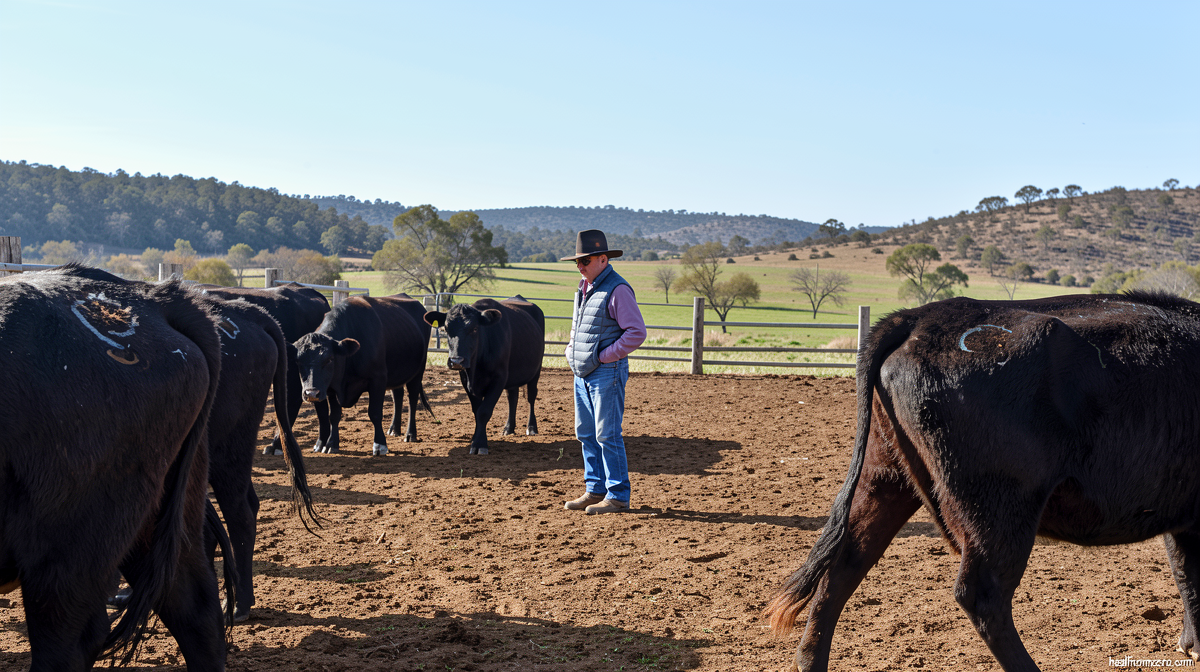
Healfromzero.com – The New World screwworm — a parasitic fly whose larvae burrow into living tissue and consume flesh from the inside out — has become the unlikely fulcrum of a bitter transnational dispute over who gets to move livestock across the US-Mexico border. What began as a quarantine measure in November 2024, tightened again in July 2025, is now set to be partially reversed: the Department of Agriculture announced Thursday that it will proceed with reopening a crossing at Douglas, Arizona, to accept cattle shipments from Sonora, Mexico, as early as Monday.
The decision lands amid record-high beef prices on American grocery shelves, a shrinking domestic herd, and a political landscape where the cost of a hamburger has become a campaign talking point heading into the 2026 midterms. Ranchers on both sides of the 1,954-mile boundary say they are losing ground, but for opposite reasons.
What the Screwworm Actually Does
Unlike common house flies, the New World screwworm (Cochliomyia hominivorax) lays eggs directly into open wounds or mucous membranes of warm-blooded animals. The hatching larvae then feed on living muscle and fat, often killing livestock within days if untreated. The parasite has been detected in Texas, stoking fears that it could migrate northward and disrupt the entire North American beef supply chain. In Mexico, the threat has prompted aggressive eradication programs; a facility in Chiapas, for instance, sterilizes captured flies in bulk as part of a national campaign to eliminate the species from the country’s cattle belt.
US officials selected Sonora for the initial reopening because the state maintained high biosecurity standards and, until recently, reported zero screwworm cases. That calculus was complicated within days of the announcement: Sonora logged its first confirmed infestation. The single case has not, however, derailed the USDA’s schedule.
Mexican Ranchers: A Year of Financial Bleeding
For producers south of the border, the closure has been existential. Alvaro Bustillos, who leads the rancher’s union in the Mexican state of Chihuahua, told reporters that the shutdown nearly destroyed his operation.
“I had to fire people. It took me years to build my team. It took me years to build relationships. This is not only about the cattle trade. This is about families bonded together.”
Bustillos is watching the Sonora reopening closely, hoping a successful pilot will eventually unlock cross-border flows into his own region. Mexican producers broadly view the reopening as a lifeline after more than a year of frozen revenue.
US Ranchers: The Fear of Cheap Imports
North of the line, the mood is markedly different. Johnny Mestas, a 74-year-old cattle operator in the arid San Luis Valley of southern Colorado, has spent decades battling what he calls the three constants of ranching: market volatility, punishing weather, and competitive pressure from neighboring operations. He has survived two heart attacks along the way.
“Not everybody is meant to be a farmer. You’ve got to be half-crazy. There’s three elements you fight: the market, the weather and your neighbors.”
Mestas says the current price environment — beef at historic highs — has finally allowed him to turn a profit after years of operating at break-even.
“These past few years, I actually made money! Years and years, it was basically always break-even.”
His unease about the border reopening is not primarily about screwworm biology. It is about economics: if Mexican cattle, raised at lower feed and labor costs, flood back into US feedlots and packing plants, domestic cattle prices could fall sharply, erasing the narrow margin that has kept operations like his afloat.
Bill Bullard, a former South Dakota rancher now serving as CEO of R-CALF — a national association representing independent cattle and sheep producers — frames the issue in structural terms. He argues that American ranchers have been systematically displaced by cheaper foreign supply over roughly a generation.
“In just over a generation’s time, we wiped out half (of) our cattle producers in this country. It’s because we have been growing our dependence on foreign sources, displacing our domestic production in the United States. It is a threat to national security.”
The Political Dimension
Jenna Stanton, director of policy at the US Cattlemen’s Association (USCA), told reporters that many producers interpret the administration’s push to reopen the border as a deliberate attempt to cool beef prices ahead of the 2026 elections. That reading gains weight from a parallel move: the White House previously quadrupled the volume of low-tariff Argentine beef imports specifically to suppress domestic prices.
On Friday, the president announced a plan to import 300,000 metric tons of beef, framing the action as a consumer-protection measure that would “reduce prices for Americans while giving space for our Great American Beef.” The announcement deepened the sense among independent producers that policy is being calibrated to favor meatpackers and consumers at the expense of the ranching sector.
Why This Matters Beyond the Feedlot
The screwworm standoff is, on its surface, a veterinary quarantine question. In practice, it sits at the intersection of food-security policy, rural employment, transnational trade law, and electoral politics. A single parasitic fly has become the mechanism through which decades of accumulated tension over import dependence, price manipulation, and border governance are being tested in real time. Whether the Douglas crossing holds open, closes again, or triggers a wider reopening will shape not only cattle prices at the next supermarket checkout but also the viability of small-scale ranching communities on both sides of the Rio Grande.
Related Reading
Frequently Asked Questions
What is Screwworm is squeezing ranchers on both?
Screwworm is squeezing ranchers on both is the main topic of this guide. The article explains the context, practical details, and next steps readers should understand.
Why does Screwworm is squeezing ranchers on both matter?
Screwworm is squeezing ranchers on both matters because readers are looking for a useful answer, not just a short summary. Good content should match search intent and help them decide what to do next.