Ebola outbreak in Democratic Republic of Congo becomes deadliest in country’s history

DR Congo Ebola Outbreak Becomes Deadliest Ever
Healfromzero.com – The Ebola outbreak in Democratic Republic of Congo has now claimed 2,325 lives, government data released Sunday confirmed, making it the most lethal epidemic the country has ever recorded. The toll surpasses the 2,299 deaths from the 2018–2020 wave that previously held the national record. The milestone lands at a moment when surveillance gaps, strained clinics, and lingering community suspicion continue to hamper every stage of the response.
Scale, Speed, and a Fatality Curve That Should Not Be Rising
Confirmed infections have reached 4,945, with another 101 cases logged in the prior 24-hour window. This marks the nation’s 17th Ebola event since the virus was first isolated in the region. In raw numbers the episode still pales beside the 2014–2016 West African catastrophe — 28,616 cases and 11,310 deaths across Guinea, Liberia, and Sierra Leone, per World Health Organization tallies — but the tempo of escalation sets it apart. West Africa needed nearly five months from formal declaration before passing 1,000 deaths; the current crisis in Democratic Republic of Congo crossed the 2,000-death threshold in under three months.
The case fatality ratio, the share of confirmed infections ending in death, has climbed from roughly 20 percent in early June to 46 percent under the latest figures. Specialists stress that the virus itself has not grown more lethal. What has worsened is the pipeline between symptom onset and clinical recognition: late detection, incomplete contact tracing, and delayed supportive care all push patients past the window where intervention can succeed.
“Normally, as an outbreak progresses, the case fatality ratio should fall as contact tracing improves and patients are identified and treated earlier,” said Thomas Parisch, a Médecins Sans Frontières specialist recently deployed to the country. “Instead, we’re still seeing many cases detected very late, when treatment is less likely to succeed, with many identified only after they die in the community.”
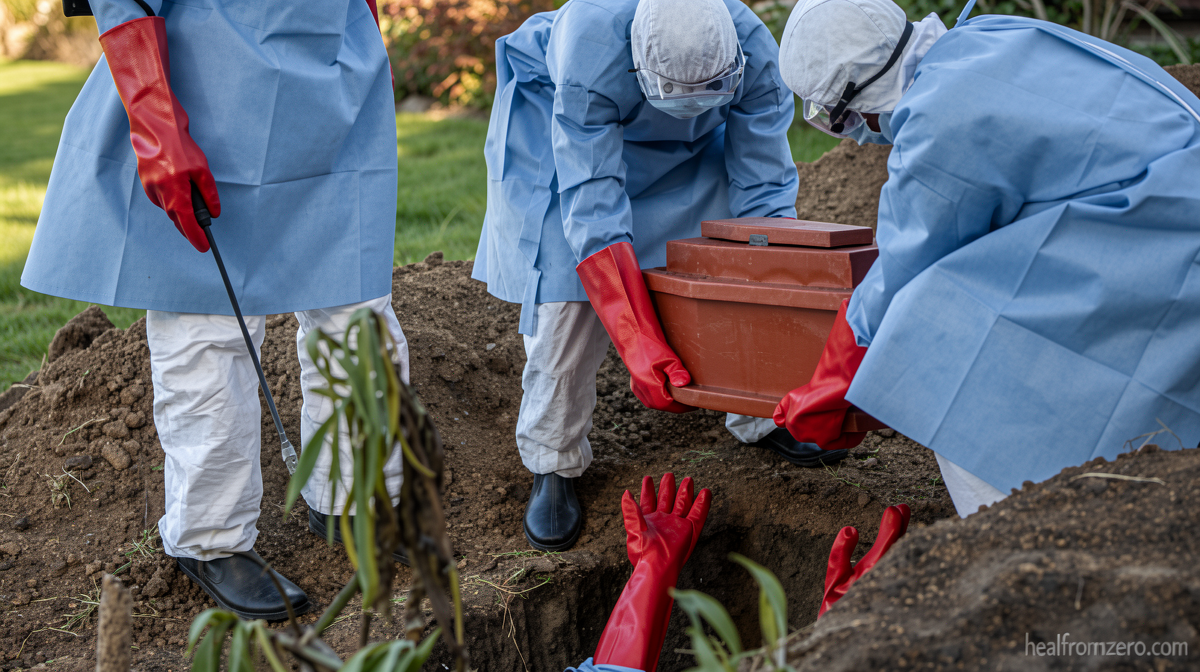
In rural and peri-urban districts, families often bury relatives before any laboratory confirmation arrives, seeding transmission chains that investigators must painstakingly reconstruct. By the time a patient reaches a treatment center, viral loads are frequently high enough to overwhelm even aggressive fluid replacement and electrolyte management.
The Bundibugyo Strain, Regional Spillover, and What Comes Next
The pathogen driving this epidemic is the Bundibugyo species of Ebola, for which no licensed vaccine or specific antiviral therapy yet exists. Experimental candidates remain confined to preclinical animal studies, and global health bodies are probing whether treatments developed for other Ebola species might confer cross-protection, though definitive human data are still lacking. The absence of an approved intervention compounds every structural weakness: weak eastern-province health infrastructure, periodic instability in conflict-affected zones, and deep-seated community resistance to contact-tracing teams.
The outbreak was formally declared on May 15, and its momentum has accelerated rather than decelerated since. A brief spillover into Uganda was contained within 20 confirmed cases and two deaths before local authorities declared that episode over last month — a contrast that underscores how quickly a neighbor with stronger surveillance capacity can ring-fence a cross-border event.
Ebola transmits through direct contact with the bodily fluids of infected persons, living or deceased. Typical manifestations include high fever, profuse vomiting, watery diarrhea, and, in advanced stages, both internal hemorrhage and visible external bleeding. Without early supportive care, mortality remains high, which is precisely why the speed of detection and isolation remains the single most consequential variable in curbing the next wave.
Frequently Asked Questions
How many people have died in the current Ebola outbreak in Democratic Republic of Congo? Government figures released Sunday confirm 2,325 fatalities, surpassing the 2,299 deaths from the 2018–2020 outbreak.
Is there a vaccine available for the Bundibugyo strain? No. No licensed vaccine or specific antiviral therapy currently exists for the Bundibugyo species. Experimental candidates are under evaluation but remain in preclinical stages.
Did the outbreak spread beyond DR Congo? A limited spillover reached Uganda, producing 20 confirmed cases and two deaths before local authorities contained and closed the episode last month.
When was the outbreak officially declared? The epidemic was formally declared on May 15, and case counts have continued to rise in the months since.