Ötzi the Iceman is long dead, but some of his ancient microbes are still alive

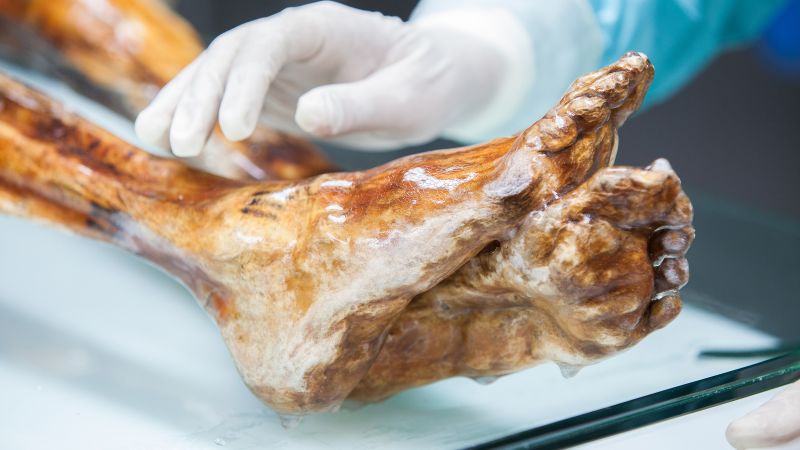
Ötzi the Iceman is long dead, but some of his ancient microbes are still alive
Ötzi the Iceman is long dead – Five millennia after his death, the mummified remains of Ötzi the Iceman continue to reveal secrets about life in the Copper Age. A groundbreaking study has uncovered that the frozen man, discovered in 1991 in the Ötztal Alps, is not just a static artifact but a living repository of microbes. Researchers found that certain fungal and bacterial species within and around his body remain active, challenging the long-held belief that ancient organic remains are sterile after thousands of years. This discovery suggests that microbial life can persist in frozen environments, offering new perspectives on preservation and decay.
Ötzi’s body, encased in glacial ice for over 5,300 years, has been a focal point for scientists since its discovery. The latest research, published in the journal Microbiome, reveals that the mummy harbors a dynamic microbial ecosystem. Some of these microorganisms, including fungi, have retained viability despite the passage of time. The study’s authors argue that these microbes were not merely preserved in a dormant state but may have continued to multiply in small pockets of moisture within the mummy’s tissues.
“In many studies of DNA from ancient human remains, the microbial DNA is largely ignored, and it’s often not clear if the microbial DNA that is recovered is as old as the human body itself or more recent contamination,” said Anders Bergström, an evolutionary genomics researcher at the University of East Anglia. “This study of Ötzi now provides some fascinating insights into this.”
Bergström, who was not involved in the research, highlighted the significance of the findings. The study’s methodology involved a meticulous examination of Ötzi’s microbial communities, both inside and outside his body. Scientists analyzed water reservoirs within his tissues, swabbed the exterior of the mummy, and sampled exposed internal organs. They also collected soil from the glacier where he was found and compared it with microbes from the museum’s storage chamber and the handling room. This multi-pronged approach allowed them to distinguish between original microbes and those that had colonized his body post-mortem.
One of the study’s key revelations is the role of the cold mountain environment in preserving these ancient organisms. Researchers linked several fungal species to the specific conditions of the glacier, suggesting that these microbes likely colonized Ötzi’s corpse and froze with it. The fungi’s ability to survive in sub-zero temperatures was pivotal, as their dormant state allowed them to remain viable even after thousands of years. When revived in a controlled lab setting, these microbes demonstrated surprising resilience, raising questions about the long-term stability of biological material in icy environments.
The findings also have implications for understanding the microbial diversity of the Copper Age. Senior author Frank Maixner, leading the Institute for Mummy Studies at Eurac Research in Bolzano, Italy, emphasized the value of Ötzi’s gut microbiome as a window into ancient ecosystems. “These microbes give us a unique and precious snapshot of what the human gut looked like in the Copper Age, before industrialization reshaped our microbiome,” Maixner explained in an email to CNN. “We identified ancient gut bacteria preserved inside Ötzi that are extremely rare in people living modern, industrialized lifestyles today — though they can still be found in people with traditional, non-industrialized ways of life.”
While Ötzi’s microbes offer a glimpse into the past, they also present challenges for modern preservation techniques. Scientists initially believed that storing the mummy at around 21 degrees Fahrenheit (minus 6 degrees Celsius) with 99% relative humidity would prevent microbial activity. However, recent evidence suggests that some microbes thrive in cold environments, even when preserved in such conditions. This has led researchers to question whether the current storage methods are sufficient to maintain the integrity of Ötzi’s biological remains.
Handling the mummy further complicates matters. Every contact with the specimen introduces the risk of contamination from modern bacteria and fungi. These contaminants can mix with ancient microbes, making it difficult to determine which species originated with Ötzi and which were introduced later. The study’s team addressed this by comparing microbial samples from the mummy with those from the museum’s surroundings, using DNA damage analysis to estimate the age of each species. This process helped identify which microbes were truly ancient and which were recent arrivals.
Ancient Microbial Communities and Their Survival
The research team also examined the possibility of microbial activity within Ötzi’s body. By culturing microbes from various sites, including his gut and the glacier soil, they observed that some species remained metabolically active. This suggests that the mummy’s frozen state has not fully halted microbial processes, and that certain organisms can continue to function even after millennia. The implications of this discovery extend beyond Ötzi, as it challenges assumptions about the long-term survival of microorganisms in ancient remains.
Ötzi’s survival of microbial activity in such a cold environment is particularly noteworthy. The glacier’s freezing temperatures and low humidity have protected his body from degradation, but they have also preserved the microorganisms that once inhabited it. Scientists are now exploring how these microbes interacted with their surroundings and whether they played a role in the preservation of the mummy itself. The study’s authors propose that the microbes’ activity may have contributed to the remarkable state of Ötzi’s remains, creating a symbiotic relationship between the organism and its environment.
Moreover, the findings suggest that the storage conditions of Ötzi’s remains may have inadvertently supported microbial life rather than suppressing it. While the mummy was kept in a controlled environment, the study indicates that some microbes could have continued to multiply in the micro-pockets of moisture present in his tissues. This raises concerns about the reliability of microbial data collected from ancient specimens, as modern contaminants may overshadow the original microbial composition.
Ötzi’s 61 Tattoos and the Microbial Connection
Adding to the intrigue of Ötzi’s story, new research has shed light on his 61 tattoos, which were initially thought to be a result of post-mortem damage. Scientists now believe these markings may have been created by the same microbial processes that preserved his body. The tattoos, etched into his skin, are not just cultural artifacts but potential evidence of ancient microbial interactions with the human body.
This discovery underscores the complexity of Ötzi’s preservation. The mummy’s skin, once thought to be a passive surface, may have been influenced by the microbes that colonized it. Researchers hypothesize that the cold environment and the unique properties of Ötzi’s skin allowed these microbes to remain active, contributing to the formation of the tattoos. The study’s authors argue that this dual role of microbes — both as preservers and creators of biological features — highlights their importance in ancient ecosystems.
By analyzing the microbial communities associated with Ötzi, scientists are not only unraveling the mysteries of his life but also gaining insights into the broader microbial world of the Copper Age. These findings suggest that the human body can serve as a microcosm for studying ancient microbial diversity, with Ötzi acting as a unique case study. The research opens new avenues for understanding how microbes have shaped human history, from health and diet to environmental adaptation.
As the study continues to gain attention, it prompts a reevaluation of how scientists handle and analyze ancient remains. The microbial activity in Ötzi’s body demonstrates that even the most well-preserved specimens can hold surprises. This realization encourages researchers to consider the dynamic nature of ancient ecosystems, where microbes and humans coexisted in intricate, often overlooked, ways. Ötzi’s legacy, once thought to be solely archaeological, now extends into the realm of microbiology, offering a multidisciplinary perspective on the past.