Exclusive: EPA scientists say they are being pushed to downplay potential risks of household products

Exclusive: EPA Scientists Report Facing Pressure to Minimize Chemical Risk Assessments
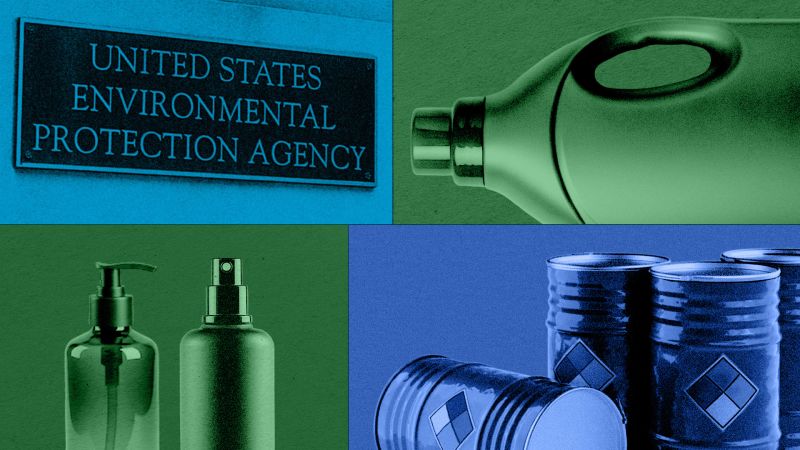
Exclusive – Within the Environmental Protection Agency (EPA) under the Trump administration, career scientists have described a growing trend of political influence over their evaluations of chemical safety. These assessments, which typically scrutinize the health risks of substances found in everyday products such as cleaning agents and personal care items, are being subtly reshaped to reduce perceived dangers. Multiple current and former employees from the Office of Chemical Safety and Pollution Prevention shared that their supervisors are encouraging them to downplay the potential hazards of chemicals already in use, effectively altering the narrative to suggest safety where risk might otherwise be evident.
Shifting Priorities in Chemical Risk Analysis
According to those who have worked within the agency, the emphasis has shifted from comprehensive risk evaluations to scenarios that prioritize political alignment over scientific rigor. This has led to a situation where even chemicals that pose significant threats to human health or the environment are being reanalyzed with parameters that may not reflect real-world exposure. One insider explained that the directive often involves exploring alternative exposure situations, such as reducing the amount of contact a chemical has with the body, to justify its safety.
“What we’ve been told is: ‘Let’s look at alternative scenarios,’” a former EPA employee said. “If putting two hands in a chemical shows risk, this person said a supervisor might ask, ‘What if you dip one hand? What if you dip one finger?’ in search of the smallest amount of contact needed to call it safe.”
This approach has sparked concerns among scientists about the integrity of their work. The EPA’s chemical safety division is responsible for evaluating a wide range of substances, from common household cleaners to cosmetics, for risks such as cancer, endocrine disruption, birth defects, and reproductive harm. However, the current process has led to scenarios that lack a solid scientific foundation, according to the employees. The push to downplay risks is not just an internal matter—it aligns with broader policy goals of the administration, which has sought to roll back environmental regulations and emphasize economic efficiency over precautionary measures.
Political Appointees and the Evolution of Risk Definitions
The shift in focus also reflects the influence of political appointees in the agency. With the Trump administration’s appointment of former industry insiders and lobbyists to key positions, there has been a noticeable change in how risks are interpreted. Career staff report being instructed to limit their consideration of factors like racial disparities in chemical exposure, a move that aligns with the administration’s broader efforts to reduce regulatory burdens.
“Every decision is going to the political level, down to the smallest detail. That is abnormal,” a scientist who recently left the chemical division told CNN.
Senior experts have increasingly been moved into administrative roles, leaving less experienced staff to conduct critical risk assessments. This transition has created a dynamic where scientists must constantly justify their methods to political leaders, often facing scrutiny for their choices. “You have to follow instructions,” said one career employee. “Otherwise, that’s insubordination.” The fear of retribution has also grown, with some staff mentioning the termination of union contracts and the suspension of colleagues who expressed dissent in written statements.
EPA’s Defense of Scientific Integrity
In response to these claims, the EPA has defended its commitment to gold-standard science. The agency cited its Executive Order on Restoring Gold Standard Science, which it claims ensures risk evaluations are based on realistic exposure scenarios rather than overcautious assumptions. In an email to CNN, the EPA stated: “EPA is implementing the President’s Executive Order on Restoring Gold Standard Science across its risk evaluations. In practice, that means using realistic exposure scenarios rather than defaulting to compounded worst-case assumptions, being transparent about the assumptions and uncertainties in every analysis, and ensuring conclusions are testable and reproducible.”
The agency also emphasized that its decisions are grounded in peer-reviewed literature, validated test methods, and real-world data. “Our top priority is protecting the health of all Americans,” the statement added. “Every chemical safety decision is informed by gold-standard science: peer-reviewed literature, validated test methods, real-world monitoring data, and fit-for-purpose exposure and fate modeling.” Despite these assurances, career staff argue that the practical implementation of these guidelines has diverged from their intended purpose.
Impact on Scientific Independence
Employees described a growing disconnect between the agency’s scientific mission and the political priorities driving its operations. While previous administrations were said to respect the expertise of scientists, the current environment has created a more adversarial relationship. “There was a level of respect and trust that the scientists were relying on the best science,” said a former employee. “But now, subject-matter experts have to explain to political appointees why they chose a particular science approach, and if asked to think differently, there’s little you can do to push back if you’re meeting with the top person.”
This tension has raised questions about the long-term implications for public health. Thousands of chemicals in everyday products remain unassessed for their full impact on human health, despite being widely used. The changes in risk evaluation methods have led to a scenario where potential dangers are minimized, potentially delaying or eliminating regulations that could protect vulnerable populations. For instance, chemicals known to disproportionately affect minority communities are now being evaluated with parameters that ignore these disparities, a shift that has drawn criticism from both within and outside the agency.
As the EPA continues to prioritize economic considerations over health risks, scientists are left navigating a complex landscape where political influence and scientific integrity are in constant dialogue. The challenge lies in maintaining the accuracy of risk assessments while adapting to the expectations of a leadership that favors deregulation. For those who have witnessed this transformation firsthand, the outcome is a system where the pursuit of safety is no longer purely data-driven but shaped by the political agenda of the day.
With the ongoing changes, the question remains: how much of the scientific process can be trusted when it is subject to such influence? The EPA’s role as a guardian of public health is being tested, and the consequences of these shifts may take years to fully understand. Yet, for now, the agency’s scientists continue their work, adapting to a new reality where the line between evidence and ideology is increasingly blurred.