
The oceans are in deep trouble. The Trump administration is ditching a vital deep-sea monitoring system
The Oceans Face a Crisis as the Trump Administration Discontinues a Key Monitoring System
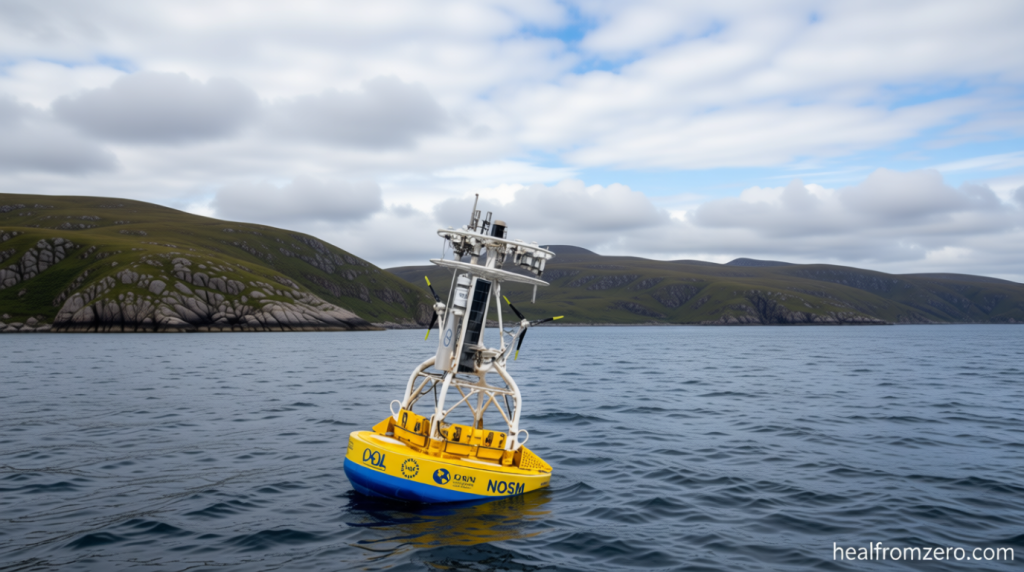
The oceans are in deep trouble – In a decision that has sparked significant concern, the Trump administration has moved to dismantle a $368 million deep-sea monitoring initiative, the Ocean Observatories Initiative (OOI). This network of instruments, crucial for tracking changes in oceanic conditions, is now at risk of being dismantled, leaving scientists to question the U.S.’s commitment to understanding and protecting its marine environments during a period of unprecedented environmental stress.
A Vital System at Risk
The OOI, launched in 2016, consists of nearly 900 advanced instruments deployed across critical regions of the Pacific and Atlantic Oceans. These tools, engineered to endure extreme pressure and corrosive saltwater, provide real-time data on oceanic health, including shifts in chemical composition, temperature fluctuations, and the dynamics of powerful current systems. Scientists rely on this information to predict weather patterns, manage fisheries, and assess the impacts of climate change on coastal communities.
The National Science Foundation (NSF), the primary funder of the OOI, recently announced plans to “descop” the system, a process that will involve the removal of in-water infrastructure over the next 15 months. This includes arrays off the coasts of Alaska, Washington, Oregon, and North Carolina, as well as a network in the North Atlantic near southeast Greenland. According to Mike England, media affairs head at the NSF, the decision reflects a broader strategy to adopt a more agile approach, focusing on evolving priorities and smarter resource allocation within the research infrastructure portfolio.
Climate Rollbacks and Deep-Sea Mining
The announcement coincides with the Trump administration’s broader efforts to roll back climate regulations and reduce funding for environmental research. At the same time, the government is advancing plans to exploit the deep sea for critical minerals, such as rare earth elements, which are essential for technologies like electric vehicles and renewable energy systems. This dual focus on deregulation and resource extraction has raised alarms among experts, who argue that the OOI’s removal undermines scientific progress at a pivotal moment.
“This is a case of being short-sighted,” remarked Rick Spinrad, an oceanographer who oversaw the National Oceanic and Atmospheric Administration during the Biden administration. Spinrad emphasized that the OOI has already demonstrated its value in delivering benefits beyond scientific curiosity, such as improving weather forecasts, supporting fisheries management, and safeguarding coastal regions from rising sea levels. “Where is the analysis showing that eliminating the OOI is in the best interest of the American people?” he questioned, highlighting the lack of a clear cost-benefit argument for the decision.
AMOC: A Crucial System in Peril
A central worry is the potential collapse of the Atlantic Meridional Overturning Circulation (AMOC), a vast network of ocean currents that plays a vital role in regulating global climate. Data from the OOI has been instrumental in tracking AMOC’s behavior, revealing signs of weakening that could lead to severe consequences. Researchers warn that a complete shutdown of this system might trigger accelerated sea level rise along the U.S. East Coast, bring winter deep freezes to Europe, and cause prolonged droughts across parts of Africa.
“The AMOC is like the circulatory system of the planet,” explained Stefan Rahmstorf, a professor of physics and oceanography at Potsdam University in Germany. “Its disruption could have cascading effects on weather systems, ecosystems, and economies worldwide. Right now, we need to maintain the most detailed observations possible to anticipate these changes.” Rahmstorf’s comments reflect the broader anxiety within the oceanography community, which sees the OOI’s removal as a critical setback in the race to understand climate risks.
Understanding the Ocean’s Hidden Changes
Scientists are particularly concerned about the loss of data from the Ocean Station Papa, a buoy-based array in the Gulf of Alaska that monitors ocean health. This system tracks factors like acidity levels in waters that are vital for sustaining the region’s fishing industry, which is already under threat from ocean acidification. Helen Findlay, a biological oceanographer at the Plymouth Marine Laboratory in the UK, noted that her research has shown vast portions of the global ocean have entered a “zone of risk” for ecosystem collapse.
“The ocean is on a dangerous tipping point,” Findlay said. “Without long-term observations, we’re essentially navigating a volatile system with less visibility, which could have dire consequences for both marine life and human societies.” Her warning underscores the importance of sustained monitoring in detecting early warning signs of climate-driven disruptions, such as coral bleaching, intensified storms, and shifts in oceanic chemistry.
Global Implications of the Decision
The dismantling of the OOI has drawn criticism for its timing, as the world grapples with record-high sea temperatures and the looming threat of a super El Niño event. These phenomena are already causing more frequent and severe hurricanes, exacerbating sea level rise, and straining marine ecosystems. The loss of real-time data from the OOI could leave policymakers and scientists ill-equipped to respond to these challenges effectively.
“The AMOC is one of the most critical components of our climate system, and its fate is uncertain,” said Rahmstorf. “If we stop monitoring now, we might miss the early signals that could help us prepare for a future of extreme weather and climate instability.” The NSF’s decision to de-scop the OOI has been interpreted by some as a sign of prioritizing short-term gains over long-term climate resilience, particularly as the U.S. continues to push for deep-sea mining initiatives.
While the NSF defends the move as a necessary step to streamline operations and align with emerging technologies, the scientific community remains divided. Some argue that the OOI’s data is indispensable for modeling climate scenarios and informing international climate agreements. Others see the administration’s actions as a deliberate attempt to weaken ocean science, reducing the U.S.’s influence in global climate discussions and leaving taxpayer-funded equipment in disarray.
Conclusion: A Call for Re-evaluation
As the OOI’s infrastructure is gradually removed, the question remains: what will be the long-term cost of this decision? For decades, the system has provided insights into the ocean’s complex interactions with the atmosphere, helping to forecast changes that affect everything from agriculture to transportation. Its potential loss could hinder efforts to mitigate climate impacts and protect vulnerable coastal populations.
“We are choosing to go blind in a time when we need eyes the most,” said Findlay. “The ocean is already showing signs of irreversible change, and without this network, we may not have the tools to address it.” The OOI’s dismantling serves as a reminder of the delicate balance between fiscal responsibility and scientific preparedness, as the world braces for the consequences of a warming planet.