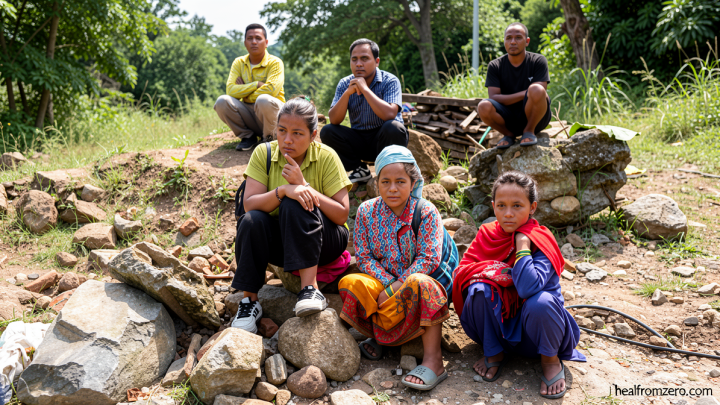
After a sexual assault case went viral, China’s corporate drinking culture is under fire


Daftar Isi
When the Toast Turns Toxic: A Viral Assault Case Exposes China’s Corporate Drinking Problem
Healfromzero.com – In the gleaming office towers of Hangzhou, one of China’s wealthiest technology and commerce centers, a routine after-dinner trip to a karaoke bar became the flashpoint for a national reckoning. Two men — a senior executive at a state-backed real-estate developer and a local government official — have been placed under criminal detention after allegedly forcing themselves on a woman who had attended their gathering. The victim sustained injuries requiring hospitalization, and both accused have been stripped of their positions. What began as a celebration of a profitable property transaction has now ignited a firestorm of public debate over decades of entrenched workplace drinking rituals that many Chinese women say leave them vulnerable, pressured, and powerless.
The Incident and Its Aftermath
Authorities in Hangzhou confirmed in an official investigation report that the two men were detained on charges of “forcibly molesting” the woman at the karaoke venue following their dinner. The woman, identified in local media coverage as an employee of a real-estate firm, had been summoned by her supervisor to join the evening’s festivities. Once there, she was pressured to drink alongside the men. After the dinner concluded, the group moved to the karaoke bar, where the alleged assault took place.
The case detonated across Chinese social media within days of becoming public. On Weibo, the country’s dominant microblogging platform modeled after X, the story accumulated more than half a billion views. The sheer scale of the reaction caught many observers off guard, and it quickly shifted the conversation from the individual crime to the systemic culture that made such an evening possible in the first place.
A Culture Built on the Bottle
Work-related drinking in China is far more than a social nicety. In industries and government offices where men overwhelmingly occupy senior roles, the expectation that subordinates — particularly women — will drink alongside their superiors functions as a loyalty test, a bonding ritual, and an implicit power assertion. Declining a toast can be read as insubordination. Accepting one, repeatedly, can leave a woman too intoxicated to leave, too compromised to speak, or simply too isolated to call for help.
Online commentators have described women at such gatherings as “sacrifices” or “bargaining chips,” tools deployed to lubricate negotiations between male executives. One widely shared social media post articulating that dynamic gathered more than 25,000 likes on Weibo. Other users noted that in China’s hypercompetitive job market, refusing an invitation to a drinking dinner risks being branded uncooperative and damaging one’s career trajectory — leaving women with little practical option but to attend and to keep drinking.
Beijing’s Anti-Excess Agenda Collides with the Case
The timing of the scandal intersects with a priority that has defined Chinese governance for years: the campaign against official graft, cronyism, and lifestyle excess. President Xi Jinping has repeatedly framed lavish banquets and free-flowing alcohol as symptoms of a decadent culture that threatens both the Communist Party’s grip on power and the nation’s economic trajectory. State media seized on the Hangzhou incident to reinforce that message.
A wave of opinion pieces and editorials in official outlets condemned what they called the “distorted culture of excessive drinking at business dinners.” Notably, much of the institutional blowback focused on the excesses surrounding the dinner rather than on the alleged sexual assault itself — a distinction that drew sharp criticism from many readers who felt the framing minimized the crime.
“The fact that a drinking party incident has sparked such intense public debate stems from people’s high sensitivity to the conduct of public officials, their keen attention to the boundaries of government-business relations, and their deep empathy for the victims,” a commentary in the Chinese Communist Party mouthpiece People’s Daily said.
Local media identified both accused men as connected to government entities — precisely the category of officials Beijing has been pressuring to curb extravagance. One online commentator captured the irony: “In the current climate of high-pressure anti-corruption efforts and strict control over drinking parties, it is truly unbelievable that these people dared to act so brazenly.”
Gender Dynamics Beneath the Official Narrative
Outside the state-media frame, social media conversation turned with equal intensity to the gendered power dynamics at the heart of the alleged assault. Users exchanged personal accounts of being cornered at corporate dinners, of being expected to drink until they could no longer walk steadily, of being treated as decorative or expendable in rooms where deals were being struck. Several commentators highlighted how alcohol was being weaponized to “shift blame” for sexual misconduct away from men and onto the woman’s supposed willingness to participate in the drinking.
This is not an isolated phenomenon. In 2021, a young female employee at tech giant Alibaba publicly accused her manager and a client of sexually assaulting her after a business dinner. In a rare judicial victory in a category of cases that seldom reach conviction, the client received an 18-month prison sentence. Yet the woman who had told her story in an essay circulated on the company’s internal network was ultimately terminated from her position, and the court dismissed the case against her manager.
That earlier episode illustrated a pattern: even when the legal system delivers a partial verdict, the institutional and social costs for the accuser can be severe. Workplace sexual-assault cases remain uncommon in Chinese courts, and women who have pursued high-profile claims have frequently encountered backlash, censorship, or career retaliation. Chinese authorities have, on multiple occasions, moved to quiet #MeToo-adjacent moments and to constrain activism aimed at workplace sexual harassment.
What Comes Next
The Hangzhou investigation remains ongoing, and the criminal detention of both men signals that prosecutors intend to pursue charges. Whether the case produces a conviction, a meaningful institutional reckoning at the state-backed developer, or both, will be watched closely by a public that has already made clear it expects more than a token disciplinary response. For millions of Chinese women who navigate corporate drinking culture daily, the question is whether a viral scandal can catalyze structural change — or whether, once the news cycle moves on, the toasts will resume as before.
Related Reading
Frequently Asked Questions
What is After a sexual assault case went?
After a sexual assault case went is the main topic of this guide. The article explains the context, practical details, and next steps readers should understand.
Why does After a sexual assault case went matter?
After a sexual assault case went matters because readers are looking for a useful answer, not just a short summary. Good content should match search intent and help them decide what to do next.