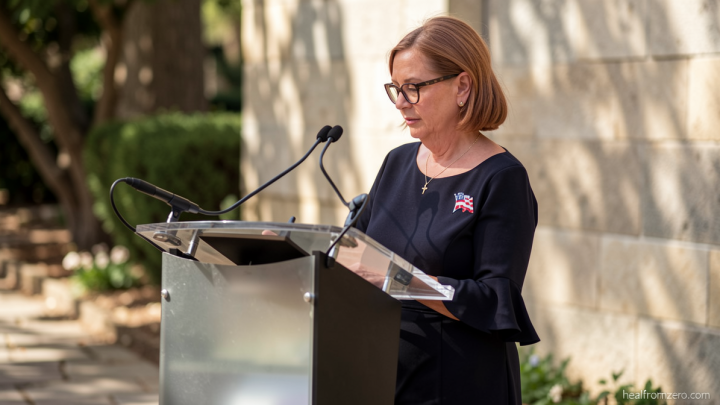
Sailors on carriers like the USS Abraham Lincoln feel the strain as Navy deployments stretch longer

Daftar Isi
Extended Carrier Deployments Test Navy Crew Resilience
Healfromzero.com – The USS Abraham Lincoln has become the latest symbol of a growing challenge within the United States Navy: increasingly lengthy deployments that are pushing sailors beyond traditional endurance limits. Currently maintaining a presence at sea for more than half a year, the aircraft carrier faces mounting concerns regarding crew morale and psychological wellbeing. This extended mission could potentially establish a new benchmark for the longest continuous deployment by an American carrier since the conclusion of the Vietnam War era.
Breaking Records and Setting New Standards
The Lincoln’s current voyage joins a recent trend of extended carrier operations. Just months prior, the USS Gerald R. Ford concluded an impressive 326-day deployment that encompassed significant military operations targeting both Iran and Venezuela. That achievement set a new high-water mark for carrier longevity at sea.
Analysis of deployment announcements and fleet tracking data reveals a clear pattern emerging across the Navy’s carrier fleet. Command leadership is progressively requesting aircraft carrier groups to surpass the service’s established recommendation of seven months for standard deployments. This shift represents a meaningful departure from historical norms and is generating conversations throughout naval communities.
Life at Sea Under Pressure
For sailors aboard the Lincoln, daily existence has grown increasingly demanding. A crew member described the atmosphere on the vessel as notably diminished, with repeated reports of suicidal thoughts circulating among fellow service members. Essential facilities have experienced frequent disruptions, with toilets and water fountains regularly closing for maintenance while hot water availability remains inconsistent.
Everyday we wake up and listen to our Captain speak, we are desperately hoping and anxious for updates on our return.
Conditions aboard the Lincoln differ substantially from previous deployments, primarily because ongoing combat operations have prevented the carrier from visiting friendly ports. Traditional port calls allow ships to replenish supplies and provide sailors with opportunities to rest and reconnect with family. Without these regular breaks, the Lincoln has encountered intermittent food shortages, depleted hygiene supplies, and complications within its water distribution system.
One sailor, speaking anonymously due to concerns about potential repercussions, explained the changing landscape of daily necessities. Previously, the ship store offered unlimited access to items with consistent availability of hygiene products. Now, purchase restrictions are in place and essential items are difficult to obtain.
Mental Health and Human Cost
The psychological toll of extended deployments has become increasingly visible. Two sailors assigned to the Lincoln strike group have jumped overboard in recent months, with both individuals rescued alive according to US officials. Additional incidents involving crew members attempting to leave the ship have been reported by naval publications.
The father of one Lincoln sailor, who requested anonymity, expressed understanding that service members join the Navy to fulfill their duties and that combat operations are inherently challenging. However, he questioned why relief has not arrived sooner and whether some of the mental strain could have been anticipated and mitigated.
The Navy has issued a formal response to concerns about crew wellbeing. In a statement provided to CNN, naval representatives noted that they have not observed an increase in suicidal ideations or attempts aboard the ship. The organization emphasized that religious, medical, and mental health professionals remain available to evaluate and address concerns as they emerge.
We have not observed an increase in suicidal ideations or attempts aboard the ship. We take every service member’s well-being seriously and have religious, medical and mental health professionals available to assess and address concerns as they arise.
A US official further clarified that the Navy does not perceive a direct correlation between deployment duration and thoughts of self-harm, noting that man overboard incidents are not exclusive to this particular fleet.
Political and Family Dimensions
President Donald Trump addressed questions regarding the Lincoln deployment length on Friday, telling reporters that the mission had been “not nearly long enough.” This comment drew immediate response from families connected to the carrier.
The wife of one Lincoln service member, who spoke with CNN’s Jake Tapper, criticized the President’s approach. She suggested that he does not always consider his words before speaking and called upon both Trump and Secretary of Defense Pete Hegseth to demonstrate greater empathy. Her message was direct: leaders should take responsibility for conditions affecting the military, their vessels, and the ongoing conflict.
Take some accountability for what’s going on with your military, your ships, in your war. In your war. It’s infuriating.
Expert Analysis and Future Implications
Kate Kuzminski, a defense expert managing research at the Center for a New American Security think tank, has called for the Navy to recalibrate its deployment framework to align with practical realities. She emphasized the importance of establishing realistic expectations for sailors and their families.
What does it do to a family who’s newly assigned to the Ford? It could drive people’s or families’ decisions to get out (of the Navy).
Statistics reviewed by CNN indicate that the median duration of US-based aircraft carrier deployments has consistently risen since 2020. Admiral Daryl Caudle has outlined a Navy strategy designed to deliver predictable three-year cycles for sailors, incorporating a seven-month or 210-day deployment period. Between 2018 and 2022, the majority of deployments remained within or slightly below these parameters.
As the Lincoln continues its extended mission, the broader implications extend beyond immediate crew welfare. Experts warn that sustained pressure on both vessels and personnel could accelerate burnout rates and influence retention decisions across the Navy. Families newly assigned to carriers experiencing extended deployments face particular uncertainty, potentially affecting career choices and quality of life for service members and their loved ones.
The evolving deployment landscape raises questions about long-term sustainability. While extended operations may serve strategic objectives, the human element remains critical to maintaining a capable and motivated naval force. How the Navy balances operational demands with crew wellbeing will likely shape recruitment, retention, and family stability for years to come.
Related Reading
Frequently Asked Questions
What is Sailors on carriers like the USS Abraham?
Sailors on carriers like the USS Abraham is the main topic of this guide. The article explains the context, practical details, and next steps readers should understand.
Why does Sailors on carriers like the USS Abraham matter?
Sailors on carriers like the USS Abraham matters because readers are looking for a useful answer, not just a short summary. Good content should match search intent and help them decide what to do next.