Trump has a new plan to crush Iran’s economy. But will he stay the course?

Daftar Isi
Trump Pivots to Economic Siege Against Iran as Military Campaign Stalls
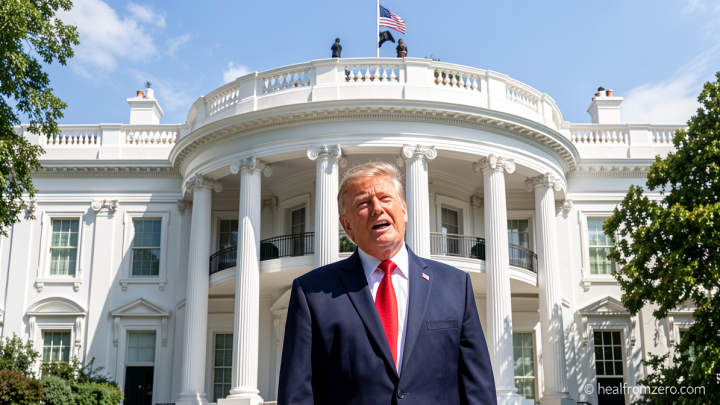
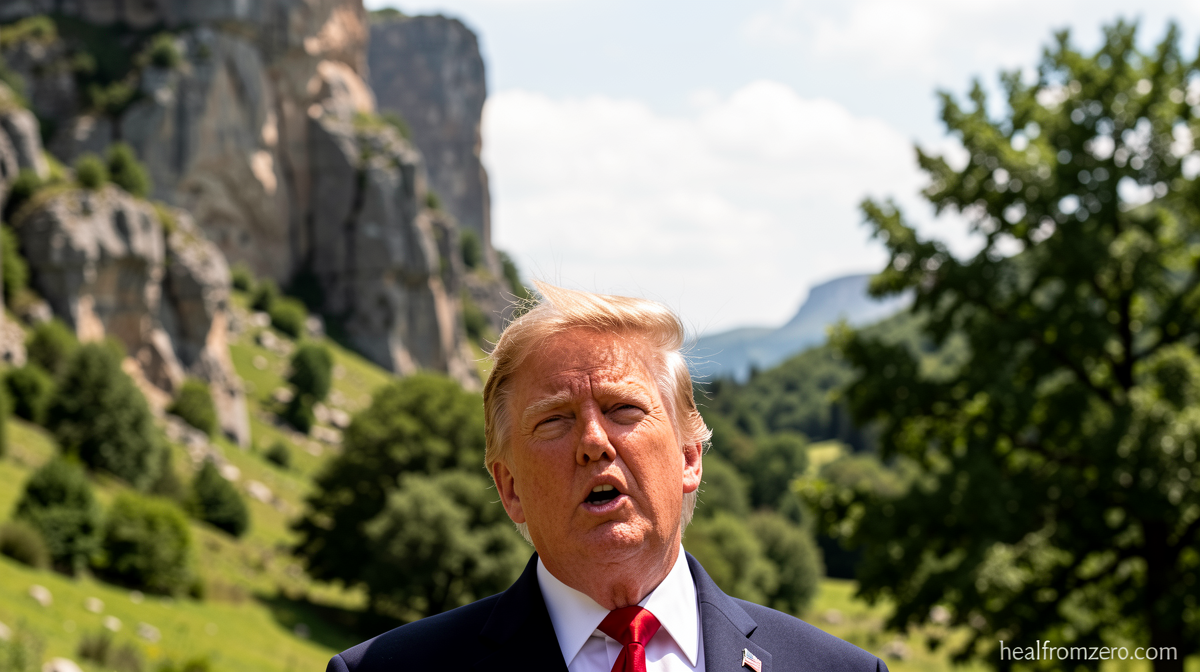
Healfromzero.com – After six months of a war he declared victorious within days, President Donald Trump has unveiled what he calls the most devastating economic operation ever directed at a sovereign nation. Announced via a Truth Social post on Wednesday, the plan marks yet another sharp turn in a conflict defined by its unpredictability — one that has already produced more strategic reversals than most observers can track. The president’s latest gambit: strangling Iran’s economy through comprehensive financial isolation until Tehran capitulates on its nuclear program and broader regional ambitions.
The pivot arrives after two earlier strategies failed to deliver results. Bombing campaigns did not force the Islamic Republic to surrender. A memorandum of understanding offering nuclear talks with added incentives also fell through. Now, with all diplomatic channels formally shut down, Trump’s inner circle has briefed political allies that the administration is settling into a prolonged war of economic attrition — a strategy whose success depends on sustained pressure over months or years rather than dramatic single strikes.
“Right now, I think the situation is so good,” Trump said Wednesday, describing a conflict he had declared won after a handful of days but which has now stretched deep into its sixth month.
The Scope of the Financial Squeeze
In a follow-up social media post, the president laid out the operational details of his economic blockade with characteristic bluntness. He pledged to punish any nation whose banks, commercial entities, airports, or government bodies extend any form of lifeline to Tehran.
“Oil smuggling, swap lines, cash transfers, exchange houses, ship registries, front companies — It all needs to stop NOW. You know who you are,” the president wrote.
The language targets the elaborate shadow networks Iran has cultivated over decades of sanctions — informal currency exchanges, third-country shipping arrangements, and barter deals that have kept petrodollars flowing despite Western restrictions. By naming these mechanisms explicitly, Trump is signaling that the administration intends to audit and disrupt not just official state channels but the informal financial plumbing that sustains the Iranian economy.
Skepticism in Tehran and Beyond
Analysts familiar with the Iranian system question whether economic duress alone will produce capitulation. The revolutionary government has endured some of the most punishing sanctions regimes in modern history — from the post-1979 asset freezes through the 2012 oil embargo and the post-2018 snapback following the US withdrawal from the nuclear deal. Its leadership has repeatedly demonstrated a willingness to absorb civilian hardship rather than concede strategic ground.
Daniel Citrinowicz, who served in Israel’s Defense Intelligence agency including as head of the Iran branch within the Research and Analysis Division, told CNN International on Tuesday that no evidence suggests Tehran is softening its posture of pressuring Trump through international commodity markets. While acknowledging that sustained economic pressure would impose severe costs on ordinary Iranians, he cautioned against overestimating its coercive effect.
“Those who think that Iran will collapse under the pressure, I think they are mistaken, despite the economic situation,” Citrinowicz said. “At the end of the day, I don’t see the Iranian calculus changing because of this pressure.”
That assessment carries weight given that the regime’s survival calculus has historically prioritized regime continuity over short-term economic welfare. A government that has weathered two decades of maximum-pressure campaigns is unlikely to fold simply because the pressure intensifies, particularly if it believes the applying side will tire first.
The Patience Problem
The central vulnerability of Trump’s new strategy is temporal. Destroying an economy of Iran’s size — one that produces roughly 3.3 million barrels of oil per day and sustains a population exceeding 88 million — is not a matter of weeks. It requires months, perhaps years, of consistent enforcement across multiple theaters. That demands a degree of strategic patience the president has rarely demonstrated in any domain, from trade negotiations to infrastructure projects to foreign policy commitments.
Iran’s leadership, if it judges that Washington will abandon the squeeze before results materialize, gains a powerful incentive to simply wait. The longer the administration hesitates or scales back enforcement, the more Tehran’s calculus tilts toward endurance over concession.
Diplomatic Dimensions and Allied Friction
The economic blockade cannot function in isolation. A truly effective isolation of Iran’s economy would require coordinated action spanning the Persian Gulf, European financial centers, and Asian trading partners. Yet the administration’s diplomatic posture has complicated such cooperation. Washington’s Iran diplomacy, conducted through envoys Jared Kushner and Steve Witkoff, has drawn criticism for what observers describe as a naïve approach to multilateral coordination.
The friction has deepened since the war’s opening phase, which threatened the national and economic security interests of Gulf and European allies. Trump subsequently berated those partners for failing to join the military effort. This week, he threatened to bomb Oman over its position in negotiations aimed at reopening the Strait of Hormuz — a waterway through which roughly one-fifth of global oil consumption transits daily. Earlier in the same week, he posted a misleading claim designating the strait as a new US territory, a statement that alarmed regional governments and shipping insurers alike.
Without allied participation in shutting down the clandestine trade routes and financial workarounds Tehran has built to evade sanctions, the blockade risks becoming a unilateral gesture rather than a binding constraint.
Alternative Pressure Vectors
Some policy thinkers argue the administration could inflict genuine structural damage through more targeted measures. Ludovic Hood, a senior fellow at the Hudson Institute, published a recent Wall Street Journal op-ed advocating a coordinated regional and international squeeze on Islamic Revolutionary Guard Corps revenue streams and a renewed offensive against Tehran’s proxy network stretching from Baghdad to Beirut. He urged closer US alignment with governments in Iraq and Lebanon to contest Iranian influence across the Middle East and advised Treasury Secretary Scott Bessent to escalate economic pressure on China, the largest purchaser of Iranian crude.
Hood’s thesis is that sustained pressure would compound existing inflation and accelerate capital flight, potentially triggering a banking crisis that would erode the regime’s domestic control. A blockade reinforced by allied cooperation in dismantling sanctions-evasion infrastructure would amplify that effect considerably.
The Unfinished Sentence
The full architecture of Trump’s economic war plan remains partially opaque. The administration has outlined its intent in broad strokes but has not yet detailed the specific sanctions instruments, enforcement mechanisms, or allied commitments that would operationalize the threat. Whether the strategy translates from social media rhetoric into sustained, multilateral economic warfare — or dissolves into another course reversal within weeks — will depend on choices the president has not yet made public. What is clear is that the sixth month of this conflict has produced no surrender, no signed agreement, and no de-escalation. The economic siege, if it proceeds at all, will be measured not in days but in fiscal quarters, and its success will hinge on a patience the president has yet to demonstrate.
Related Reading
Frequently Asked Questions
What is Trump has a new plan to crush?
Trump has a new plan to crush is the main topic of this guide. The article explains the context, practical details, and next steps readers should understand.
Why does Trump has a new plan to crush matter?
Trump has a new plan to crush matters because readers are looking for a useful answer, not just a short summary. Good content should match search intent and help them decide what to do next.