How the humble barcode could help prevent the next cyclospora outbreak

Daftar Isi
A Two-Dimensional Leap: How Next-Generation Barcodes Aim to Close the Gap in Food Safety
Healfromzero.com – This summer’s cyclosporiasis outbreak, which claimed two lives in the United States, laid bare a vulnerability that has persisted for decades: when a contaminated product reaches a consumer’s kitchen, tracing it back to its origin often depends on a human squinting at a string of stamped characters on a cardboard box. The retail and packaged-goods sectors are now preparing a technological fix that could fundamentally alter how America tracks, recalls, and safeguards the food supply. Beginning next year, stores will start rolling out two-dimensional barcodes — QR-code-style labels capable of encoding up to 3,000 digits and characters — to replace the one-dimensional, 10-digit Universal Product Codes that have governed checkout counters since the mid-1970s.
From a Single Gum Pack to a Global Standard
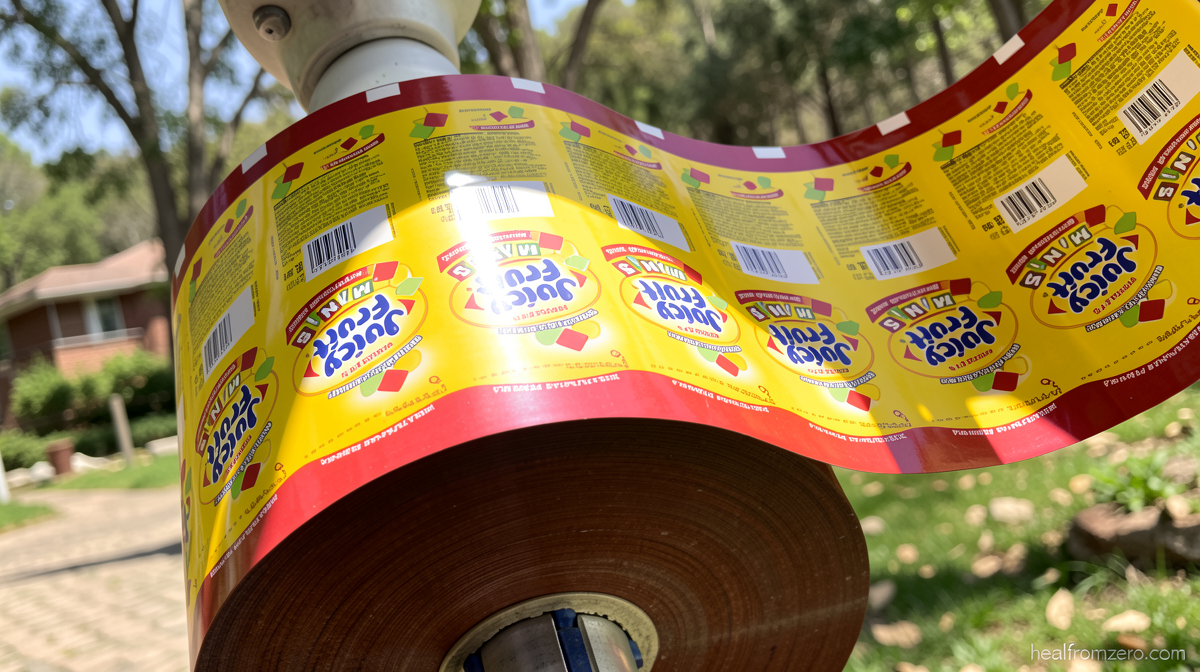
The barcode’s origin story is almost quaint by today’s standards. On June 26, 1974, a cashier at a Marsh supermarket in Troy, Ohio, scanned a pack of Wrigley’s Juicy Fruit gum, completing what remains the first recorded barcode transaction in retail history. That moment ushered grocery chains into the computing era. Fifty-two years later, the checkout experience has evolved in superficial ways — faster scanners, integrated point-of-sale systems — yet the underlying data architecture remains essentially unchanged. The same flat, linear strip of black bars still identifies nearly every item a shopper rings up.
GS1, the global standards body that licenses and governs barcode symbologies, has concluded that the industry is ready for a generational upgrade. The organization argues that manufacturers, retailers, and end consumers will all gain meaningful advantages from the transition, even though the shift demands substantial operational investment from both stores and packaged-goods companies.
What the Old Code Cannot Do
The existing one-dimensional barcode excels at exactly one task: telling a register which product is being scanned. Beyond that single function, the code is inert. Once a product leaves the shelf and enters a consumer’s home, the barcode carries no further information. It cannot identify the manufacturing date, the specific production lot, the farm of origin, or whether the item has been flagged in a recall. Those details live elsewhere — typically in a dense alphanumeric bin and lot number printed separately on the packaging, often in a font that resembles output from a 1990s dot-matrix printer.
When a recall is issued, a human being — an inspector, a store associate, or a worried shopper — must locate and decipher that separate identifier to determine whether a particular item is safe. In a typical big-box retailer stocking roughly 50,000 unique products with dozens of units of each on the shelf, the cognitive load on those human systems is enormous and error-prone.
“Human systems aren’t infallible,” said Frank Yiannas, who spent ten years as Walmart’s head of food safety before serving as FDA deputy commissioner of food policy and response. “It’ll no longer be a guesstimate. Precise recalls would add a lot of value to companies and to the customer.”
What the New Code Can Do
Two-dimensional barcodes compress thousands of characters into a compact square pattern. A cashier scans them at the register exactly as before. But a consumer with a smartphone can also scan the code, pulling up a manufacturer-hosted page that might display allergen information, recycling instructions, coupon offers, or the specific farm where ingredients were sourced. Critically for food safety, the 2D format allows the bin and lot number to be embedded directly inside the barcode itself, eliminating the need for a separate, easily overlooked stamp.
Grocery chains could leverage the embedded data to automatically flag items approaching expiration dates or to lock out spoiled products from being rung up at checkout. Manufacturers could prevent recalled units from scanning at all, whether they sit on a store shelf or in a customer’s pantry. In the ideal scenario, potentially dangerous items never reach a shelf in the first place.
“I don’t think they’re overselling the benefits of this,” Yiannas said of the projected advantages.
The Cost of the Status Quo
Under today’s system, an enormous volume of perfectly safe food is pulled from shelves and discarded because retailers cannot quickly verify lot-level safety. Yiannas estimates the resulting waste costs major retailers hundreds of millions of dollars annually, and in extraordinary cases billions. That financial drain represents the best-case outcome. At the worst end of the spectrum, consumers lose their lives — as two did in this summer’s cyclosporiasis episode, where contaminated produce reached households before the contamination was fully identified and contained.
The public-health stakes are not abstract. Cyclospora, a parasitic organism transmitted through contaminated food and water, causes prolonged diarrhea, fever, and dehydration. Outbreaks can persist for weeks while investigators work to isolate the source, and every day of delay extends the window in which additional consumers are exposed. Faster, more precise lot-level tracing compresses that window.
Implementation Hurdles
The technology is not yet deployed at scale, and the path to full adoption is nontrivial. Embedding a unique bin and lot identifier into every individual package means either printing a distinct label on-site at the manufacturing facility or pre-printing packages with those identifiers and shipping them to distribution centers. Both approaches require capital investment, supply-chain retooling, and coordination across thousands of suppliers. GS1 acknowledges the effort involved while maintaining that the long-term safety and economic returns justify the transition.
For now, the old linear barcode remains the lingua franca of American retail. But the next generation of checkout technology is already in motion, and its arrival could mean that the next time a foodborne illness outbreak strikes, the response is measured in hours rather than weeks — and that the product on your kitchen counter can tell you, in a single smartphone scan, exactly where it came from and whether it is safe to eat.
Related Reading
Frequently Asked Questions
What is How the humble barcode could help?
How the humble barcode could help is the main topic of this guide. The article explains the context, practical details, and next steps readers should understand.
Why does How the humble barcode could help matter?
How the humble barcode could help matters because readers are looking for a useful answer, not just a short summary. Good content should match search intent and help them decide what to do next.