Shein’s dressed for its long-awaited market debut in Hong Kong. But the party may be over

Daftar Isi
Shein Heads to Hong Kong’s Stock Market After Years of Delayed Listings
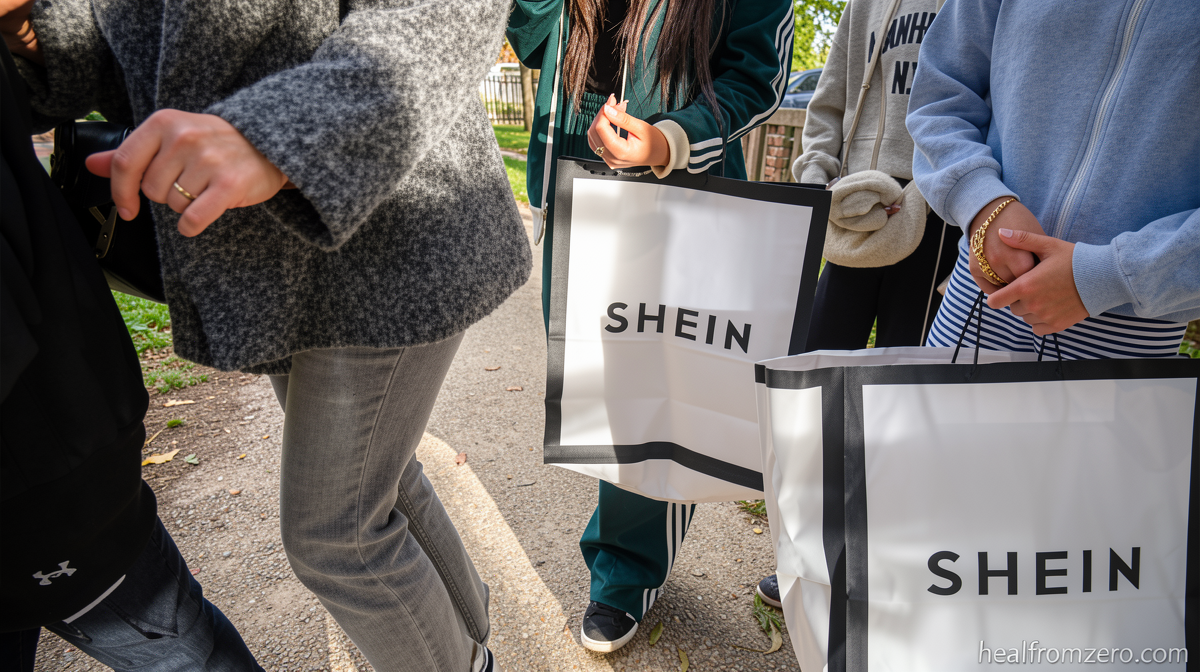
Healfromzero.com – The ultrafast fashion giant that once promised to turn any viral TikTok trend into a $3 crop top within days is preparing to ring the opening bell in Hong Kong on Tuesday — but the celebration it once envisioned at a near-$100 billion valuation has been replaced by a far humbler reality. The company, which sought to raise $1.7 billion in its initial public offering filed last week, is pricing itself at roughly $26 billion. That figure represents a collapse of more than 70% from the $98.2 billion peak it reached in 2022, when investors were still betting on its breakneck growth trajectory.
The steep de-rating signals deep unease among institutional buyers about where Shein’s revenue curve is headed. Intensifying competition from other low-cost retailers, shifting trade-policy landscapes, and persistent questions around labor sourcing and environmental impact have all converged to shrink the company’s perceived upside. For a brand that built its identity on speed and disruption, the message from the market is blunt: the window for explosive, tariff-free growth may have closed.
A Business Model Under Siege
Shein’s founding premise was radical for its time. Established in China in 2012, the company wired its Chinese manufacturing base directly into a social-media-driven demand loop. A micro-trend spotted on Instagram or TikTok could be translated into a finished garment on a customer’s doorstep within days, at prices that made traditional fast-fashion cycles look glacial. The result was a customer base skewed heavily toward teenagers and young adults who treated the platform less like a retailer and more like a real-time fashion feed.
“Shein took the fast fashion model, which is frequent release of new products, and just put it on steroids. The way that they’ve been really disruptive is because they’re so fast – Any small trend that popped up on social media, like TikTok or Instagram, they were able to supply a demand instantly,” said Louise Deglise-Favre, lead apparel analyst at market intelligence firm GlobalData.
By last year’s sales figures, Shein had climbed to the position of the world’s third-largest apparel brand, trailing only Nike and Adidas, with Zara and H&M sitting just behind it. GlobalData projects the company will hold that ranking through the current year. Yet the very speed that powered its ascent now collides with a regulatory environment that no longer rewards it.
Tariffs and the End of Free-Riding
The single most consequential policy shift for Shein’s economics was the elimination of the United States’ de minimis exemption — the rule that had permitted small parcels arriving from abroad to enter the country without paying import duties. Because Shein’s second-largest market after Europe is the US, that exemption was the financial backbone of its direct-to-consumer shipping model. Once the waiver was rescinded, billions of low-value packages flowing into American homes became subject to steep tariffs, compressing margins that were already razor-thin.
Europe followed suit. Last month, the European Union dismantled its own parallel exemption, removing the last major safe harbor for Shein’s parcel-based logistics. The prospectus, released in July, revealed the financial toll: net income had plunged 39% year over year even as revenue continued to grow, and by the first quarter of this year the company was posting losses of $99 million. The trajectory from profit to loss in a single fiscal cycle underscores how quickly the tariff wall altered unit economics.
“It has absolutely missed the best timing for an IPO,” said Jin Lu, senior vice president of The Asia Group consultancy. “Everyone is watching to see whether there’s still room for growth, and how much room there is. And competition, if anything, has intensified.”
Geopolitical Friction on Two Fronts
Shein’s path to a public listing has been obstructed not only by market forces but by the politics of its origin. Founded in China, the company spent years attempting to list in New York and London. In 2022, ahead of a planned US debut, it relocated its headquarters to Singapore and began opening overseas production facilities, moves widely read as attempts to dilute its Chinese identity amid escalating Washington–Beijing tensions. Neither listing was ultimately approved by Beijing, and both bids were withdrawn.
The forced-labor question has compounded the diplomatic friction. A Congressional Commission concluded in 2023 that there were “credible allegations of the company’s use of underpaid and forced labor” in China’s Xinjiang region — a major cotton-producing area home to the Uyghur minority — in violation of US law. China has publicly rejected those findings. Shein, for its part, has consistently denied employing forced labor anywhere in its supply chain and previously stated it did not source cotton from Xinjiang or from China generally. Yet at a UK parliamentary hearing early last year, the company’s legal counsel repeatedly sidestepped direct questions about whether Xinjiang cotton enters its supply chain. The Hong Kong prospectus, notably, contains no discussion of risks tied to the Xinjiang controversy.
The company has also faced design-plagiarism accusations from independent artists and established fashion houses, alongside environmental critiques of its volume-driven production model. Each of these issues, individually manageable, collectively erodes the premium that growth investors once attached to the brand.
What the Hong Kong Listing Signals
Choosing Hong Kong over New York or London is itself a statement. It places Shein within a jurisdiction where Chinese regulatory approval is a given, sidestepping the Beijing sign-off that blocked earlier attempts. It also positions the shares closer to the Asian supply chain that still underpins its operations. For retail investors in the region, the listing offers exposure to a brand they already shop, albeit at a valuation that prices in substantial execution risk.
The broader implication extends beyond one company. Shein’s experience — a non-tech Chinese firm unable to secure Western listing approval, forced to reprice itself after trade-policy reversals, and navigating labor-standards scrutiny from multiple governments — maps the headwinds now confronting any Chinese-origin consumer brand seeking global capital-market access. The party Shein once planned for its debut has been rescheduled, rescaled, and relocated. Whether the new venue offers a viable long-term seat remains the central question for every investor watching the Tuesday opening bell.
Related Reading
Frequently Asked Questions
What is Shein s dressed for its long?
Shein s dressed for its long is the main topic of this guide. The article explains the context, practical details, and next steps readers should understand.
Why does Shein s dressed for its long matter?
Shein s dressed for its long matters because readers are looking for a useful answer, not just a short summary. Good content should match search intent and help them decide what to do next.