
DNA from bones on a Revolutionary War battlefield solves the case of ‘America’s oldest John Doe’
Historical Mystery Solved: DNA Reveals Identity of Revolutionary War Soldier After Nearly Two and a Half Centuries
A Teenager’s Journey from Unknown to Remembered
DNA from bones on a Revolutionary – For more than two and a half centuries, the remains of a young Maryland soldier lay unidentified on a South Carolina battlefield. Now, through the combined efforts of modern DNA technology and traditional archival research, Pvt. John Pumphrey has been given back his name and his place in American history. The discovery arrives at a particularly meaningful moment, coinciding with preparations for the nation’s 250th anniversary celebration.
Allison Peacock, who established FHD Forensics, expressed her satisfaction with the timing of the breakthrough. “There was a sense of divine timing, I guess,” she remarked. “I don’t know what else you want to call it.” Her company played a crucial role in helping solve what she had come to refer to as “America’s oldest John Doe” case.
The Battle of Camden and the Fallen Soldiers
Pumphrey lost his life on August 16, 1780, during the Battle of Camden, which stands as one of the most crushing defeats suffered by the Continental Army. British forces commanded by Gen. Charles Lord Cornwallis decisively routed the patriot troops led by Maj. Gen. Horatio Gates. Of approximately 900 soldiers who perished in the engagement, many were left where they fell, exposed to the relentless South Carolina heat, devastating humidity, and the scavenging of wild animals.
Archaeological surveys conducted in 2020 uncovered human bones emerging from the earth. Eventually, researchers identified 14 distinct sets of remains. Twelve belonged to Continental soldiers, while the remaining two were determined to be British and were subsequently reburied at the battlefield site.
The Science Behind the Identification
The Richland County Coroner’s Office, which had previously collaborated with Texas-based FHD Forensics on contemporary cases, requested assistance with this historical mystery. Peacock explained that their approach mirrored standard procedures for unidentified remains. “What we did is pretty much the same as what we do with any other John Doe case,” she noted. “Nobody really knew for sure whether we could get genetic profiles suitable for a genealogy investigation on 240-plus year old remains. But we got lucky.”
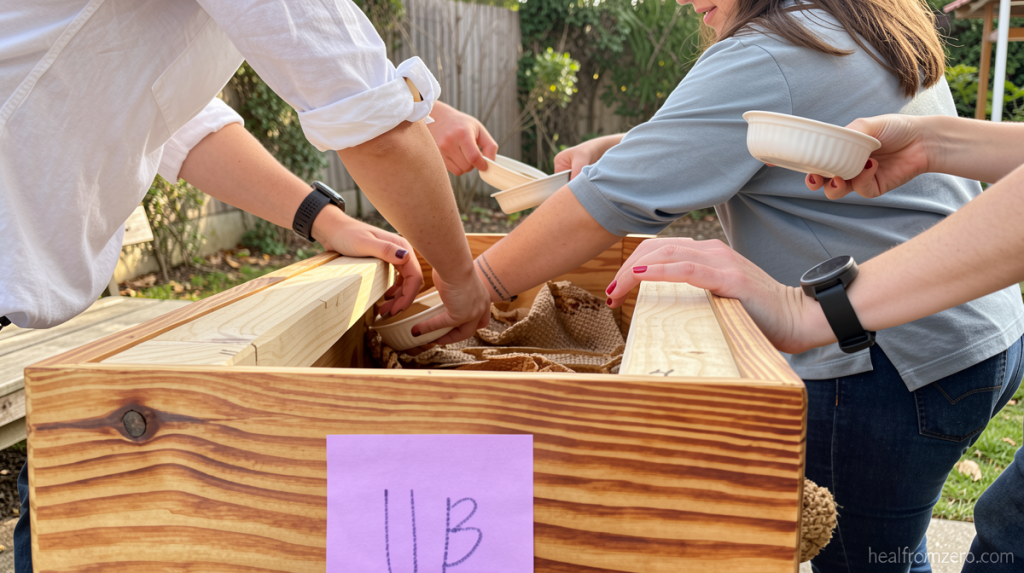
Unlike most of the fallen soldiers, Pumphrey and four fellow comrades received a modest burial beneath a thin covering of soil. He was designated “Camden 9B,” indicating he was the second set of remains recovered from burial number nine. His original headstone bore only the inscription: “UNKNOWN. REV WAR. BATTLE OF CAMDEN. AUG 16 1780.”
While teeth are typically the preferred source for DNA extraction due to their protected position in the jaw, this case presented challenges. “Typically, in a case like this, we work with teeth, because teeth are in the jaw and are protected, the roots are protected,” Peacock explained. “In this case, they were just coming up with nothing on the teeth.”
Kelly Harkins Kincaid, co-founder and scientific adviser at Astrea Forensics, noted the complexity of working with ancient samples. “It gets colonized by the microbial environment in the soil and the water in the environment,” she said. Despite having processed DNA samples dating back 10,000 years, this represented the oldest material her company had ever attempted to use for family tree reconstruction.
From the petrous portion of the temporal bone—a delicate structure located behind the ear at the skull’s base—researchers successfully extracted three types of genetic material: autosomal DNA, X chromosome DNA, and Y chromosome DNA.
Genealogical Breakthrough and Historical Portrait
Peacock’s team submitted the genetic results to both FamilyTreeDNA and GEDmatch databases. “We got 20,000 matches to work with,” she said. “So, it was a lot to kind of comb through.”
Among those matches was Russ Hudson, a retired federal agent residing in Gettysburg, Pennsylvania, who connected through the maternal line. Hudson volunteered to conduct archival research, and gradually a portrait of Pumphrey emerged. He was a young orphan from Anne Arundel County in Maryland, displaced and seeking his path in life. “I learned that probably when he was 13, he went to Baltimore and he enlisted in the militia,” Hudson shared. “And who knows what his story was? What did he accomplish in order to become a member of the militia at such a young age?”
Without a surviving birth record, researchers cannot determine Pumphrey’s exact age when he entered military service. He signed his re-enlistment documents with an “X,” suggesting limited formal education. However, Peacock observed that his growth plates around the knees had not yet fully closed at the time of his death, confirming he was quite young.
Historical records now place Pumphrey and his comrades from the 7th Maryland Regiment alongside George Washington during the harsh winter at Valley Forge, Pennsylvania. His unit participated in several significant engagements in the Northern Theater, including the battles of Brandywine, Germantown, and Monmouth. Peacock estimates that Pumphrey marched approximately 1,000 miles before meeting his fate in the pine forests of South Carolina.
Regarding his death, Peacock explained that “we don’t really know what John Pumphrey’s cause of death was because they did not find a particular injury on his body.” She suggested that “it’s possible that he had a soft tissue injury, like a bayonet injury,” though no definitive evidence was discovered. The identification of Pvt. John Pumphrey represents not only a personal triumph for a forgotten teenager but also a testament to how modern science can bridge centuries of historical mystery.