
As SEC football media days begin, the specter of recent Big Ten dominance looms
As SEC Football Media Days Begin: Big Ten Dominance Looms
Healfromzero.com – As SEC football media days begin in Tampa, a familiar narrative emerges with renewed urgency. Oklahoma head coach Brent Venables took the stage as the opening speaker, representing a conference that has long claimed supremacy in collegiate athletics. The timing coincided with broader sports conversations, but the focus remained squarely on the Southeastern Conference’s quest to reaffirm its position at the top of college football.
Attendees at the Tampa Marriott quickly noticed the conference’s branding efforts. The WiFi password read 2026IJMM—short for “It Just Means More,” a slogan that has become synonymous with SEC confidence. Even before the actual football season begins, fans in team colors gathered outside the SEC Network broadcast set, demonstrating that enthusiasm remains strong despite recent competitive headwinds.
Commissioner Highlights Conference Strengths
SEC Commissioner Greg Sankey opened the proceedings with impressive statistics.
“Southeastern Conference football remains the second most-watched sports property in the United States, trailing only the National Football League,”
he stated. Sankey also emphasized attendance figures, noting that programs draw an average of 80,000 fans per game—the highest average attendance of any sport globally.
The commissioner celebrated thirteen national titles captured by SEC programs during the previous academic year, surpassing the prior record of ten. However, one detail warranted attention: for the third consecutive season, none of those championships belonged to football. This marks the league’s longest football championship drought since 1999 through 2002.
Big Ten’s Rise Challenges SEC Supremacy
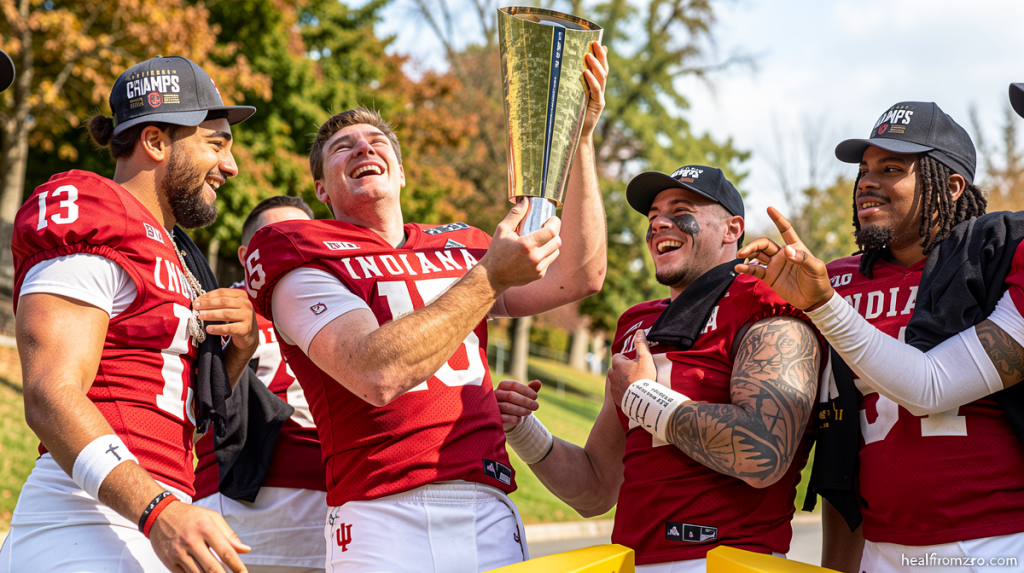
The Big Ten Conference has positioned itself as a serious contender. With an extraordinarily lucrative media rights deal and geographic presence spanning from coast to coast, the conference appears ready to challenge SEC dominance. While the South maintains unmatched devotion to college football, the Big Ten has secured the most valuable prize: trophies.
The conference has claimed the last three national championships, distributing honors among three separate programs. Against SEC opponents during those same three seasons, the Big Ten maintained a perfect 4-0 record. Financially, the gap has widened. The Big Ten generated 1.74 billion dollars in revenue, surpassing the SEC’s first-time billion-dollar milestone.
Oklahoma’s Venables acknowledged his team’s donor base during his address and specifically mentioned defensive lineman Taylor Wein as
“one of the lowest-paid guys on our roster.”
The Big Ten has also mobilized wealthy alumni networks, enlisting figures such as Mark Cuban of Indiana, Larry Ellison of Michigan, and Phil Knight from Oregon to demonstrate institutional loyalty through financial support.
Navigating Future Challenges
Kevin Warren, whose transition from the Big Ten to the Chicago Bears received mixed reactions, played a pivotal role in securing both the critical television agreement and the Westward Ho expansion initiative. Combined with Oregon’s on-field achievements—one College Football Playoff quarterfinal appearance followed by a semifinal berth within two seasons—these elements have created a stable foundation unlikely to crumble.
Sankey addressed potential Congressional intervention in collegiate athletics and emphasized the need for greater transparency within the NIL landscape. When pressed about whether the SEC had seriously considered withdrawing from the NCAA framework, he responded thoughtfully:
“So they’re real. People have talked about that. They’ve opined about the frustrations that bring them to the point of saying we should look at something different. I do not believe that is a leverage point. I think that’s just honest communication.”
The question remains whether the SEC’s current position represents a temporary setback or a more permanent shift in power dynamics. Without overstating the case, the conference faces genuine uncertainty about its trajectory as As SEC football media days continue, with the Big Ten’s recent success serving as both a challenge and a catalyst for change.