Why botched lethal injections are becoming more common


Daftar Isi
Lethal Injection Problems Raise New Questions After Tennessee Execution Attempt
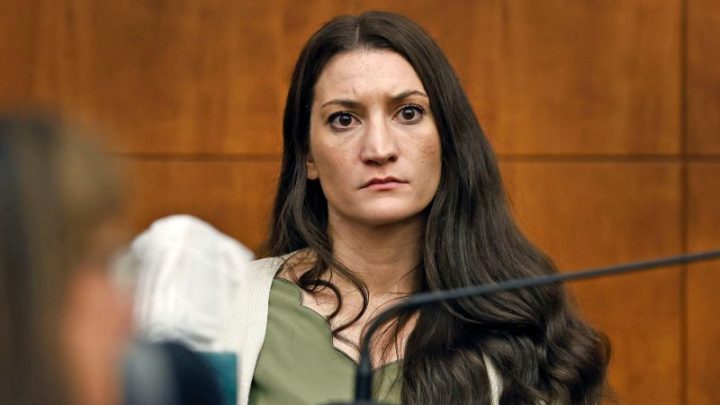
Healfromzero.com – The failed execution of Christa Pike in Tennessee on Wednesday night has renewed scrutiny of lethal injection, a method once presented as a more clinical alternative to older forms of capital punishment. Pike’s case was not Tennessee’s first lethal-injection failure, nor was it the state’s first such incident this year.
For legal scholars who study executions, the episode reflects a broader pattern: as states face mounting obstacles in obtaining drugs and qualified participants, lethal injections have become more vulnerable to breakdowns. Austin Sarat, a professor of jurisprudence and political science at Amherst College and an author on capital punishment, says cases in which prisoners survive an execution attempt have become more frequent.
“The incidence of people surviving executions has certainly increased as states have encountered more difficulties with lethal injection,” Sarat said.
A procedure designed to look medical
Oklahoma developed lethal injection in 1977 while officials sought an execution method that appeared less violent than hanging, firing squads, gas chambers or the electric chair. Texas carried out the first lethal injection five years later.
The original three-drug protocol began with sodium thiopental, an anesthetic. It was followed by pancuronium bromide, a drug intended to cause paralysis, and potassium chloride, which stops the heart. Each drug was administered in amounts far beyond typical medical dosing.
Yet the method’s medical appearance has long conflicted with the medical profession’s position on participation in executions. Major organizations, including the American Medical Association and the American Nurses Association, have opposed or barred members from taking part. That leaves states attempting to carry out a technically demanding process without the ordinary medical personnel and systems associated with administering powerful drugs.
Corinna Barrett Lain, a University of Richmond School of Law professor and author of the 2025 book Secrets of the Killing State: the Untold Story of Lethal Injection, describes the resulting system as a distorted imitation of health care.
“It’s a highly delicate, error-prone procedure that is done by people who are not trained,” Lain said, referring to drugs obtained “on the black market, under the table. It’s a recipe for disaster from the start.”
Botched executions have become more common
A botched execution is one that fails to unfold as its protocol intended. It can involve lengthy delays, avoidable suffering and, in some cases, disturbing visible consequences. Sarat’s data, published by the Death Penalty Information Center, found that lethal injections were botched roughly 7% of the time from 1890 through 2010. Across every execution method, the combined rate was 3.2%.
Since 2010, Sarat has said, the failure rate for lethal injections has risen toward 8%. The increase includes several people who, like Pike, survived lethal-injection attempts. The central factor, he said, has been the growing challenge of finding suppliers willing to provide the necessary drugs.
Drug restrictions changed the landscape
The drug supply began narrowing sharply in 2010, when the British human rights organization Reprieve campaigned to prevent European pharmaceutical companies from exporting execution drugs to the United States. Initially, some manufacturers argued that they could not fully control products after they entered American distribution channels and noted the drugs’ legitimate medical uses.
Over time, companies imposed distribution restrictions. Britain and European countries introduced export controls, and US drugmakers ultimately adopted similar limits. Sarat said companies increasingly sought to avoid the reputational harm associated with having their medicines used in executions.
“Drug companies began to say, ‘We don’t want this negative publicity,’” Sarat said.
The restrictions created shortages that pushed states toward alternative sources, including compounding pharmacies. Those pharmacies commonly prepare individualized medications for patients, such as people who cannot take an ingredient found in a standard manufactured drug. Their oversight differs from that of conventional drug manufacturers regulated by the US Food and Drug Administration.
In 2015, the Alliance for Pharmacy Compounding discouraged the preparation of drugs for lethal injection. The organization nevertheless recognized that individual practitioners could decide whether to dispense medication based on personal ethical or religious beliefs. Its position focused on whether drug manufacturers should be able to limit use of FDA-approved products to purposes consistent with their corporate values, rather than framing the matter as a moral judgment on capital punishment itself.
Questions of quality, training and transparency
Lain has warned that some compounding pharmacies involved in supplying execution drugs have had deeply troubling histories. If a drug has the wrong strength or has been stored improperly, its intended effects may be altered. In an execution setting, those concerns carry especially grave consequences because the drugs are meant to act rapidly and because an unsuccessful attempt may leave a prisoner alive after experiencing a procedure designed to be fatal.
The dispute is not limited to the drugs themselves. Establishing intravenous lines, monitoring the process and responding to complications all require skill. Medical professionals’ opposition to involvement means states may have difficulty assembling teams with the expertise normally expected for such high-risk procedures.
Pike’s survival places those tensions in immediate focus. Her case raises practical questions about what Tennessee will do next, but it also underscores a longstanding national debate. Lethal injection was introduced to make executions appear more controlled and humane. Decades later, drug shortages, secrecy around suppliers, limits on medical participation and repeated failures have made that promise increasingly difficult to sustain.
Related Reading
Frequently Asked Questions
What is Why botched lethal injections are becoming?
Why botched lethal injections are becoming is the main topic of this guide. The article explains the context, practical details, and next steps readers should understand.
Why does Why botched lethal injections are becoming matter?
Why botched lethal injections are becoming matters because readers are looking for a useful answer, not just a short summary. Good content should match search intent and help them decide what to do next.