It’s official: Trump’s midterm convention was a bust

Daftar Isi
Trump’s Midterm Gathering Offered Little Evidence of a GOP Lift
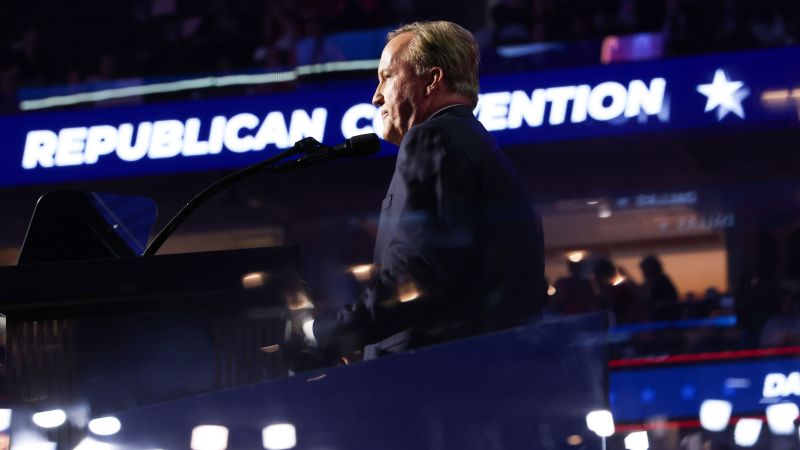
Healfromzero.com – Republicans entered September hoping that a Dallas political event centered on President Donald Trump would energize voters ahead of the midterm elections. Instead, the convention known informally as “Trump-a-palooza” appears to have produced no clear benefit for the party—and may have coincided with movement in the opposite direction.
The September 9-10 convention was an unusual gamble. Midterm campaigns generally focus on congressional candidates, local concerns and turnout operations rather than staging a major national event around a president whose approval ratings have remained historically weak. Trump nevertheless pushed for the gathering, and prominent Republicans did not publicly resist the plan.
Its most obvious potential beneficiary was Texas Attorney General Ken Paxton, the Republican Senate candidate whose contest received extensive attention during the convention. Yet Paxton was later heard voicing concern privately about its effect on his campaign.
“So to be honest with you, the numbers — when we did that convention — it dropped our numbers,” Paxton said. “Everybody’s numbers dropped. Right now, yeah, not good.”
Nick Maddux, a senior Paxton adviser, rejected the account as “manipulated nonsense” intended to manufacture a narrative, without detailing what had been altered. Maddux also said that serious pollsters would say Paxton’s standing had improved since early September.
National polling shows no convention bounce
The broader polling picture offers little indication that the Dallas event strengthened the Republican position. Changes in surveys remain relatively modest and frequently fall within margins of error, but the direction of the available national data has not favored the GOP.
The generic congressional ballot is one of the clearest measures to watch. It asks voters whether they would choose a Democratic or Republican candidate for Congress without naming a specific race. Major polling averages maintained by Nate Silver and FiftyPlusOne show Democrats expanding their edge by at least two points since September 9.
That does not prove the convention caused the shift. Public opinion can move for many reasons, and an event watched primarily by politically engaged audiences may have limited ability to reach voters who are less focused on campaigns. Trump’s claims of extraordinarily large viewership also did not establish that the gathering reached a broad national audience.
Still, the absence of a visible boost matters. Major presidential nominating conventions sometimes create a temporary polling improvement for the party holding them. A national midterm convention built around a sitting president would have needed to show some comparable payoff to justify its political risk. Instead, the available data suggest either a negligible impact or a result that did not help Republicans.
Individual surveys reinforce that cautious assessment. Polls from CNN, NBC News and Fox News found no movement from their earlier readings of the generic ballot. One high-quality survey, conducted by The New York Times and Siena College, showed a better Republican position after the convention, but its earlier comparison point came from May rather than immediately before the Dallas event.
Enthusiasm remains an obstacle
The convention also did not appear to erase a continuing Republican enthusiasm gap. In a Marist poll, 76% of Democrats said they cared a great deal about which party wins control of Congress. The comparable share among Republicans was 67%.
Intensity is not the same as a final vote count, and it can change before Election Day. But enthusiasm often affects volunteer activity, campaign engagement and turnout. For a party trying to gain ground in a midterm environment, a gap of that kind can be consequential even if overall ballot preferences remain close.
The political question is especially important in Texas, where Paxton needs to consolidate Republican support while facing Democratic state Rep. James Talarico. The convention took place in Paxton’s home state and gave Trump a major platform to back him. If a nationally prominent presidential event was going to help a candidate, Paxton seemed like a likely candidate to receive that advantage.
Instead, Trump spent portions of the gathering criticizing Paxton’s appearance, clothing and manner of speaking. That unusual dynamic complicated an event ostensibly intended to strengthen a Republican contender.
Paxton’s polling difficulties continue
Recent surveys indicate that Paxton’s challenges have not disappeared. A ReconMR-Siena College poll conducted across the period of the convention, along with a Marist College poll released last week, each placed Talarico ahead by 6 points. The Siena survey measured likely voters, while the Marist poll surveyed registered voters.
Those represented Talarico’s largest leads so far during the general-election period. A Texas Southern University poll showed a much tighter contest, with Talarico leading 47% to 46%, but it still placed the Democrat narrowly ahead.
Paxton’s personal ratings have also remained a concern. Siena found his favorable rating at 38% and his unfavorable rating at 55%, leaving him 17 points below water. Marist measured him at 33% favorable and 54% unfavorable, a net negative of 21 points. The Texas Southern poll showed some improvement, though Paxton still held a double-digit negative rating.
Texas remains a Republican-leaning state, so polling at this stage does not settle the outcome. But the numbers underline the problem facing Paxton and the national party: a high-profile convention designed to showcase Trump and assist Republican candidates has not generated an obvious recovery in either national sentiment or one of its most closely watched Texas races.
For Republicans, the event’s most significant legacy may be what it failed to accomplish. It did not provide a clear national polling surge, did not visibly close the enthusiasm divide and did not appear to repair Paxton’s standing. In a midterm cycle where every turnout advantage could matter, an expensive political spectacle without a measurable payoff may prove harder to defend than it was to organize.
Related Reading
Frequently Asked Questions
What is It s official?
It s official is the main topic of this guide. The article explains the context, practical details, and next steps readers should understand.
Why does It s official matter?
It s official matters because readers are looking for a useful answer, not just a short summary. Good content should match search intent and help them decide what to do next.