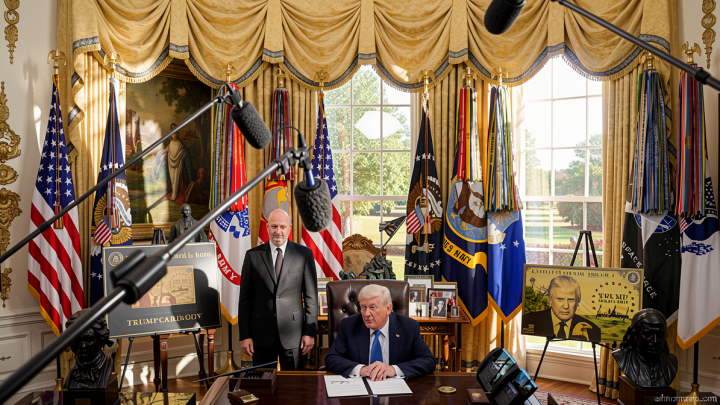
John Roberts draws a line with Trump — over history

Daftar Isi
Roberts Breaks Ranks Over White House Ballroom, Invoking Century-Old Architectural Debates
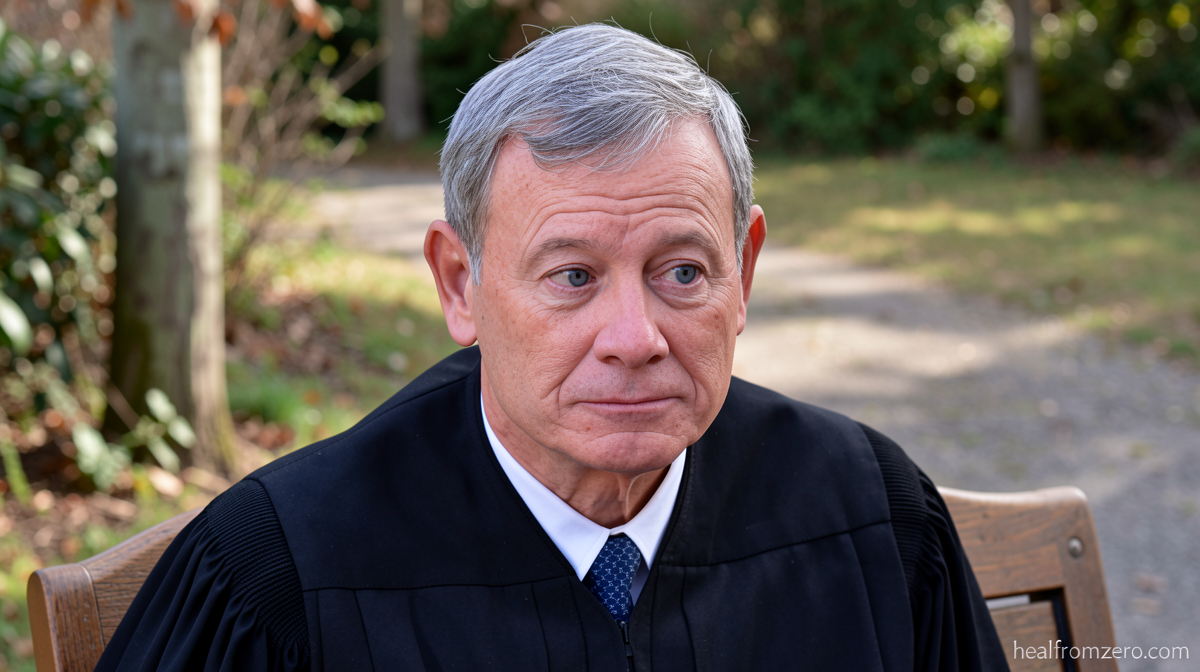
Healfromzero.com – For most of Donald Trump’s second term, Chief Justice John Roberts has served as the Supreme Court’s most reliable institutional backstop for presidential power. He authored the landmark 2024 opinion shielding the president from criminal prosecution and, just last June, penned the ruling that handed Trump authority to dismiss the leaders of independent federal agencies. Yet on Monday, Roberts stepped outside that alignment — joining no one else on the bench — to file a six-page dissenting statement opposing the administration’s push to demolish the White House East Wing and erect a sprawling ballroom and security annex in its place.
The break was startling not because of its legal force, which proved negligible, but because of its tone. Roberts, a jurist who has told audiences he once contemplated a doctoral program in history at Harvard before turning to law, filled his dissent with reverence for the capital’s built heritage. He invoked Theodore Roosevelt and Winston Churchill, framing the dispute not as a partisan fight but as a question of what a republic owes its own physical memory.
“We shape our buildings, and afterwards our buildings shape us.”
That line, lifted from a 1943 Churchill wartime address, anchored the chief justice’s argument. Roberts appended his own gloss: “All the more reason to ensure that those responsible follow the rules in deciding what to tear down and what to build up at the People’s House.” The phrasing — “the People’s House” — carried a deliberate democratic charge, positioning the White House not as a presidential estate but as a civic monument belonging to the public.
A Dissent That Changed Nothing
Five conservative colleagues formed a majority to let the ballroom project proceed. Construction has been underway for close to a year and is reportedly nearing completion, meaning Roberts’ objection arrived after the fact in practical terms. The vote was costless to the president: no injunction issued, no timeline altered. Still, the statement deepens a pattern visible across Roberts’ second-term record. Last session he voted against two of Trump’s most expansive moves — the sweeping tariffs levied on imported goods without congressional authorization, and the effort to curtail birthright citizenship, a practice stretching back centuries that guarantees American nationality to any child born on U.S. soil.
The ballroom case, then, adds a third data point: a chief justice willing to say no, even when the institutional cost of saying so is essentially zero.
The Legal Vehicle: Standing and the Per Curiam
The suit originated with the National Trust for Historic Preservation, which argued that tearing down the East Wing and raising a 90,000-square-foot ballroom-plus-security structure required explicit congressional approval under federal historic-preservation statutes. Lower federal courts had preliminarily agreed, finding the Trust possessed standing because it demonstrated a concrete, particularized injury. The court pointed to Alison Hoagland, an architectural historian and longtime Trust leader, whose personal enjoyment of viewing the White House she said had been impaired by the demolition.
The Supreme Court majority rejected that theory. Writing per curiam — the Latin designation for an unsigned, whole-court opinion typically reserved for emergency-docket appeals — the justices held that “mere offense, disagreement, or distaste does not qualify as a concrete and particularized injury” sufficient to confer standing. The ruling effectively closed the judicial avenue for aesthetic or heritage-based challenges to executive construction projects, a doctrinal move with implications well beyond one ballroom.
Washington Under Reconstruction
The ballroom is one element in a broader campaign to reshape the capital’s skyline in the president’s image. Trump has moved to inscribe his name onto the John F. Kennedy Center for the Performing Arts and to authorize a triumphal 250-foot arch at the traffic circle between the Arlington National Cemetery entrance and the Lincoln Memorial. Each proposal has drawn objections from preservation groups, architectural historians, and members of Congress, yet the administration has pressed forward under the theory that executive control over federal property permits unilateral alteration.
Roberts’ dissent situates itself within that larger contest. His historical citations were not decorative. In 1902, when Roosevelt thanked Congress for appropriations funding the East and West Wing additions, he praised “the stately simplicity” of the original structure and stressed the duty to preserve “such buildings as historic monuments which keep alive our sense of continuing with the Nation’s past.” Roberts, who has spoken publicly about the Supreme Court’s own columned edifice — a building the Court did not occupy until 1935, more than a century after the White House and Capitol were completed — clearly saw the ballroom question as a test of whether the executive could override that continuity.
The Smithsonian Thread
One further layer complicates the picture. By virtue of his position as chief justice, Roberts serves as chancellor of the Smithsonian Institution, a role that is largely ceremonial but has nonetheless placed him in the room for board meetings while the Trump administration has pursued an ongoing effort to reshape the nation’s major public museums. The ballroom dissent thus lands in a context where the chief justice is simultaneously a guardian of one federal cultural institution and a judge reviewing another federal institution’s physical transformation.
Whether Roberts’ Monday statement signals a durable judicial boundary on executive construction authority, or whether it will be read as a solitary, consequence-free gesture, remains to be seen. What is clear is that the chief justice chose, for once, to let the architecture speak before the politics did.
Related Reading
Frequently Asked Questions
What is John Roberts draws a line?
John Roberts draws a line is the main topic of this guide. The article explains the context, practical details, and next steps readers should understand.
Why does John Roberts draws a line matter?
John Roberts draws a line matters because readers are looking for a useful answer, not just a short summary. Good content should match search intent and help them decide what to do next.