Scientists extracted DNA from mummified cheetah remains and made a surprising discovery

Daftar Isi
Naturally Mummified Cheetahs in Saudi Caves Rewrite the Peninsula’s Feline History
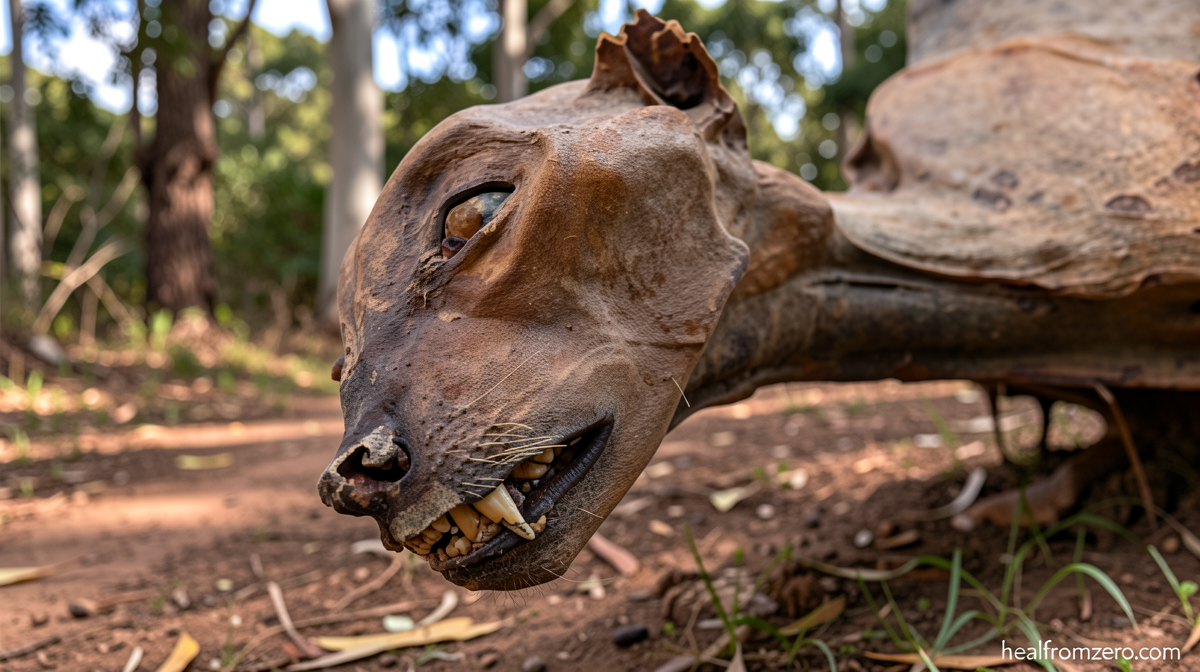
Healfromzero.com – Deep inside a cluster of limestone caves in northern Saudi Arabia, researchers stumbled upon a scene no one had anticipated: seven cheetahs, preserved by millennia of hyper-arid air into natural mummies, their soft tissue and skeletal structures remarkably intact. The find, made during wildlife surveys conducted in 2022 and 2023 by teams affiliated with the National Center for Wildlife, sits near the border town of Arar and has upended long-held assumptions about which cheetah lineages once roamed the Arabian Peninsula.
A Genetic Surprise Hidden in Ancient Tissue
For decades, the prevailing view held that only one subspecies — the Asiatic cheetah, Acinonyx jubatus venaticus — had ever set paw on Saudi soil. That species now clings to existence in a small wild population in Iran and is classified as critically endangered. Across the broader peninsula, cheetahs were declared locally extinct during the 1970s, and the animal’s global range has contracted to roughly 9 percent of its historic footprint across Africa and western Asia.
When the research team extracted complete genome sequences from three of the seven mummified remains — a first for naturally mummified cheetahs and, more broadly, for large felines — the results defied expectation. Two of the oldest specimens proved genetically closer to Acinonyx jubatus hecki, the Northwest African cheetah, rather than to the Asiatic form. The finding, published in January in the journal Communications Earth & Environment, establishes that at least two distinct cheetah subspecies once inhabited the Arabian Peninsula, making the region an ecological corridor rather than a terminal dead end for the species.
Why the Caves, and Why Now?
The circumstances of preservation remain partly mysterious. Cheetahs are open-country hunters; they do not typically seek out enclosed cave systems. Lead author Ahmed Al Boug, an ecologist and deputy CEO of the National Center for Wildlife, told reporters by email that the team does not believe the animals entered the caves accidentally or as a terminal act of aging. The hyper-arid microclimate inside the cavities, however, created conditions ideal for desiccation and natural mummification, effectively halting decomposition.
“It was highly surprising. This finding represents the first documented case of natural mummification in cheetahs, and first physical evidence that cheetah subspecies occurred in the Arabian Peninsula. Moreover, cave use by cheetahs is extremely atypical behavior, making both the discovery itself and the context in which it occurred entirely unexpected,” Al Boug said.
Alongside the seven mummies, surveyors catalogued skeletal fragments belonging to 54 additional cats within the same cave network. Radiocarbon dating of five of those skeletons placed the oldest at approximately 4,000 years before present. The two mummies subjected to full genomic analysis date to roughly 130 and 1,870 years ago, respectively — meaning one of the animals was alive within living memory of the region’s human communities.
Implications for Reintroduction and Conservation
The practical stakes of the discovery are considerable. Saudi Arabia has invested heavily in large-mammal restoration, and knowing precisely which cheetah lineages once thrived in the peninsula allows conservation planners to select genetically and ecologically appropriate animals for future reintroduction programs rather than importing individuals from unrelated populations. The genetic record also clarifies the timeline of regional extirpation, showing that multiple lineages persisted over millennia before disappearing.
“This discovery is significant in that it represents the easternmost record of an African cheetah subspecies and demonstrates that northern Saudi Arabia was occupied by multiple cheetah lineages over millennia. Together, these findings refine our understanding of cheetah landscape use, clarify timelines of regional extirpation, and improve resolution on the subspecies historically present in this region,” Al Boug added.
Complementing the genetic work, the team reported that two cheetah cubs were born via in-vitro fertilization — a first for the species — offering a tangible pathway to bolstering captive populations that could eventually seed wild reintroductions.
An Outside Perspective
Adrian Tordiffe, a veterinary wildlife specialist based in India and a lecturer at South Africa’s University of Pretoria, who was not involved in the study, called the temporal proximity of some remains startling. That cats dating to roughly a century ago were preserved in situ means cheetahs persisted in Saudi Arabia far longer than most observers had assumed.
“Even more striking is that the remains show different subspecies of cheetahs lived there at different times. This tells us the Arabian Peninsula was once an important natural bridge for cheetahs, not an ecological dead end,” Tordiffe said in an email.
He emphasized that the discovery hands conservationists a concrete, evidence-based blueprint: knowing which lineages historically occupied a landscape allows managers to match reintroduction candidates to the ecological niche those animals once filled, rather than relying on guesswork or on animals sourced from entirely different biogeographic regions.
What Comes Next
The research team plans to extend genomic and morphological analysis to the remaining mummies and to the skeletal fragments of the additional 54 cats, with the aim of assigning subspecies identities to as many individuals as possible. Each new identification sharpens the picture of how cheetah populations moved through, adapted to, and ultimately vanished from the Arabian landscape over thousands of years — a picture that now carries direct relevance for the peninsula’s ongoing wildlife-restoration agenda.
Related Reading
Frequently Asked Questions
What is Scientists extracted DNA from mummified cheetah?
Scientists extracted DNA from mummified cheetah is the main topic of this guide. The article explains the context, practical details, and next steps readers should understand.
Why does Scientists extracted DNA from mummified cheetah matter?
Scientists extracted DNA from mummified cheetah matters because readers are looking for a useful answer, not just a short summary. Good content should match search intent and help them decide what to do next.