Experts slam Trump’s unusual new census report as a ‘hijack by the White House’

Daftar Isi
- An Unsigned Census Bureau Document Sparks a Firestorm Over Noncitizen Voting Claims
- What the Report Actually Says — and What It Cannot Say
- Statisticians Question the Methodology
- Institutional Independence Under Strain
- Broader Context: A Long-Standing Claim Meets New Data
- Related Reading
- Frequently Asked Questions
An Unsigned Census Bureau Document Sparks a Firestorm Over Noncitizen Voting Claims
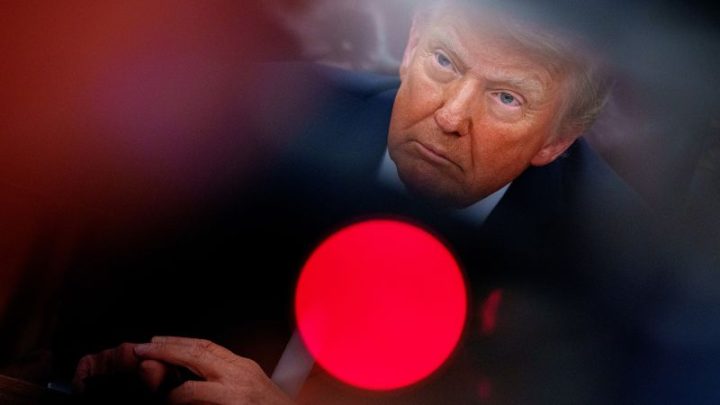
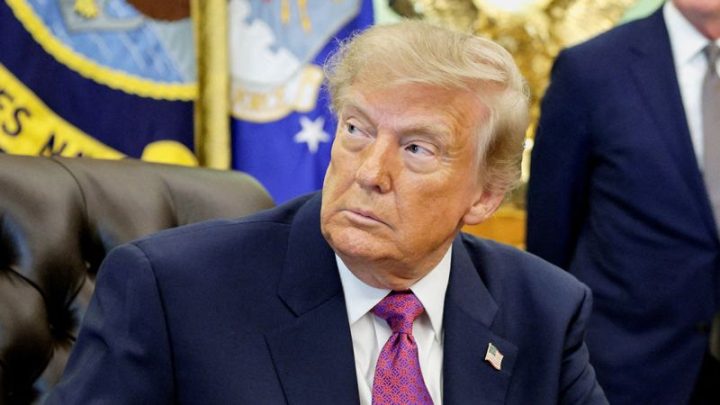
Healfromzero.com – A document that appeared on the Census Bureau’s public website without any named authors or contributors has ignited a sharp debate among statisticians, former agency leaders, and voting-rights groups. The paper asserts that tens of thousands of people who were not U.S. citizens cast ballots in the 2020 presidential election. Within hours of its release, President Donald Trump amplified the findings on his Truth Social platform, declaring in all caps: “I WON THE ELECTION!” — a refrain he has repeated since November 2020 without producing verifiable evidence of systematic fraud.
The timing and presentation of the document have drawn particular scrutiny. Career statisticians who once ran the bureau say the absence of bylines is deeply irregular and may signal that professional staff were bypassed in favor of politically aligned analysts. The episode lands amid a broader pattern of what critics describe as mounting political pressure on an agency that, for decades, has operated at arm’s length from the executive branch.
How the Numbers Were Framed Politically
Trump’s Truth Social post stated that the bureau had confirmed more than 24,000 noncitizens voted illegally in 2020 after examining 128 million individual voter records. He added that the figure would “explode” once analysts finished processing the remaining 32 million records in the dataset. Commerce Secretary Howard Lutnick, whose department has supervisory authority over the Census Bureau, followed with his own post: “It’s just the beginning,” predicting the next round of analysis “will likely show tens of thousands of additional illegal voters.”
Both statements arrived the same day the unsigned document went live. Neither the Census Bureau, the Commerce Department, nor the White House responded to requests for comment explaining the methodology, authorship, or review process behind the publication.
What the Report Actually Says — and What It Cannot Say
The document, which it labels a “beginning analysis,” describes a comparison between a commercial voter-registration database and federal records maintained by the Internal Revenue Service, the Social Security Administration, the State Department, and the Department of Homeland Security. The commercial dataset was supplied by Data-Clear, a Virginia-based company that received a $649,500 federal contract in 2024 to procure voter-registration data, per federal contracting records. Analysts then used the Census Bureau’s own record-linking system to search for individual voters whose names and identifiers matched entries flagged as noncitizens in the federal databases.
Two structural limitations are worth noting for readers. First, because ballot selections are constitutionally secret, the analysis cannot — and does not — identify which candidate or party any of the matched voters supported. Second, even if every match were genuine, 24,000 votes represent roughly 0.019 percent of the 128 million records examined, and less than 0.02 percent of the approximately 160 million ballots cast nationwide in 2020. Joe Biden carried the national popular vote by more than seven million votes, and his margins in the most tightly contested states exceeded the disputed figure by wide margins.
Statisticians Question the Methodology
John M. Abowd, who served as the bureau’s chief scientist from 2016 through 2022, told reporters that the statistical signal is too small to separate from ordinary matching errors inherent in any record-linking exercise. Well-designed linkage systems still generate false positives, he noted, and a result of this magnitude would not, in his experience, support a definitive claim about noncitizen participation.
“None of the professional researchers that I knew or worked with at the Census Bureau would make such a claim from that study. Professional researchers would have reported that result and given it some context.”
Abowd emphasized that the 24,000 matches amount to about 0.019 percent of the analyzed records — a proportion that, in his view, falls within the expected noise floor of automated matching.
The “Fatal Flaw” Argument
Robert Santos, who led the Census Bureau from 2022 until resigning in the opening days of Trump’s second term, went further. He described the publication as an obvious “hijack by the White House” and said he was “shocked and dismayed” that a document of this character — which he declined to call a report — would appear on the agency’s website at all.
“It is clearly a product of White House and Department of Commerce analysts.”
Santos identified what he called a “fatal flaw” in the underlying assumption: the analysis treats federal, state, and local voter records as perfectly accurate. In practice, voter files routinely contain stale or erroneous entries. Those inaccuracies were likely compounded during the pandemic years, when many election offices faced shutdowns, staffing shortages, and backlogs that slowed routine data maintenance.
Institutional Independence Under Strain
The Census Bureau has long been governed by career statisticians and has operated independently of the White House. Earlier this year, however, the administration placed a cohort of partisan analysts affiliated with the America First Policy Institute — a Trump-aligned think tank — inside the bureau, according to three former bureau officials who served during Trump’s first term. AFPI did not immediately respond to a request for comment.
The placement has raised questions about whether the bureau’s analytical output now reflects political priorities rather than methodological norms. The unsigned nature of the Tuesday document, combined with the absence of peer review or named contributors, deepened those concerns among former senior officials.
Broader Context: A Long-Standing Claim Meets New Data
The disputed findings arrive as the administration intensifies its search for documentary support behind Trump’s repeated assertions of widespread voter fraud. In a primetime address last month, the president cited a collection of newly declassified documents to argue that the U.S. election system harbors “gaping vulnerabilities” that leave future contests exposed to foreign interference and noncitizen participation. The Census Bureau analysis appears to be the first concrete dataset offered in service of that narrative.
For voters and election-watchers, the episode underscores a recurring tension: the gap between the scale of a statistical anomaly and the scale of a political conclusion. Whether the remaining 32 million records yield materially different results, and whether the unsigned document will eventually be reissued with named authors and full methodological transparency, remain open questions. What is not open, critics argue, is the fact that an agency built on statistical independence has, for the first time in decades, published a politically consequential finding without telling the public who produced it.
Related Reading
Frequently Asked Questions
What is Experts slam Trump s unusual new census?
Experts slam Trump s unusual new census is the main topic of this guide. The article explains the context, practical details, and next steps readers should understand.
Why does Experts slam Trump s unusual new census matter?
Experts slam Trump s unusual new census matters because readers are looking for a useful answer, not just a short summary. Good content should match search intent and help them decide what to do next.