Pakistan’s former leader Imran Khan taken back to prison after hospital check-up

Pakistan’s Former Leader Imran Khan Back in Prison
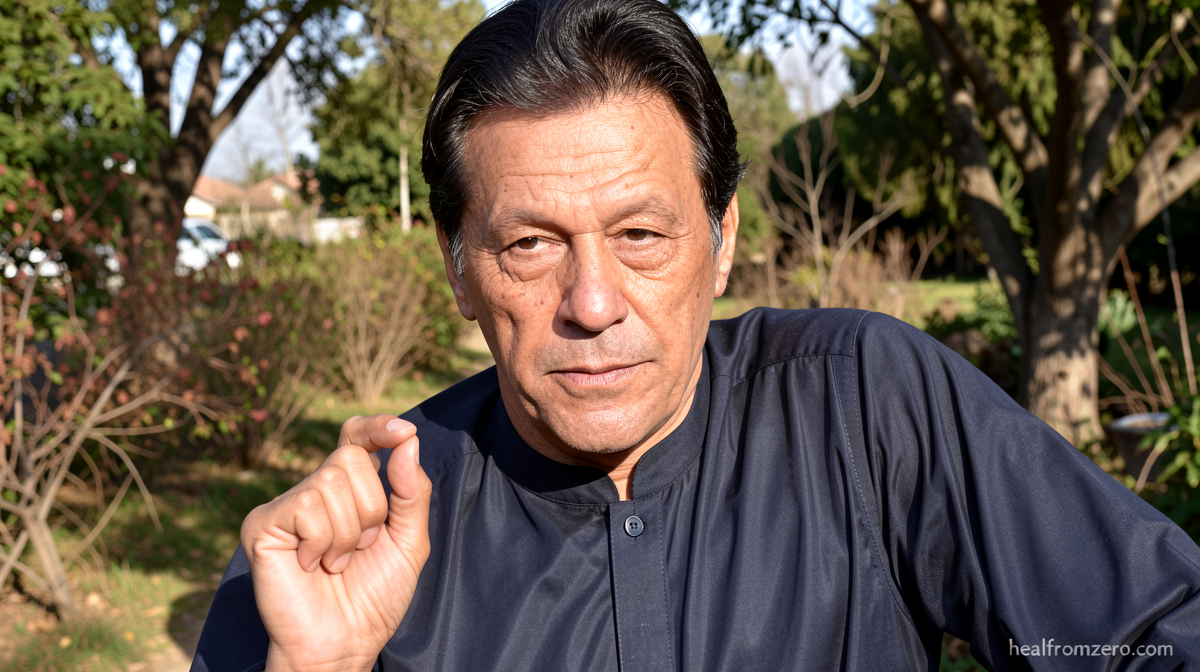
Healfromzero.com – Pakistan’s former leader Imran Khan was escorted from a private Islamabad hospital back to Adiala prison on Friday morning after spending the night under specialist observation. The transfer followed a court order issued earlier in the week, and government officials confirmed the move once Khan was cleared by the medical team to resume his sentence.
The overnight stay, though brief, landed amid months of mounting pressure from Khan’s family and lawyers demanding better access to outside specialists. His sons had spoken publicly about being barred from prison visits and voiced alarm over his rapidly worsening eyesight. Supporters framed the hospitalization as a partial answer to their sustained campaign, while the state maintained it was simply fulfilling a judicial directive.
What the Medical Panel Found
Information Minister Attaullah Tarar detailed the examination on X, confirming that a multidisciplinary team — including an ophthalmologist, a cardiologist, and a general physician — assessed the former leader through the night and declared him fit to return to custody. Khan’s sister sat beside him for the full duration of the evaluation, and Tarar reiterated that incarcerated persons are entitled to external medical care whenever clinical need arises.
“A team of qualified doctors, including an ophthalmologist, a cardiologist, and a physician, conducted a detailed examination of him and declared him medically fit.” — Information Minister Attaullah Tarar
The visit was not an isolated event. A Tuesday ruling from Pakistan’s supreme court had ordered a thorough hospital examination and any necessary treatment, going further by mandating a standing medical board to oversee Khan’s ongoing care. That panel is to include his personal physicians alongside his sister, Dr. Uzma Khan, who is herself a practicing doctor. The bench also reinstated weekly family visitation rights that had been suspended during his confinement.
Political Fallout and the Broader Fight
Inside the Pakistan Tehreek-e-Insaf, the party Khan founded, the episode was received as a narrow but meaningful concession. Senior PTI figure Zulfikar Bukhari described the hospital transfer as a “constitutional obligation” rather than a “political concession,” a framing meant to strip the gesture of partisan goodwill and recast it as a matter of legal entitlement.
That distinction matters in a climate where Khan’s imprisonment has become a central axis of contestation. His backers maintain that the corruption and state-secrets charges underlying his conviction were engineered as a punitive response to his vocal opposition to Prime Minister Shehbaz Sharif’s administration. Under that reading, every medical accommodation granted to Pakistan’s former leader Imran Khan is parsed through a partisan lens: proof the system works only when compelled by the judiciary, or evidence that state treatment of its ex-leaders remains hostage to political convenience.
Khan’s arc from cricket stardom to the premiership and back into a prison cell has made his health a national talking point. He led Pakistan’s cricket team to international acclaim before entering politics, won the premiership in 2018, and was removed by a parliamentary no-confidence vote in 2022. Within a year of that ouster he was convicted and incarcerated, where he has remained since. The convergence of celebrity, political ambition, and prolonged detention ensures that even a routine medical checkup draws outsized public attention.
Frequently Asked Questions
Where is Imran Khan being held? He is incarcerated at Adiala prison near Islamabad, where he has been detained since his conviction following the 2022 no-confidence vote.
Who ordered the hospital transfer? Pakistan’s supreme court issued a directive on Tuesday requiring a thorough medical examination and any necessary treatment. The overnight stay at a private hospital in Islamabad was carried out under that judicial order.
What conditions prompted the family’s intervention? Khan’s sons reported that he had lost the majority of his vision in his right eye and that specialist ophthalmological care was unavailable inside the correctional facility. They also complained of being barred from visiting him.
What ongoing protections did the court put in place? The bench mandated a standing medical board to oversee his care, specified that the panel include his personal physicians and his sister Dr. Uzma Khan, and restored weekly family visitation rights.