Hong Kong democracy activist Joshua Wong faces longer prison sentence after second national security guilty plea

Hong Kong Activist Joshua Wong Pleads Guilty Again
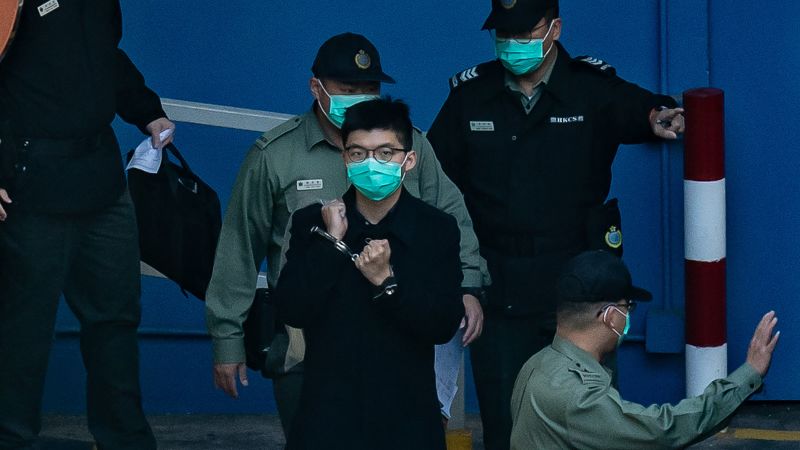
Healfromzero.com – Hong Kong democracy activist Joshua Wong, now 29, entered a second guilty plea on Wednesday to a national security count that prosecutors say involved coordinating efforts to attract foreign sanctions against China and the territory back in 2020. The admission extends the prison term he is already serving and pushes back what had been slated as his January release date, deepening uncertainty over how many more years he will spend behind bars.
The Charge and Its Consequences
Prosecutors before a judge appointed specifically to hear national security matters at the High Court outlined what they called the “International Battlefront.” Before Beijing enacted its sweeping national security legislation in 2020, Wong and fellow activists lobbied Washington for a statute authorizing sanctions against Hong Kong and mainland China. The campaign ran through social media pushes and direct meetings with American politicians, including former House Speaker Nancy Pelosi and then-Senator Marco Rubio. Efforts to pressure other governments into imposing their own punitive measures formed part of the same strategy, the prosecution said. After the law took effect, the United States went on to sanction more than a dozen Hong Kong and Chinese officials, prosecutors noted, indicating the plan persisted beyond its original window.
The High Court carries authority to impose sentences ranging up to life imprisonment, a fact that loomed over the proceedings. Wong had already been convicted in a landmark subversion trial in 2024, where his guilty plea produced a sentence of four years and eight months. His latest charge, heard in the same court, now threatens to compound that term substantially.
Sentencing and Mitigation
Counsel Derek Chan told the court that his client had already accumulated six years of incarceration across multiple charges, all of which he accepted without contest. Chan acknowledged the judge could impose a sentence of up to ten years for the new count but pressed for a reduction by half.
“He has had a lengthy opportunity to want to reflect on his action, to reflect on the path that he took,” Chan told the court, urging a sentence that “gives the defendant some hope and a future to look forward to that will not be crushing.”
The judge adjourned the matter, with sentencing set for a later date.
Government Response and Broader Context
A spokesperson for the Hong Kong administration moved quickly to frame the prosecution as a straightforward application of domestic law, pushing back against what they characterized as foreign interference in local judicial affairs.
“The lawful exercise of free speech must not be conflated with taking actions to collude with a foreign country to impose ‘sanctions’ to harm one’s own country,” the spokesperson stated.
The remark echoed a broader pattern in which Beijing and the Hong Kong government have defended the national security law as a stabilizing measure following the massive, occasionally violent pro-democracy protests of 2019. Both governments credit the statute with restoring order to the former British colony. Human rights organizations, however, maintain that the legislation has chilled open dissent and made even measured criticism of official policy a hazardous undertaking.
Outside the Courtroom
Police maintained a heavy presence around the court complex, registering and searching dozens of people queued outside. Inside, limited seating meant supporters rotated through the gallery in brief shifts, catching a glimpse of Wong before stepping aside for the next group.
Gloria Cheng, 32, a friend of the activist, stood among those waiting outside and drew attention to the wider pattern of prosecutions targeting opposition figures.
“This is not the first time for him and there were others before him,” Cheng said. “It really shows the state of affairs in Hong Kong now.”
Another visitor, Louis Lee, who had been meeting Wong regularly in prison, described an inmate who tried to maintain morale through study, exercise, and learning to play the guitar. Lee said Wong was devastated upon learning of the second national security charge.
“We are very upset because no one would like to spend another day in prison,” Lee said.
As Wong was escorted from the dock, he raised a hand toward the gallery and called out, “Bye bye,” a small gesture of farewell that drew quiet attention from those watching.
Frequently Asked Questions
What charge did Joshua Wong plead guilty to? He pleaded guilty to a national security count alleging he coordinated efforts in 2020 to draw foreign sanctions onto China and Hong Kong, a scheme prosecutors labeled the “International Battlefront.”
How long could his sentence be? The High Court can impose up to ten years for this count, on top of the four years and eight months already handed down in his 2024 subversion conviction. His counsel argued for a sentence no greater than five years.
When will sentencing take place? The judge adjourned the matter; a specific sentencing date has not yet been announced.
What is the status of his earlier January release? The new guilty plea extends his current term, meaning the previously scheduled January release is now delayed by an undetermined number of months or years pending the judge’s decision.