Aboard the USS Abraham Lincoln, where hardship and resilience share quarters

Daftar Isi
Nine Months at Sea: Life Inside the USS Abraham Lincoln’s Record-Setting Deployment
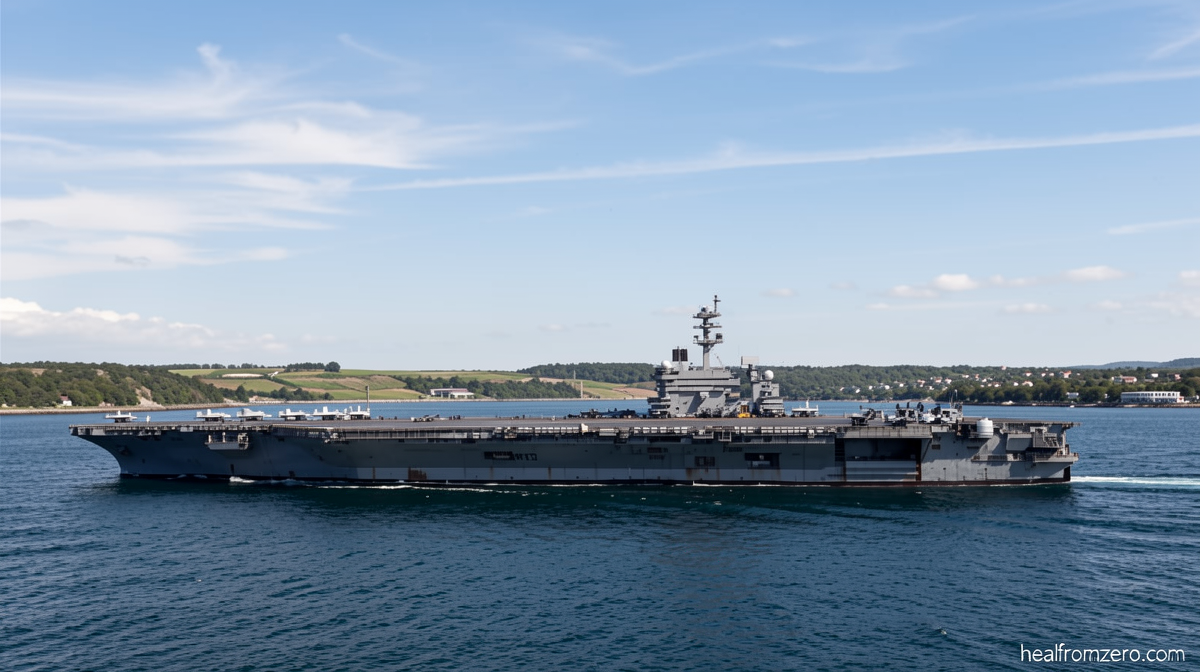
Healfromzero.com – The aircraft carrier USS Abraham Lincoln has been sailing since late October, and by the time it pulled into Duqm, Oman, on July 7, the ship had already accumulated nearly nine months away from its home port — a duration that may set a new record for any American carrier. The vessel was docking precisely as hostilities with Iran reignited, and the atmosphere aboard shifted from routine maintenance to active combat posture within hours of the crew stepping back on deck.
By the time journalists completed their initial orientation walk-through, Iranian forces had struck a third tanker transiting the Strait of Hormuz. US Central Command, the theater-level body executing the Pentagon’s operational strategy, was already assembling a retaliatory response. The first live ordnance shot from the Lincoln’s flight deck came within sixty minutes of boarding. One senior official sent a text that read: “Your timing is impeccable.”
A War That Has Already Claimed 18 American Lives
The broader conflict, which opened in February, has killed 18 US service members. Yet the shock of those losses — and of the daily escalation cycle — seemed to register with surprising quietness among the roughly 5,000 sailors assigned to the Lincoln. The day after boarding was designated a “no fly day,” a scheduled pause giving the air wing and support personnel time to decompress after a brief port call. While the crew rested, American naval assets elsewhere in the region carried out fresh strikes on Iranian targets, and rhetoric on both sides sharpened as a tentative peace framework between Washington and Tehran collapsed.
At 6 a.m. the following morning, in the ship’s cafeteria — officially called the mess deck — senior enlisted personnel sat down to breakfast with an almost studied calm. Most had not been tracking the news cycle, despite Wi-Fi being available aboard. They had cycled through escalation and de-escalation so many times that the current spike felt procedural rather than existential.
Hardship and Resilience in the Same Sentence
Recent coverage of the Lincoln has fixated on deteriorating conditions and mental-health strain, and those accounts are grounded in reality. But three days aboard, dozens of conversations with both officers and enlisted sailors, and the Navy’s permission to roam freely (with an escort) and speak with whomever one wished, painted a picture far more tangled than any single narrative allows. Genuine suffering sat beside genuine toughness — sometimes within the same individual, sometimes within the same breath.
The deployment’s length has drawn alarm from families at home, compounded by reports of suicide ideation among crew members and at least one instance of a sailor being pulled from the water. Defense Secretary Pete Hegseth has pushed back publicly, calling the depiction of onboard conditions “completely misrepresented.” President Donald Trump, speaking the previous week, declared the deployment “not nearly long enough.” That framing landed poorly with many of the sailors in ongoing contact with reporters, and the reality on deck resists reduction to a soundbite.
The Supply Chain That Broke — and Partially Healed
Food tells the story most viscerally. Early in the war, Iranian strikes severed the logistics corridor through Bahrain, plunging the ship into a rationing period that sailors still recount with vivid detail. For a stretch, meals collapsed into tuna stirred into noodles, or corn dogs. Several crew members described losing meaningful weight during that window.
By July, the situation had improved. Fresh fruit and vegetables appeared at breakfast — a direct result of the Duqm port visit. Daily output now runs at 17,000 to 18,000 meals, drawn largely from frozen inventory and rotated on a 14-day cycle the crew knows by heart: “pizza day,” “burger day,” and so on. Morale-boosting events such as ice cream socials punctuate the rotation. Still, young enlisted sailors routinely wait up to an hour in line for each meal, a daily grind that erodes patience quickly. Many spoke of dreaming about their first plate back home — Chinese takeout, a Chipotle burrito, a mother’s homemade bolognese.
One sailor, who messaged after the ship had departed, summarized the situation with characteristic understatement:
“Food has slightly increased in edibility, if I was asked a few months ago I would say a lot of people were losing weight due to the food.”
That is neither a five-star review nor the catastrophe some coverage has implied. It is an honest accounting from people living aboard a warship operating in rough seas under sustained combat pressure.
The Navy’s own statement framed the disruption in operational terms: “Lincoln is operating in a highly contested environment where traditional supply hubs in the Middle East were disrupted by combat actions.” Leadership, the statement continued, “prioritized mission-critical supplies: first food, then hygiene items, then mail.”
The Physical Reality of Carrier Life
Guest quarters in the Lincoln’s below-deck section sit beneath a near-constant barrage of jet launches. The communal officers’ bathroom available to visitors had hot water but demanded a thorough scrub before use. Reports from other sections of the ship included backed-up toilets that, in some cases, required extended waits and improvised workarounds. The infrastructure strain of nine months at sea, combined with the physical demands of flight-deck operations and watch rotations, leaves little margin for comfort.
What emerges from the totality of onboard observation is not a story of collapse, nor one of effortless heroism. It is a story of 5,000 people enduring a supply-chain rupture, a record-length deployment, and an active war — and choosing, day after day, to keep the ship flying, the guns aimed, and each other fed. The hardship is real. The resilience is equally real. They share quarters, literally and otherwise.
Related Reading
Frequently Asked Questions
What is Aboard the USS Abraham Lincoln where?
Aboard the USS Abraham Lincoln where is the main topic of this guide. The article explains the context, practical details, and next steps readers should understand.
Why does Aboard the USS Abraham Lincoln where matter?
Aboard the USS Abraham Lincoln where matters because readers are looking for a useful answer, not just a short summary. Good content should match search intent and help them decide what to do next.