This ‘perfect invader’ is spreading across the world. It’s costing economies billions

Daftar Isi
A Tiny Beetle, A Global Menace: How the Shot-Hole Borer Is Reshaping Forests and Economies
Healfromzero.com – Stellenbosch has long been celebrated as a picturesque South African town where vineyards cascade toward the dramatic peaks of the Western Cape mountains. For nearly three and a half centuries, this community earned the nickname “City of Oaks” thanks to the magnificent English oaks and other urban trees that once shaded its streets and homesteads. That reputation now hangs by a thread. Countless towering specimens have vanished, while many remaining trees bear the unmistakable signature of an invisible enemy — scores of microscopic holes, each no wider than a ballpoint pen mark, scattered beneath their bark like braille messages announcing their impending demise.
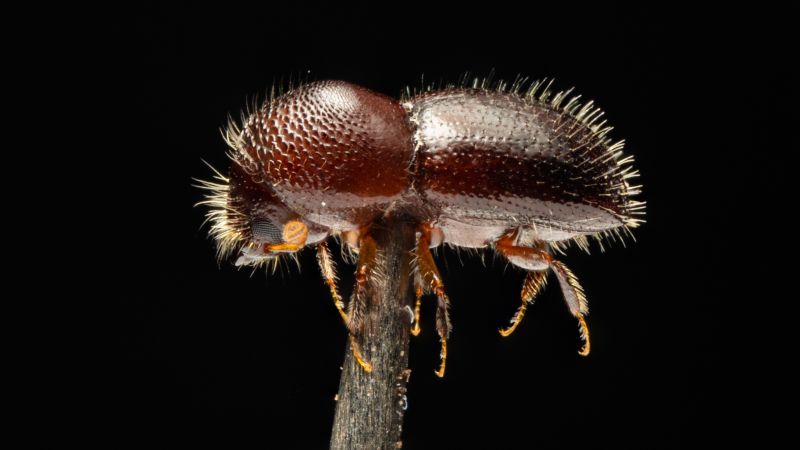
These perforations represent the work of the polyphagous shot-hole borer, an invasive beetle species currently waging war on tree populations throughout South Africa and spreading worldwide. Despite measuring barely larger than a sesame seed, this creature’s ecological and financial consequences are enormous and expanding rapidly across the globe. The beetle has already affected millions of trees and is projected to cost billions of dollars in damages.
A Perfect Storm of Invasion
Originally native to Southeast Asia, the beetle has successfully colonized every continent except Antarctica, according to research published in the Journal of Pest Science during June. Travelers and commerce inadvertently transported the insect inside wood products, live plants, and packaging materials. A comprehensive review published in the Forests journal during July documented that approximately 680 tree and woody plant species have fallen victim to this pest so far.
South Africa has experienced particularly devastating effects. The beetle was initially spotted in the eastern KwaZulu-Natal province in 2012, though the first official documentation occurred five years later in 2017. Researchers have now confirmed its presence in eight of the nation’s nine provinces, with scientists suspecting it has already reached Limpopo as well — simply awaiting discovery.
Francois Roets, a conservation ecology and entomology professor at Stellenbosch University, has witnessed this threat firsthand. He characterizes the beetle as “the perfect invader,” noting its remarkable combination of adaptive traits.
“I used to have a course for undergraduates where we asked students to design an invasive species based on all the kinds of characteristics that they have,” Roets explained to CNN. “This little beetle has all of those things rolled into one.”
The Fungal Alliance
The beetle’s destructive power stems from a sophisticated partnership. While the insect alone cannot kill most trees — including avocados, box elders, and big leaf maples — it never ventures into a host without a companion. The beetle drills tunnels through wood to establish breeding galleries, simultaneously releasing spores of a fungus carried in specialized pouches behind its mandibles.
This fungus establishes a symbiotic relationship that ultimately harms the tree. In exchange for transportation to an ideal nursery, the fungus provides the beetle with food and protection. The fungus serves as sustenance for both the adult insect and its larvae while simultaneously blocking the tree’s vascular tissue. This obstruction prevents the tree’s natural defense mechanisms from reaching the invading beetle.
More critically, the blockage disrupts water and nutrient flow throughout the tree. The resulting fungal disease, known as fusarium dieback, produces symptoms resembling severe drought conditions. These symptoms frequently culminate in extensive damage and tree death. Survival timelines vary considerably by species, Roets noted. Oak trees typically perish within four years of infestation, whereas box elders rarely endure beyond their first twelve months.
Reproductive Superpowers
Remarkably, a single beetle can initiate an epidemic. Unlike most insects, the polyphagous shot-hole borer does not require a male partner to reproduce. Virgin females can deposit unfertilized eggs that develop into males, which they then mate with to establish new colonies. This reproductive system, called haplodiploidy, provides extraordinary flexibility.
While males remain wingless and females can only fly short distances, this reproductive efficiency — combined with the insect’s diminutive size and preference for concealing itself within wood — has accelerated its rapid expansion across South Africa. By 2022, satellite imagery captured the alarming disappearance of tree-lined strips from Johannesburg’s suburban neighborhoods.
Billions in Economic Damage
Removing infected or dead trees represents the primary defense strategy, but this approach carries substantial costs. A 2022 study conducted by economists and ecologists at Stellenbosch and Pretoria universities calculated that the beetle could generate up to 275 billion rand — approximately 18.5 billion dollars at contemporary exchange rates — in economic impact over ten years. This figure represents roughly 0.66 percent of South Africa’s total gross domestic product.
The financial burden extends beyond tree removal expenses. Urban tree loss affects property values, increases cooling costs for buildings, reduces air quality, and diminishes biodiversity. Municipalities face mounting challenges in maintaining green infrastructure while managing this expanding threat.
As global trade continues to accelerate, the risk of additional invasive species entering new ecosystems grows proportionally. The shot-hole borer serves as a cautionary example of how a seemingly insignificant organism can reshape entire landscapes and economies when given the opportunity to establish itself.
Related Reading
Frequently Asked Questions
What is This perfect invader is spreading across?
This perfect invader is spreading across is the main topic of this guide. The article explains the context, practical details, and next steps readers should understand.
Why does This perfect invader is spreading across matter?
This perfect invader is spreading across matters because readers are looking for a useful answer, not just a short summary. Good content should match search intent and help them decide what to do next.