
What were the Covid ‘lockdowns,’ really?
Understanding the Term “Lockdown” in the Context of the Pandemic
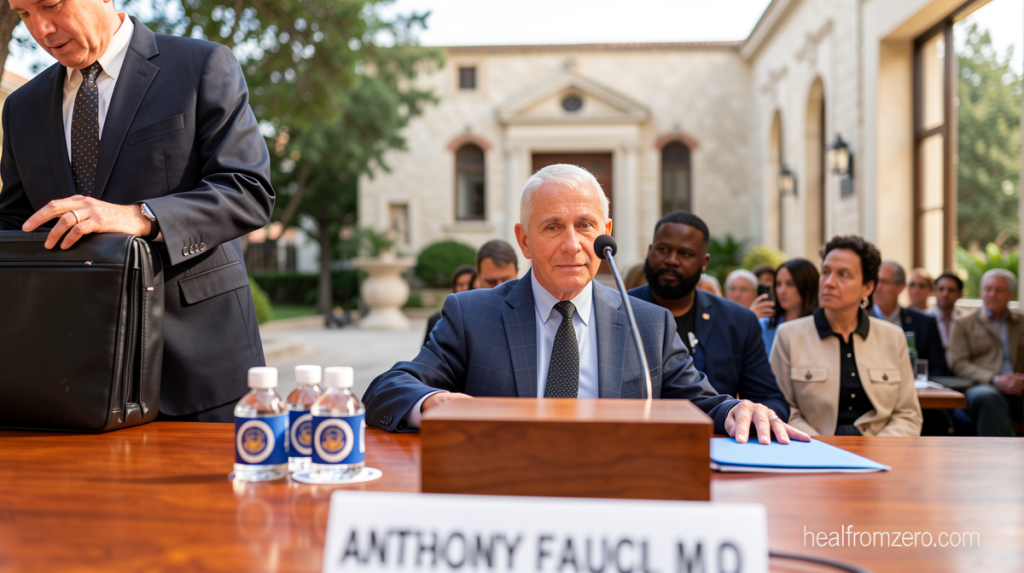
Healfromzero.com – Political figures on the right have recently directed significant criticism toward Dr. Anthony Fauci, the former chief medical adviser to the White House. During a congressional hearing last week and in subsequent media appearances, Republican lawmakers and Trump administration officials accused him of causing unnecessary suffering throughout the coronavirus crisis. Senator Rand Paul of Kentucky, who organized the hearing, alleged that Fauci had concealed information about the virus’s origins and provided misleading accounts regarding its emergence. Paul further contended that the former NIH director mishandled the public health response through what he characterized as an unscientific overreaction.
According to Paul and his political allies, one of Fauci’s most significant missteps was his advocacy for lockdown measures. Following the conclusion of the July 29 hearing, Paul posted a message on X stating that Fauci bore responsibility for the restrictions that citizens experienced. Health Secretary Robert F. Kennedy Jr. echoed these sentiments during a weekend interview with CNN’s Dana Bash, noting that President Trump had sought to terminate these measures. Kennedy Jr. asserted that lockdowns represented the single most damaging policy implemented during the crisis.
Defining the Lockdown Concept
The criticism of lockdowns extends beyond conservative circles. In March 2025, The New York Times podcast “The Daily” posed the question of whether these measures proved worthwhile. Stephen Macedo and Frances Lee, political scientists at Princeton University and authors of “In Covid’s Wake: How Our Politics Failed Us,” responded negatively to this inquiry.
To understand the debate, one must first define what lockdowns actually entailed. News organizations began employing the term on January 23, 2020, when covering Chinese authorities’ decision to suspend nearly all travel in Wuhan, the outbreak’s epicenter. This policy, known as “fengcheng” or “sealing the city,” represented an extreme containment strategy. English-language media quickly adopted “lockdown” as shorthand for these severe restrictions. The Guardian published a headline reading “Coronavirus: panic and anger in Wuhan as China orders city into lockdown.”
Chinese officials subsequently tightened movement restrictions even further. Residential complexes received continuous monitoring, private vehicle use was prohibited, and residents required permission to leave their homes. Similar stringent policies were implemented across other Chinese cities over the following two years.
Global and American Responses
While “lockdown” rarely appeared in official government communications, media outlets utilized it extensively to describe extreme precautions worldwide. Italy implemented localized restrictions in March 2020 that eventually expanded to cover the entire nation. These measures confined citizens to their residences except in exceptional circumstances, prohibited all public gatherings, and closed schools alongside nonessential commercial establishments. Spain and France adopted comparable approaches, as did India, which requested its population of 1.3 billion people remain indoors.
The United States approached containment differently. Rather than establishing a unified national framework, the country relied on a decentralized system of state and local decision-making. Stringency levels typically correlated with partisan affiliation, with Republican-led jurisdictions generally lifting restrictions more rapidly than Democratic-led ones. California issued a comprehensive statewide order on March 19, 2020, directing residents to stay home and requiring nonessential businesses to close. Forty-three states implemented similar directives between March and April 2020. While some restrictions lasted only a few weeks, California’s measures persisted for several months.
Researchers from Oxford University evaluated pandemic responses across multiple nations and positioned the United States in the middle tier during 2020 and 2021. Anna Petherick, a principal investigator on the project, emphasized that substantial variation among states complicated national-level assessment. By 2022, American policymakers had established some of the least restrictive coronavirus policies globally.
Historical Origins of the Term
Despite evolving into a pandemic-era buzzword, “lockdown” carries historical precedent. The term was first documented in its contemporary meaning in 1973, when it described the practice of confining prisoners to their cells as a security protocol. The following year, a New York Times article referenced the word in connection with an outbreak of violence, demonstrating its pre-pandemic usage in contexts involving restricted movement and containment.
“If there’s one thing I wanted to make clear to Anthony Fauci, it’s that he’s culpable for the lockdowns we all endured.” — Senator Rand Paul, X post following July 29 hearing
“I think the thing that did the most damage to our country was the lockdowns.” — Health Secretary Robert F. Kennedy Jr., CNN interview with Dana Bash
The ongoing discussion about lockdowns reflects broader questions about how societies balance public health imperatives with individual freedoms. Whether viewed as necessary protective measures or excessive government overreach, these restrictions fundamentally shaped daily life for billions of people worldwide. Understanding both the historical definition and practical implementation of lockdowns provides essential context for evaluating their effectiveness and legacy in contemporary political discourse.
Related Reading
Frequently Asked Questions
What is What were the Covid lockdowns really?
What were the Covid lockdowns really is the main topic of this guide. The article explains the context, practical details, and next steps readers should understand.
Why does What were the Covid lockdowns really matter?
What were the Covid lockdowns really matters because readers are looking for a useful answer, not just a short summary. Good content should match search intent and help them decide what to do next.