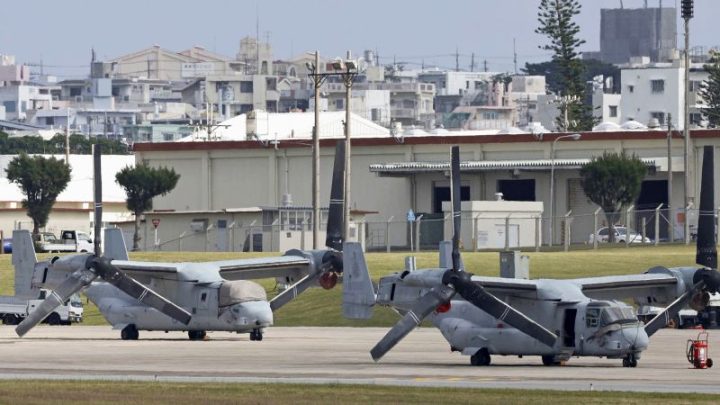
US military uses laser to down three Mexican cartel drones near border

Daftar Isi
Laser Fire Over the Rio Grande: US Army Downs Three Cartel Drones in Southern Texas
Healfromzero.com – In a move that marks one of the most visible applications of directed-energy weaponry along the southern frontier, US forces employed a high-powered laser to destroy three unmanned aircraft linked to Mexican drug trafficking organizations. The strikes occurred in the Rio Grande Valley region of southern Texas, close to the international boundary, during the late hours of Tuesday and the early hours of Wednesday, according to officials who confirmed the operation on Thursday.
The announcement came from two major commands working in concert: the North American Aerospace Defense Command and US Northern Command. Both identified the weapon used as the Army Multipurpose High Energy Laser, a system designed to neutralize small aerial threats without the cost or logistical footprint of conventional munitions. Officials declined to disclose the exact coordinates of the engagements and did not clarify whether the drones were flying over American soil or Mexican territory at the moment they were destroyed.
A Sovereignty Flashpoint
The ambiguity over jurisdiction is not incidental. Mexican President Claudia Sheinbaum has publicly warned that any unilateral American military action conducted on Mexican ground would constitute a serious violation of national sovereignty. That statement frames a tense diplomatic backdrop against which the latest laser engagement must be read. Whether the three drones crossed the border before being targeted, or remained within Mexican airspace, will likely shape bilateral discussions in the days ahead.
The military justified the operation by characterizing the drones as presenting “a physical threat” to both uniformed service members and personnel from US Customs and Border Protection stationed in the area. The characterization underscores a growing operational concern: small, inexpensive unmanned aircraft have become routine tools of organized crime networks operating along the 2,000-mile boundary.
Cartel Aviation Goes Mainstream
Major General Curtis Taylor, who commands Joint Task Force–Southern Border, outlined the broader pattern in a written statement:
“Cartel networks are increasingly employing unmanned aircraft systems to facilitate illicit human-smuggling and actively spy on our personnel and law enforcement partners.”
The general’s remarks point to a tactical shift. Where cartels once relied on foot runners, trucks, and fixed observation posts, they now layer in aerial reconnaissance and small-package delivery. In regions of Mexico farther from the border, drone-delivered explosives have been dropped in lethal attacks on communities and infrastructure. Near the boundary, the same technology is repurposed for surveilling patrol routes and dropping contraband into staging areas.
The timing of the announcement coincides with a broader push by the Trump administration to tighten immigration enforcement and dismantle cartel logistics networks along the frontier. Those objectives were central promises of the 2024 presidential campaign, and the border task force created in 2025 has since logged tens of thousands of detection and monitoring patrols alongside thousands of observation flights, according to the unit’s own accounting.
The Laser Behind the Shot
The military did not name the manufacturer of the specific laser unit employed in the Rio Grande Valley strikes. However, AeroVironment Inc delivered its first two multipurpose high-energy laser packages to the US Army last summer, and the service has previously fielded the company’s LOCUST system in border deployments. That earlier LOCUST deployment produced an operational disruption earlier this year: a seven-hour airspace closure near El Paso International Airport in Texas, a reminder that directed-energy systems, while precise, still require careful coordination with civilian air traffic.
In February, the military inadvertently destroyed a US government drone with a laser-based anti-drone system, congressional aides told Reuters at the time. The incident highlighted the learning curve involved in integrating high-energy lasers into an environment shared with allied and civilian aircraft.
Cooperation and Competition at the Boundary
US and Mexican authorities have been coordinating to counter the proliferation of cartel drones in the border zone. Mexican officials have expressed alarm over what they describe as cartel offensives timed around high-visibility events such as the World Cup, during which a village near the boundary received warnings of an impending organized-crime push. The drone attacks that followed those warnings added urgency to the question of how quickly and how precisely the US military can respond.
Security officials on both sides of the river have voiced concern that cartels are adapting commercially available drone platforms—often crudely modified for payload capacity or range—to serve smuggling and surveillance missions. The result is a low-cost, hard-to-detect aerial capability that forces border agencies to invest in layered detection: radar, infrared sensors, acoustic arrays, and now directed-energy interceptors.
The laser engagement in the Rio Grande Valley represents a concrete step in that layered defense. It also raises questions that extend beyond the immediate tactical success: How frequently will directed-energy systems be employed? What protocols govern their use near shared airspace? And how will Mexico respond if future strikes occur over its own territory without prior notification? The answers will shape the next chapter of a border security relationship already strained by competing claims of sovereignty, sovereignty-adjacent operations, and the relentless logistics of transnational crime.
Related Reading
Frequently Asked Questions
What is US military uses laser to down?
US military uses laser to down is the main topic of this guide. The article explains the context, practical details, and next steps readers should understand.
Why does US military uses laser to down matter?
US military uses laser to down matters because readers are looking for a useful answer, not just a short summary. Good content should match search intent and help them decide what to do next.