
Ukraine launches major drone attack on Moscow, hitting a satellite center and killing a baby
Ukraine Launches Major Drone Attack on Moscow, Hitting Satellite Center and Killing a Baby
Ukraine launches major drone attack on Moscow – On Tuesday, Ukraine claimed to have struck Russia’s Dubna Satellite Communications Center for the second time in less than a week, intensifying its long-range drone campaigns to exert pressure on the Kremlin. The attack, which targeted a key facility near Moscow, follows a similar strike reported earlier in the month and underscores Kyiv’s growing capability to strike deep into Russian territory. This development comes amid escalating tensions as the war in Ukraine continues to spill over into Russian soil, with President Volodymyr Zelensky emphasizing the need to force Moscow’s hand in ending the conflict.
Targeting a Strategic Hub
The Dubna Satellite Communications Center, located approximately 500 kilometers (310 miles) from the Ukrainian border, serves as a critical node for Russia’s intelligence operations and military coordination. Zelensky stated that the facility is used to monitor and direct Russia’s armed forces in Ukraine, making it a high-value target. While the Kremlin has yet to officially confirm the damage, regional governor Andrey Vorobyov reported that a drone had impacted an administrative building in the town, though no casualties were initially reported.
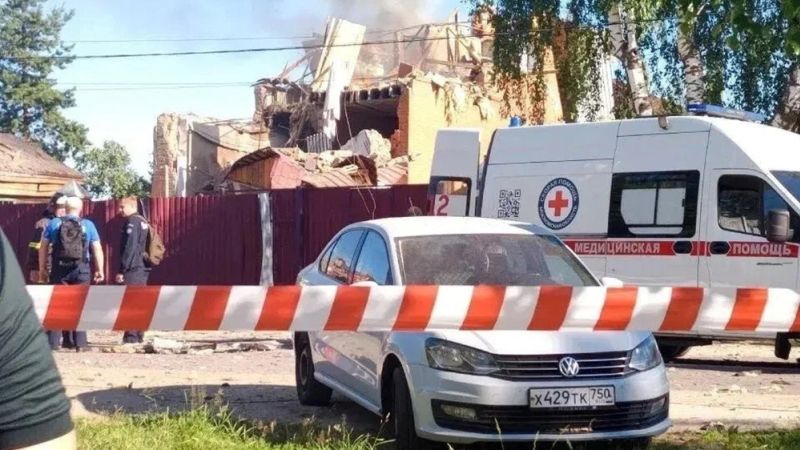
“Civilians are suffering, children are dying,” said Kremlin spokesman Dmitry Peskov, criticizing the strike as part of Kyiv’s ongoing efforts to escalate the conflict. He highlighted the impact on local communities, with the death of a six-month-old baby in Yegoryevsk, a town southeast of Moscow, drawing particular attention. The child’s home was hit by a drone that crashed, trapping residents under debris. Rescue workers managed to extract two adults and two children, but the infant succumbed to injuries en route to the hospital, according to Vorobyov’s Telegram update.
Meanwhile, another incident in Russia’s western Tver region saw a 61-year-old woman killed when a drone, which had been shot down, struck a residential summer home. Regional authorities confirmed the fatality, stating that the drone’s impact caused the death of the elderly woman. This incident adds to the growing list of casualties attributed to Ukraine’s intensified aerial campaigns.
Russian Air Defenses Under Scrutiny
Despite the attacks, Moscow Mayor Sergey Sobyanin reported that Russian air defenses successfully intercepted more than 60 drones launched toward the capital over the course of Monday night and Tuesday. The Ministry of Defense expanded on this, asserting it had destroyed or neutralized 419 drones in total. However, the effectiveness of these defenses has been called into question, with the Ukrainian military attributing the success of strikes to a “breakthrough in the enemy’s dense air defense system.”
According to Ukrainian officials, the ability to target Moscow and St. Petersburg has been made possible by the systematic dismantling of radar systems in the Bryansk region, which borders the capital. These radars, they claim, were crucial for monitoring airspace and detecting incoming threats. By neutralizing them, Kyiv has created a path for drones to bypass Russian defenses and strike strategic locations with greater precision.
A Pattern of Attacks
This marks the second confirmed strike on the Dubna facility by Ukrainian forces since June 22, when they first reported hitting the site. During that incident, Russian state news agency TASS described the attack as a “massive drone assault” but noted that communications and television broadcasts remained unaffected, and no staff were injured. The current strike, however, has raised concerns about the facility’s vulnerability and the potential for more severe damage.
Zelensky has framed these attacks as part of a broader strategy to “compel” Russia to end the war. His announcement of a 40-day operation last week signaled a shift toward more aggressive tactics, with the aim of demonstrating Ukraine’s ability to strike beyond its borders. The Dubna facility, a hub for intelligence and military command, has become a focal point in this effort, as its destruction could disrupt Russian operations and weaken its strategic position.
Human Cost of the Conflict
The human toll of the attacks has intensified as the war’s reach extends into Russian territory. The death of the infant in Yegoryevsk has sparked outrage among some Russians, with Vorobyov’s statement underscoring the tragedy of civilian casualties. “The drone crash in our town has left a family shattered,” he said in a recent post. The incident has also prompted calls for accountability, with critics questioning the collateral damage caused by Kyiv’s strikes.
Ukrainian military analysts argue that these attacks are not only a strategic move but also a psychological weapon, aiming to erode Russian morale and public support for the war. “The attack on Moscow is a clear message to the Kremlin: we are not just fighting in Ukraine, but anywhere you choose to wage war,” one official stated. The combination of targeting infrastructure and causing civilian deaths is designed to pressure Russia’s leadership into negotiations.
Escalation and Response
As the attacks continue, Russia’s defense systems have faced a test of their resilience. The reported success of intercepting over 60 drones in the capital suggests that Moscow’s air defenses are holding up, but the ongoing strikes have exposed gaps in their coverage. Analysts suggest that Ukraine’s focus on disrupting communication networks may be more effective than targeting physical infrastructure, as it could create confusion and delay decision-making within the Russian military.
The Dubna facility’s role in Russia’s operations highlights its strategic importance. Located in the Moscow region, it is believed to handle critical data for the war effort, including real-time intelligence and coordination of frontline activities. If the center is damaged, it could weaken Russia’s ability to maintain control over its forces in Ukraine, further pressuring the Kremlin to reconsider its stance.
Despite the casualties, Russia remains steadfast in its military operations, with Putin continuing to assert that the war is a necessary fight for territorial integrity. However, the increasing frequency of attacks and their impact on civilians may challenge his narrative. As Zelensky’s 40-day operation unfolds, the conflict is expected to reach new heights, with both sides vying for dominance in the skies and on the ground.
For now, the focus remains on the immediate aftermath of Tuesday’s strikes. The death of the baby has become a symbol of the war’s reach, while the destruction of the Dubna center raises questions about the future of Russian military strategy. With Ukraine’s drone attacks continuing and the Kremlin’s response growing more measured, the next phase of the conflict promises to be as intense as the previous ones.