The most powerful rocket ever built is now even bigger and more powerful. But will it work?

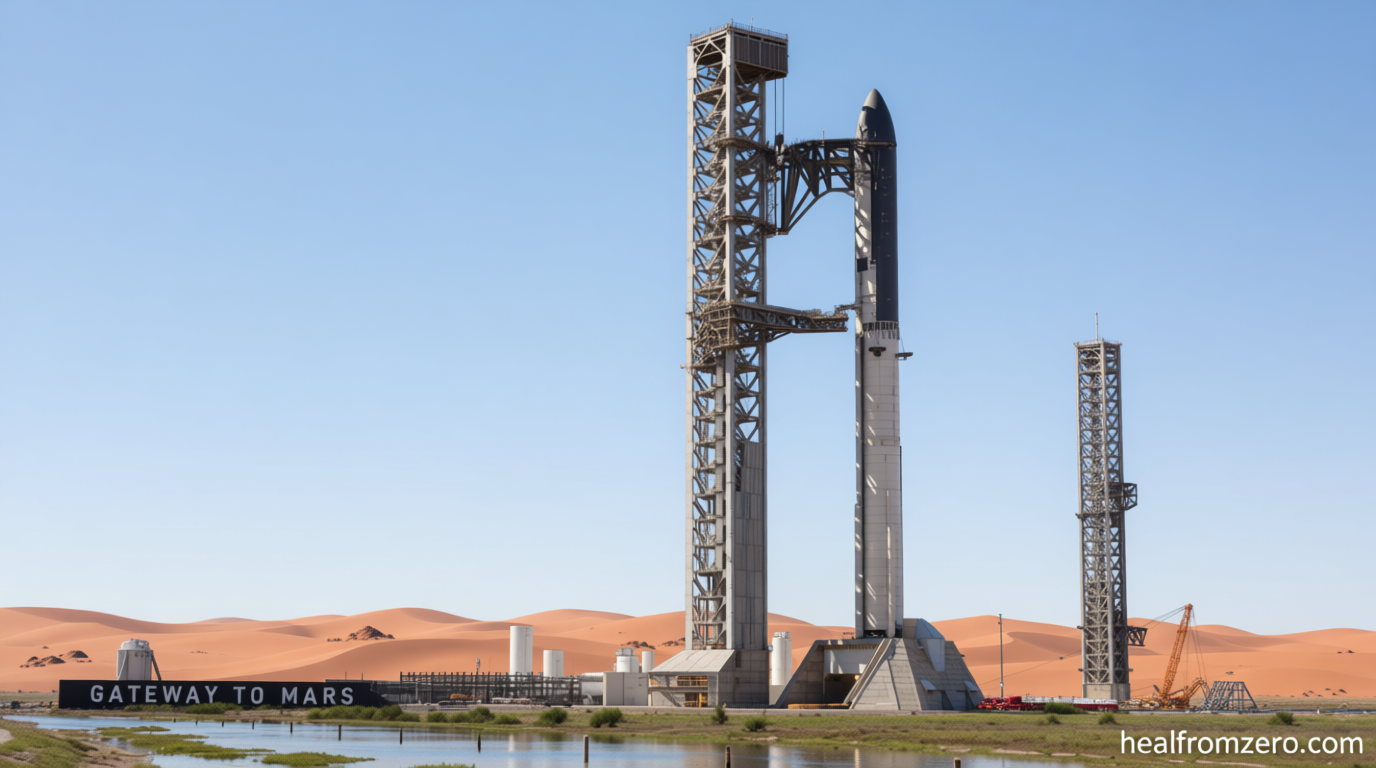
The most powerful rocket ever built is now even bigger and more powerful. But will it work?
Starship’s High-Stakes Test Launch
The most powerful rocket ever built – Following a seven-month pause, SpaceX is preparing to debut an upgraded version of its Starship megarocket — a pivotal moment in its ambitious quest to conquer unprecedented challenges in rocketry. This latest iteration aims to address earlier issues while pushing the boundaries of what’s possible in space exploration. The launch, scheduled for Thursday at 6:30 p.m. ET, is a critical step toward readiness for NASA missions to the moon, but it also comes with heightened scrutiny as the company eyes its most significant financial milestone yet: an IPO that could redefine its trajectory in the aerospace sector.
The stakes are enormous. With China advancing rapidly in its space ambitions, US lawmakers have framed the Starship development as a key factor in the global race for space dominance. Success could solidify SpaceX’s role in NASA’s lunar ambitions, while failure might prompt questions about its ability to meet deadlines or outpace competitors like Blue Origin. Yet, for all its potential, the rocket’s performance remains uncertain, raising concerns among experts and investors alike.
Risks and Scrutiny Surround the Mission
SpaceX’s upcoming test flight is occurring under intense public and regulatory pressure. The company is set to break records with its initial public offering, which has drawn significant attention from investors. However, the recent history of Starship test flights — marred by explosions and technical glitches — has left some wary. “More eyes are watching this test launch than ever before,” said Andrew Chanin, CEO of investment firm ProcureAM. “It’s a risky move to do this highly anticipated event so close to the IPO.”
Despite the risks, Chanin acknowledged that boldness often pays off. “Fortune favors the bold,” he added, highlighting the importance of progress over perfection. For SpaceX, the outcome of this test could have far-reaching implications. The Starship is central to its vision for Starlink, the satellite internet network, and its plans to provide services to NASA and the US military. A successful launch would not only validate the rocket’s capabilities but also bolster investor confidence ahead of the IPO.
A History of Explosive Challenges
Starship’s journey has been marked by a series of dramatic incidents. In October 2024, the company achieved a major milestone by recovering the Super Heavy booster for the first time — landing it in the mechanical arms of its “Mechazilla” tower at Starbase, Texas. This success demonstrated SpaceX’s ability to innovate, but the same vehicle faced setbacks in subsequent iterations.
Version 2 of Starship encountered multiple failures during its early flights. In January 2025, the rocket exploded shortly after liftoff, sending debris across Florida and into the Turks and Caicos Islands. A similar mishap occurred in March, with debris reaching Bahamian shores. These incidents triggered federal investigations and raised concerns about safety protocols. Even a more stable May 2025 test flight ended in disaster when the spacecraft spun out of control during descent, despite a controlled splashdown of the Super Heavy booster in the Gulf.
The challenges continued into the summer of 2025. During a ground test in June, a Starship spacecraft exploded in Brownsville, Texas, prompting an emergency response from local authorities. An incident report, shared with CNN through a freedom of information act request, detailed the chaos: “Dispatchers were forced into rapid-fire triage, making split-second decisions to prioritize life-threatening emergencies,” it read. “Public panic spread across the region, and command staff had to swiftly reallocate resources to manage the crisis.”
Blue Origin and the Space Race
As SpaceX navigates these hurdles, it faces competition from Blue Origin, the Jeff Bezos-backed company developing its own lunar spacecraft. The pressure to outpace rivals has intensified, particularly in the context of the US-China space rivalry. NASA officials, including its chief administrator, have been grilled over Trump’s proposed budget, which emphasizes lunar exploration and the need for American leadership in space. The success of Starship could be a turning point in this contest, but the recent pattern of failures suggests the path is fraught with uncertainty.
The rocket’s potential for commercial use adds another layer of complexity. Starlink’s expansion depends on Starship’s ability to deliver satellites efficiently and affordably, while its military applications require reliability in extreme conditions. Each test flight is a test of both engineering prowess and the company’s ability to adapt quickly. “Anomalies” — as these accidents are termed in the industry — have become a regular part of the Starship development process, but SpaceX insists they are necessary for progress.
Joe Petrzelka, SpaceX’s vice president of booster engineering, recently described a November 2025 incident during ground testing as a “test site with minimal damage” and “no injuries.” While the event destroyed a Starship V3 rocket, it underscored the company’s commitment to rapid development. “Rapid iterative development” is a strategy that prioritizes speed over meticulous preparation, allowing engineers to refine designs through continuous trial and error. This approach, though risky, has enabled SpaceX to iterate faster than traditional aerospace firms, which rely on lengthy ground tests and phased launches.
Engineering Philosophy and the Path Forward
SpaceX’s methodology has drawn both praise and criticism. While competitors emphasize extensive planning and safety margins, the company embraces a culture of risk and experimentation. This mindset has led to breakthroughs, such as the first recovery of the Super Heavy booster, but also to costly setbacks. The question remains: Can this strategy deliver results without compromising safety?
“Every test flight is a learning opportunity,” Petrzelka noted in a promotional video. “The goal isn’t just to avoid explosions — it’s to understand what caused them and improve from there.” For SpaceX, the launch of Version 3 is not just about technical success; it’s about proving its approach works on a larger scale. The company has positioned Starship as a cornerstone of its future, with plans for deep-space missions and planetary colonization. Yet, even with these grand ambitions, the rocket’s performance will be closely watched.
As the countdown begins, the world waits to see whether Starship can finally achieve its promised capabilities. The test is more than a technical milestone — it’s a test of resilience, innovation, and the ability to thrive under pressure. If the rocket succeeds, it could cement SpaceX’s position as a leader in space exploration. If it fails again, the company may need to rethink its strategies or face growing skepticism about its readiness to carry out its most ambitious missions. The outcome of this launch will shape not only the future of Starship but also the broader landscape of space innovation.